Bingo rooms centre on shared sessions, while slots are played in separate cycles, even when both products sit under one account.
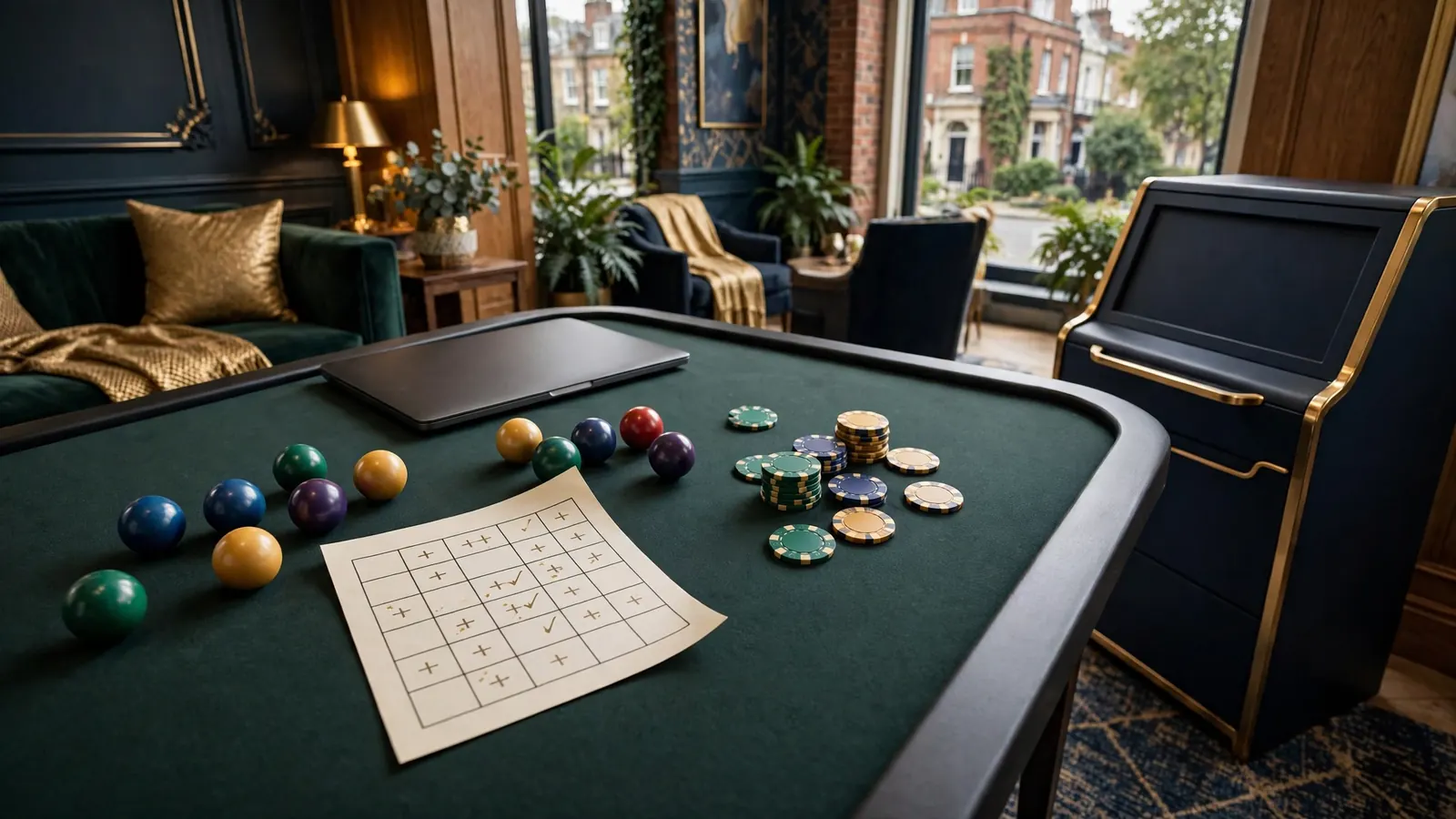
A bingo-branded casino site can place bingo rooms and online slots under the same account, but the shared website does not make them the same game. The label describes a product mix, not a common set of rules. Bingo is organised around a room and a session; a slot is played as a separate game, one cycle at a time. The distinction matters because the pace, decisions and stake rules attached to one format should not be carried over to the other.
In a bingo room, the activity is social and session-based: players take part in the same room event, rather than starting separate slot cycles whenever they choose. The room is the setting for the game. Its schedule and format shape the experience, so the site’s bingo area is not simply a collection of slot titles with a different heading. Nor does the presence of slots change how a bingo session works.
Slots have a different structure. Each play is a game cycle, and the player’s stake applies to that cycle. A slot does not become bingo because it appears on a site known for bingo, just as a bingo room does not become a slot because both products are available through one account. The distinction is basic, but commercial labels can blur it: “bingo casino” may sound like one unified product when it is really a venue offering separate formats.
Choosing a bingo casino involves more than the games on offer; payout timing can also help you decide where to play. This list gives you a quick reference point for the stated withdrawal speed of each option.
Chanze
Chanze lists a payout speed of 1–3 business days.
Dieselwin
Dieselwin lists a payout speed of 1–3 business days.
SlotoSport
SlotoSport lists a payout speed of 1–3 business days.
Revery Play
Revery Play lists a payout speed of 1–3 business days.
BeOnBet
BeOnBet lists a payout speed of 1–3 business days.
Jetsetspins
Jetsetspins lists a payout speed of 1–3 business days.
NightWin
NightWin lists a payout speed of 1–3 business days.
Zombillion
Zombillion lists a payout speed of 1–3 business days.
Amunbet
Amunbet lists a payout speed of 1–3 business days.
SpinFormula
SpinFormula lists a payout speed of 1–3 business days.
That is the useful way to read phrases such as online bingo and slots in the UK. They describe two activities available in one digital setting, not a hybrid game in which bingo calls and slot spins share mechanics. A site can give each product its own section, navigation and presentation. The account may be common; the play is not. A familiar brand or lobby does not alter the rules of the game being opened.
This matters particularly when a site’s main identity is bingo-led. The word “bingo” may set an expectation of rooms and sessions, while the casino part of the offer presents standalone slots. Those products can sit side by side without either one being a substitute for the other. A player drawn to bingo is not automatically looking for a slot, and a slot player is not participating in a bingo room simply by using the same site.
The UK stake limits make the distinction concrete. For online slots, the maximum stake per game cycle is £5 for players aged 25 and over; that limit took effect on 9 April 2025. For players aged 18 to 24, the maximum is £2 per game cycle, effective from 21 May 2025. These limits apply to slot play, not to a bingo room merely because it shares a website with slots. The product being played determines which rule is relevant.
In practical terms, “per game cycle” points to the individual slot play rather than a whole visit to the casino or a session in another product. A slot stake is therefore assessed at the level of its own cycle. That is unlike describing bingo as a room-based activity, where the defining frame is participation in the session. The terms “stake” and “session” are not interchangeable, and treating them as though they were can make a site’s product labels harder to understand.
The same separation helps when comparing sites. A prominent bingo area tells something about how the operator presents its offer, but it does not establish that every game on the site follows bingo rules. Likewise, a broad casino menu does not make the bingo product incidental or change its format. The categories matter more than the branding: bingo belongs to the room or session experience, while slots are standalone games with their own game cycles and age-based stake caps.
I have seen product labels do too much work in the mind. “Bingo casino” can sound like one format with several variations; in practice, the name often brings distinct products together. That is the point to keep in view when reading a site’s menu or promotional wording. Shared access is not shared gameplay. Separate products.
A bingo room and a slot are different kinds of play, even when they appear under the same casino brand. The distinction is not simply that one is called bingo and the other a slot. Each format sets up a different relationship between the player, the game and its pace.
Organised around a shared session and a room environment where players participate in a collective event.
A standalone game centered on an individual title with its own interface and sequence of rounds.
A bingo room is organised around a shared session. Its identity comes from the room and the activity taking place there, rather than from a single machine-style game running on its own. The session is the frame: players enter that environment to take part in bingo. What happens within it can vary by room, so the label alone does not establish every rule or feature.
A slot is a standalone game. Play is centred on that individual title, with its own interface and sequence of rounds. It does not become bingo because it sits on a bingo-branded site, and the presence of a bingo section does not change how the slot works. The branding describes the wider venue; it does not make the products mechanically interchangeable.
That difference matters when a lobby groups both under broad headings such as “bingo casino games” or “bingo and slots”. Those labels can be useful for navigation, but they do not tell the whole story. A bingo room points towards participation in a session; a slot points towards play within a specific game. The names are close in the menu. The formats are not.
I have found that the clearest way to read a games lobby is to look at what the player is being invited to enter. A room is an environment organised around bingo activity. A slot tile opens a particular game. That is a more reliable distinction than judging by the site’s name, its promotional language, or the fact that both products appear on one page.
Searches for bingo games, casino bingo and bingo slots can blur the categories. In ordinary site language, “bingo casino games” may refer to bingo offered by a casino, while “bingo slots” may mean slots found on a bingo-led site. Neither phrase proves that a slot uses bingo rules or that a bingo room behaves like a slot. The surrounding page and the actual game presentation provide the useful context.
The same applies to free-play wording. A free bingo option and a free slot option are still different products. The word “free” describes the cost or access conditions being advertised, not the format’s underlying structure. Any conditions attached to free play belong to the specific offer or game and should not be inferred from the category label.
It is also worth separating a game’s theme from its format. A slot may use imagery associated with bingo, numbers or a hall, but visual references do not turn it into a bingo room. Conversely, a bingo room remains a bingo product even if it is presented within a broader casino interface. Screens can share colours, menus and account controls without sharing play mechanics.
This is why a catalogue of titles would not answer the basic question. The practical issue is whether a listing opens a room-based bingo experience or an individual slot. Once that is clear, the names and artwork become secondary. They may help identify a particular game, but they do not define the category by themselves.
For a UK player comparing bingo casino games with slots, the useful starting point is therefore modest: treat bingo rooms and standalone slots as separate products, then assess each on its own terms. A shared site can host both without blending them into one game type. Same lobby. Different play.
When a site carries bingo and slots, the main change is the range of products presented under one roof. It does not turn bingo into a slot game, or make slot play work like a bingo room. The same website may lead with bingo while also providing a casino area, but the two remain distinct activities with separate rules and ways of playing.
That distinction matters because a site’s label can describe its overall offer without saying much about the experience in each part. A bingo-led site may give prominence to its bingo area and treat slots as an additional category. A casino-led site with bingo may arrange those priorities differently. The menu tells something about the operator’s presentation; it does not establish how often each product is available or what a particular session involves.
I have found it useful to separate the question “What does this site offer?” from “What happens when a game starts?” The first is about the site’s product mix. The second depends on whether the activity is bingo or a slot. A shared account or lobby does not erase that difference. Nor does calling a site a bingo casino mean that all of its games follow bingo rules.
For slot play in the UK, specific design requirements apply. Autoplay is prohibited, and there must be at least two and a half seconds between one spin and the next. Those requirements concern the slot product, not the site’s bingo label. A player moving from a bingo section to slots has not entered a single blended format; the activity has changed, and the slot rules apply to that play.
This is also why a broad description such as “bingo and casino” can be more useful as a navigation clue than as a promise about content. It indicates that both categories may be present, but does not explain how they are organised, which is given greater prominence, or whether a particular title appears at that moment. A category name is not a specification.
The practical comparison, then, is not simply between one site name and another. It is between the experience the site foregrounds and the products available alongside it. A bingo-first presentation may suit someone arriving for bingo, while a site that places slots prominently may feel more like a casino with bingo included. These are differences in emphasis, not evidence that the games share their mechanics.
The terms attached to promotions are another separate matter. A site can display more than one product category, but that does not mean a promotion applies to every category in the same way. The wording must be read as written, including which game or product it covers. “Available on the site” and “available for every game” are not interchangeable claims.
In short, bingo and slots can share a website without becoming one product. The site’s layout shows how the operator groups its offer; the game being played determines which format is in use. For slots, the UK’s design rules remain relevant regardless of whether the surrounding site is described as bingo-led. Shared address. Separate play.
“Free” describes how the spins are funded, not necessarily what happens to any winnings. A promotion may credit prizes as withdrawable cash, or place them in a bonus balance that must meet wagering conditions before withdrawal. The distinction sits in the terms, not in the label on the banner.
A wagering requirement sets how much qualifying play must take place against a bonus amount or the winnings from it. The terms should say which balance the calculation uses, which games count and whether a maximum cash-out applies. Those details can change the practical value of an offer. A large-looking spin package may produce winnings that remain restricted; a smaller credit with fewer conditions may be more straightforward.
I have seen promotional copy foreground the number of spins while leaving the consequential wording below the headline. That is where the mechanics become visible: whether each spin has a stated value, when winnings are credited, how long the offer remains available, and what must happen before the balance can be withdrawn. These are not interchangeable conditions. A time limit concerns when an offer can be used; wagering concerns what must be done with its winnings.
For bingo casino free spins, the key distinction is between spins on slot games and play in a bingo room. A free-spin offer concerns slot play; it does not mean that bingo sessions themselves use slot mechanics. Where a site presents both products, the promotion’s eligible game list matters. A bingo-themed brand or “bingo and slots” label does not establish that every game on the site qualifies.
There is also a UK limit on bonus wagering. The Gambling Commission’s cap of 10× wagering on bonus funds came into force on 19 December 2025. In practical terms, a bonus condition cannot require more than ten times the relevant bonus funds to be wagered. The cap does not turn every promotion into cash, remove other terms, or mean that the winnings are immediately withdrawable. It limits the wagering requirement; the rest of the promotion still needs to be read on its own wording.
That matters when a free-spin prize is credited as bonus funds. The operator’s terms should make clear how the cap is applied to those funds and what conditions remain, including eligible games and any withdrawal restrictions. A cap is a ceiling, not a promise that a particular offer has no playthrough requirement.
Some specialist reviews have described free-spin winnings at 32Red, Betfred and bet365 as carrying 0× wagering, meaning the reported winnings were credited as cash without a playthrough condition. That is a report about particular offers, not a standing rule for those operators or for bingo slots generally. Promotional terms can change, and the live terms govern.
The useful comparison is therefore not simply the number of spins. It is the route from a spin to a withdrawable balance: what is credited, what wagering applies, which games count and what other restrictions attach. Read the mechanics first. Then the headline.
“No deposit” describes the point of entry, not the value or freedom of a promotion. It generally means that a qualifying bonus can be claimed without making a first deposit. It does not, by itself, establish that the bonus is cash, that every game is eligible, or that any resulting balance can be withdrawn immediately.
That distinction matters for no-deposit bingo and slots offers. Promotional wording tends to put the absence of an upfront payment in the largest type. The conditions that determine what happens next sit elsewhere: in the eligibility rules, bonus terms and withdrawal requirements. I have found that the headline answers only one question — whether a deposit is needed to claim. The rest is in the small print.
A wagering requirement means that bonus funds, or winnings generated from them, must be played through before they can be withdrawn. The exact calculation depends on the terms. They may specify which balance is subject to wagering, which games count, and whether different products contribute in different ways. A bingo-and-slots promotion should therefore be read as a set of conditions, not as a promise that both products will clear the requirement on equal terms.
The UK Gambling Commission’s cap on wagering requirements for bonus funds took effect on 19 December 2025. The maximum permitted requirement is 10×. That limit does not turn a bonus into unrestricted cash; other stated conditions may still affect eligibility, use and withdrawal. A requirement below the cap can still be material, particularly where the promotion starts with a small bonus or restricts which play counts.
A “free” offer is not necessarily simple. The promotional balance may be separate from cash, and the terms may set an expiry or a withdrawal ceiling. Those details cannot be inferred from the no-deposit label. They need to be stated in the promotion’s own conditions. No label replaces the terms.
The practical way to assess a no-deposit offer is to follow the money through each stage. First, identify what is actually awarded: bonus funds, free play or another form of credit. Then check what must happen before any winnings become withdrawable. Finally, look for conditions that could change the result, such as game eligibility, time limits, account requirements or a maximum amount that can be cashed out.
Those clauses matter because “no deposit” can describe a promotion that still requires account verification or other steps before a withdrawal. It should not be read as “no conditions”. Nor does the phrase establish that an offer is currently available at a particular bingo casino. Promotions change, and the relevant terms are those attached to the offer when it is presented.
For bingo slots no-deposit promotions, the useful comparison is not simply the advertised bonus amount. It is the route from claim to withdrawable cash: what is credited, what play counts, and what restrictions remain at the end. The same scrutiny applies when bingo and slots appear together in a promotion; the shared label does not mean the products have identical terms.
A no-deposit offer can reduce the need to fund an account before trying a promotion. That is its narrow promise. Whether the bonus has practical value depends on the conditions around it. Read the mechanics first. The headline can wait.
A bingo site that also offers slots is not regulated according to the label on its homepage. The relevant question is who provides remote gambling to customers in Great Britain and whether that business holds the required UKGC operating licence. The Gambling Commission regulates commercial gambling in Great Britain, including remote casino activity, and its remit does not depend on where a company’s key equipment is located.
A software supplier (like Amatic Industries) holds a license to supply games, whereas a casino operator holds the operating license required to accept bets from customers.
That distinction matters when a site’s games come from a separate software company. A supplier can build or distribute a slot without taking bets from players. The casino operator remains the business offering the gambling service; the supplier’s role is to provide the software under its own licensing arrangements.
Amatic Industries illustrates the difference. It is a software supplier, not a consumer-facing casino, and it does not accept bets directly from British players. Its UK Gambling Software (Remote) licence authorises it to supply games, not to run a bingo or casino account for customers. A supplier licence and an operator licence serve different purposes.
I have seen the distinction blurred in promotional copy, where a familiar game-provider name is presented as if it were the party responsible for the whole experience. It is not. The operator is the business that offers the remote gambling service; software supply sits behind that service. The logo on a game does not establish who holds the operating licence.
The Commission also issues licences to businesses and personal licences to individuals working in relevant roles in Great Britain. Those are separate categories: a business’s authority to offer gambling is not the same thing as an individual’s personal licence. Nor does a supplier’s permission to provide software replace the operator’s obligation to hold the licence needed for its customer-facing activity.
For a site combining bingo and slots, the licensing question therefore attaches to the operator offering those products, rather than to each game brand appearing in the lobby. A bingo-focused name does not create a separate regulatory category, and adding slots does not transfer responsibility to the software provider. The operator is the accountable gambling business.
This is the part advertising tends to compress. “Powered by” identifies a software relationship; it does not tell the full story of who offers the gambling service. The Commission’s remit follows the remote gambling offered to Great Britain consumers, not the location of the equipment or the brand printed on a game. Separate roles. Separate licences.
A bingo casino can offer more than one kind of gambling, but the protections attached to the operator and the limits attached to a game are not the same thing. I find it useful to separate those two layers: account controls apply across the operator’s service, while the stake cap described here applies to online slots.
For customers in Great Britain, GamStop has been mandatory for all licensed online operators since 31 March 2020. It provides a route to exclude oneself from gambling with participating operators. That is a system-level safeguard, not a setting confined to a bingo room or a particular slot.
There is also a required prompt to set a financial limit before the first deposit with a UKGC-licensed operator. If a customer later lowers that limit, the operator must put the reduction into effect immediately. The distinction matters: the prompt is part of the deposit process, while a reduction is not supposed to sit pending. A control with a delay would work differently in practice.
Then there are the slot stake limits. For a player aged 25 or over, the maximum stake is £5 per game cycle, a rule effective from 9 April 2025. For players aged 18 to 24, it is £2 per game cycle, effective from 21 May 2025. The lower cap for younger adults is an age-based rule, not a feature that a casino can choose to apply or waive.
These limits concern online slot play. They should not be presented as the stake rules for a bingo session simply because both products appear on the same site. A “bingo casino” label describes a site’s product mix; it does not turn every game into a slot or make the slot cap a general limit for all gambling.
In practical terms, an operator’s account controls and a slot’s permitted stake answer different questions. GamStop concerns exclusion across licensed services; the financial-limit prompt concerns the customer’s account; the stake cap constrains each slot game cycle according to age. None replaces the others.
When I assess a site’s safeguards, I look for those distinctions rather than treating a responsible-gambling label as proof of how a control works. The relevant details are concrete: whether the required limit prompt appears before the first deposit, whether a reduced limit takes effect immediately, and whether slot stakes stay within the age-based cap. That is the substance, not the slogan.
A new name on a bingo site does not make its bonus wording self-explanatory. “No deposit” describes how an offer is presented, not what happens to any winnings. The terms decide whether a balance can be withdrawn, whether playthrough applies, and which games count. The headline is only the doorway.
I read a promotion in layers. First, identify what is actually awarded: bonus funds, free spins, or winnings from those spins. Then find the conditions attached to that specific reward. A code may unlock an offer, but it does not replace its terms; the code and the promotion should describe the same benefit.
The key phrase is often “wagering requirement”. It means a stated amount of play must take place before bonus-related winnings become withdrawable. The important detail is what the requirement applies to: the bonus, the winnings, or both. Terms should make that basis clear. If the wording leaves it ambiguous, the advertised value is not enough to judge the offer.
There is a UK limit behind the small print. The Gambling Commission’s cap on wagering requirements for bonus funds took effect on 19 December 2025 and sets the maximum at 10×. That limit does not turn every promotion into a cash reward, nor does it remove other conditions. A cap is a ceiling, not a promise of favourable terms.
For a newly launched bingo-and-slots site, I would also check whether the conditions name eligible games, exclude particular play, set a time window, or restrict withdrawals. These details can change how useful an offer is, but they should be read as terms of that particular promotion—not assumed from the words “bingo bonus” or “slots bonus”. A no-deposit label does not settle those questions.
The practical test is consistency: the headline, any code, and the full terms should agree about the reward and its conditions. If they do not, the headline cannot resolve the difference. New branding, old mechanics.
A label such as “bingo casino” describes a site’s positioning, not a precise measure of what it offers. The name may put bingo first, while the actual balance of rooms, slot games and other casino products can differ between operators. The category is a starting point, not a full description.
I have seen how that distinction matters in practice: a site can use bingo language because it is aimed at bingo players, even when slots are also part of its casino offering. Another site may put casino products at the centre and treat bingo as one part of a broader range. Neither label, on its own, tells much about the relative prominence of each product.
That is why “best bingo and slot sites” is not a useful category until the criteria are clear. Best for someone who wants bingo to be the main activity may mean something different from best for someone who mainly wants slots and regards bingo as an extra. The same issue applies to newer bingo casino sites: a recent launch or fresh branding does not establish how much space either product receives.
The practical distinction is visible in the site’s organisation. A bingo-led presentation foregrounds its bingo area; a casino-led presentation foregrounds casino games. The menu and lobby structure can show where the operator places emphasis, but they do not prove the quality of a game or the suitability of a site for a particular player.
Labels can also blur the distinction in phrases such as “bingo slots” or “slot bingo”. Those expressions may be used loosely to describe a site carrying both products, but they do not mean that bingo and slots share the same format. The category is about what the operator offers, not a hybrid game.
For UK players, the word “site” also needs a regulatory boundary: real-money remote gambling offered to consumers in Great Britain requires a UKGC licence, regardless of where the operator is based. A product label is not evidence of that licence. It is simply positioning. Check the substance, not the slogan.
A phone can open a gambling site in a browser or run a dedicated app, but those are different routes into the service. A mobile-friendly website is still accessed through the browser; an app is a separate piece of software that has to be obtained and installed. The word “app” in a site’s description does not, by itself, establish that a particular bingo room or slot is available through one.
That distinction matters when checking a bingo casino’s mobile access. A site may present its games through a browser without offering a dedicated app, while an app’s existence does not establish that every part of the casino is included. Availability can depend on the operator and the games it provides. I would treat claims about a specific app as something to confirm on the operator’s own service, rather than infer from a general mobile label.
There is a concrete example for Amatic games: they are generally delivered as HTML5 games in a mobile browser, without a download. That describes how those games can be accessed; it is not evidence that a bingo operator has a dedicated app, or that every casino uses the same arrangement.
For UK players, the distinction between browser and app does not change the regulatory framework. Remote gambling offered to Great Britain consumers requires the relevant UKGC licence, regardless of where the operator’s equipment is located. A phone is simply the access route, not a separate licensing category.
I have seen mobile wording do more work in marketing than it does in practice. “Play anywhere” says little about whether the desired product is in the browser or an app, and neither format guarantees that a particular game is present. Check the operator’s current information for the access method and game availability. Small print, but useful.
No UKGC-licensed operator was confirmed as accepting cryptocurrency for Amatic play. Offshore casinos offering Amatic games operate outside the UK regulatory framework.
Yes, Amatic games are generally available in a mobile browser as HTML5 games, without a download.
Since 19 December 2025, wagering requirements on bonus funds at UK-licensed operators cannot exceed 10 times the bonus amount. The cap applies to the operator’s bonus terms, not specifically to Amatic games.
Amatic is a software supplier, not a consumer-facing casino, and holds a UK Gambling Software (Remote) licence. The casino operator must hold the relevant UK licence and is responsible for deposits, payouts, bonus terms and customer support.
The maximum is £5 per game cycle for players aged 25 and over, or £2 for players aged 18 to 24. These UK online slot limits apply to Amatic slot play at licensed operators.