European branding does not establish UK authorisation; licensing and self-exclusion boundaries shape what applies to British players.
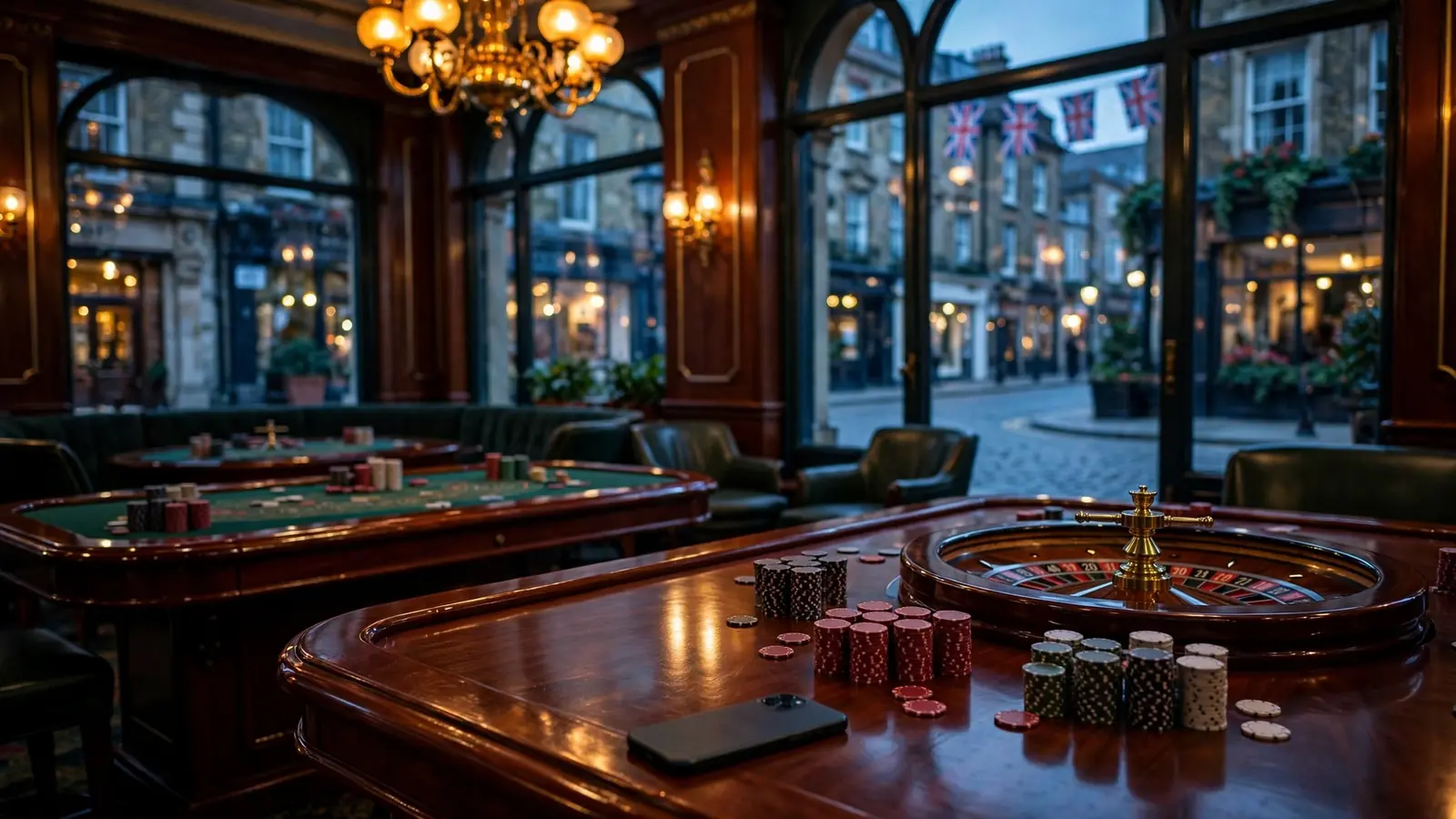
“European online casino” can describe a site’s branding, the market it says it serves, or the location of the business behind it. Those are not the same thing. A European-sounding name, a choice of European languages or a company address outside Britain does not, by itself, establish which rules apply when a site offers gambling to customers in Great Britain.
The practical distinction is between where a business is based and whether it is authorised to serve the British market. Remote gambling operators offering services to consumers in Great Britain must hold the relevant licence from the UK Gambling Commission, regardless of their location. In other words, an overseas base does not remove the requirement to hold a UK licence when the operator is selling into this market.
That matters because a casino’s wording can create a broad impression without answering the regulatory question. “European” is a geographic description, not a licence category. It does not confirm that a site is authorised for British customers, nor does it tell a player whether the site falls within the UK’s online gambling protections. The relevant point is the operator’s status in the British market, not the way its brand presents itself.
I have always found it useful to separate the label from the operating arrangement. A site may describe itself as European because of its ownership, location or intended audience. Yet the same label does not tell us whether it is legally entitled to offer real-money gambling in Great Britain. Those are separate questions. The label is marketing; the licence is regulatory.
This distinction also helps explain why GamStop is not a scheme for casinos with a particular national identity. It is Great Britain’s national online self-exclusion scheme. GAMSTOP works across participating licensed online gambling websites and apps, rather than being tied to whether a business calls itself British, European or something else. Its reach is based on participation in the scheme and the status of the online gambling operator, not on the flags, language or themes used on a casino site.
That is the point at which the word “European” can mislead. It may sound as if a site belongs to a separate European category beyond UK arrangements. But for a player in Great Britain, the site’s claimed location does not, on its own, determine whether GamStop applies. A licensed online operator participating in the scheme is within its multi-operator coverage. The scheme is designed to block access across participating sites and apps, not merely to place a marker on one casino account.
At the same time, the word “European” cannot be used as proof that a site is covered. The scheme’s description is specific: it applies across participating licensed online gambling operators. A general regional label does not establish participation. Treating a branding claim as evidence of GamStop coverage would confuse two different things: a business’s public identity and the self-exclusion arrangement that applies to its online gambling service.
For a UK reader, then, the phrase “European casino online” needs to be read with care. It may refer to a casino company based in Europe, a site aimed at several countries, or simply a brand using European imagery. None of those descriptions answers whether the operator holds the UK licence needed to serve Great Britain or whether its online service participates in GamStop. Those checks concern the operator and its regulatory position, not the broad label.
There is another boundary in the wording. The Gambling Commission’s licensing requirement described here concerns operators serving Great Britain. GAMSTOP is also identified as the national online self-exclusion scheme for Great Britain. The terms “UK” and “Europe” can therefore make a conversation sound wider or more uniform than the actual arrangements are. The safe reading is narrow: look at the market in which the service is offered, and distinguish that from the geography suggested by its name.
I would not treat “European” as a shortcut for either safety or exclusion coverage. It is not a guarantee of one, and it is not a substitute for the other. A casino’s location and branding may help describe the business, but they do not decide the UK licensing question. GamStop’s reach, in turn, depends on participating licensed online operators and the scheme’s cross-site role.
The useful distinction is simple, even if the advertising language is not: geography describes where a business may be associated; regulation describes whether it can serve the British market; and GamStop describes a self-exclusion scheme spanning participating licensed online gambling sites and apps. Keep those categories apart. The label alone says little.
A search for European roulette can mean a preference for a particular style of casino game, or simply a wish to find an online table labelled “European”. Neither the wording nor the presentation tells much about how a gambling account is managed. For a UK player, the practical question is whether the site is a UK-licensed operator and how its self-exclusion process works—not whether its branding sounds European, premium or exclusive.
I separate the game from the account. Roulette is the activity a customer may have in mind; self-exclusion is a formal safeguard applying to the relationship with a gambling business. A site cannot make that distinction disappear by placing roulette in a VIP area, using a European-themed design or describing the experience as premium. Promotional language describes positioning. It does not establish what protections are available.
Self-exclusion can be requested from a single gambling business. That is relevant when roulette is the specific activity associated with a particular account: the request is made to the business, rather than being a setting attached only to a roulette table or game. Where a site offers casino games through an app as well as a website, the instructions should be checked for the account and service being used.
The usual starting point on an individual gambling website or app is its Responsible Gambling or Safer Gambling page. The customer can follow the self-exclusion instructions there. If they cannot find them, customer services can be contacted to ask how to make the request. A gambling business must offer self-exclusion by law; it is not merely a courtesy attached to a particular roulette promotion.
This is a practical detail that can get lost in casino marketing. “VIP” may sound like a separate tier with different treatment, but the label does not turn self-exclusion into a matter of preference. The request is about stopping gambling with that business. It should not be treated as a way to pause one game while continuing to use the same account for other gambling.
A clear process matters. The operator needs to identify the account and record the request against it. From the customer’s side, the important point is to use the formal self-exclusion route, rather than relying on an informal message about taking a break. If the relevant instructions are not visible, customer services is the stated route for finding them. Keep the request within that channel and follow the operator’s process.
No ambiguity.
A European roulette label does not, by itself, confirm that a site is authorised to serve customers in Great Britain or explain how its customer safeguards operate. Remote gambling operators selling into the British market must hold a UK Gambling Commission licence, regardless of where they are based. The word “European” may refer to branding or a game description; it does not replace the question of whether the operator holds the required UK licence.
That distinction is useful when comparing a standard-looking casino page with one promising a “premium” or “VIP” roulette experience. Those words may describe how the business presents its tables or customer service. They do not prove that the site has a particular licence, that a particular roulette game is offered, or that an account will be handled in a particular way. I would not infer any of those things from a headline.
Nor does a search for the best online casino for European roulette establish a reliable ranking. A polished roulette page is not evidence of a better self-exclusion process. The specific, checkable point is whether the business provides a route to request self-exclusion and whether that route is clear enough to use. For UK-facing real-money gambling, licensing is a separate essential distinction.
When roulette is the reason for considering self-exclusion, it is easy to focus on the table itself: its name, layout or place in the casino menu. The safeguard operates at the business level. A request to self-exclude from one gambling company is not simply a block on one roulette screen. It concerns gambling with that business.
That is why the operator’s Responsible Gambling or Safer Gambling information deserves attention before promotional claims. If the instructions are difficult to locate, customer services can be asked for them. The key is to make a formal request through the company’s process, rather than assume that closing a tab, deleting an app or avoiding one table has the same effect.
A European theme can be attractive; a VIP label can sound reassuring. Neither changes the boundary. For an individual roulette site or app, self-exclusion is requested from the gambling business itself, and the site’s branding should not be mistaken for the safeguard.
European slots may look much the same on screen wherever a casino is based, but the rules depend on the market being served, not the branding or the game’s visual style. Remote gambling operators selling to customers in Great Britain must hold a UK Gambling Commission licence. A site’s European identity does not change that requirement when it offers real-money gambling to this market.
That distinction matters when comparing slot sites. A “new” label, a European theme or a claim to be among the best does not explain how a game is operated under UK rules. I have found it more useful to look at the mechanics regulators actually constrain: how quickly a spin can complete, whether spins can run automatically and the stake allowed for each game cycle. Less glamorous. More relevant.
Online slot autoplay is banned in Britain. A player cannot set a sequence of spins to run automatically while they watch or leave the game unattended. Each spin must be initiated manually.
A spin must also last at least 2.5 seconds. This is a minimum for the game cycle, not a promise that every game will take exactly that long. The rule limits the pace at which successive outcomes can be generated. It applies to online slots offered in Britain, regardless of whether the site describes itself as European or promotes a particular slot as unusually fast.
Banned in Britain; each spin must be initiated manually.
Each game cycle must last at least 2.5 seconds to limit the pace of outcomes.
Limited to £2 per cycle for players aged 18–24, and £5 per cycle for those 25 and over.
These requirements shape the experience more than a game’s presentation does. A fast animation or a prominent spin button cannot override them. When a game is offered to British customers through a licensed operator, the operator is responsible for ensuring its slot products meet the applicable rules.
The maximum stake for an online slot game cycle depends on the player’s age. For customers aged 18 to 24, the limit is £2 per cycle. For customers aged 25 and over, it is £5 per cycle; that all-adult limit took effect on 9 April 2025.
The stake limit is about the amount placed on a game cycle, not a general cap on the amount someone may spend over a session. That distinction is easy to miss in promotional language. A headline may present a game as high-stakes or make its features sound unrestricted, but the UK rules still set the maximum stake for each cycle.
A site’s catalogue, design and bonus language cannot establish that it is authorised to serve the UK. In Britain, real-money online gambling is legal only through operators holding the appropriate UK Gambling Commission licence. That requirement follows the market being served, not the location suggested by a casino’s name.
I would treat “European” as a description, not a regulatory assurance. The practical test for slot play is whether the operator is licensed for Great Britain and whether the game follows the rules on autoplay, spin duration and age-based stake limits. Those standards do not identify a best European slot site, and they do not turn an offshore offer into a UK-licensed one. Different question; different protection.
A “no-deposit” offer sounds as if the account can move straight from registration to play without financial checks. The label describes the promotion’s pitch; it does not change the rules that apply when money is added. I have seen the distinction get lost in the small print: an offer may be presented separately from the later decision to fund an account, but the deposit stage remains a regulated step.
For an online casino serving customers in Great Britain, real-money gambling requires a UK Gambling Commission licence. Before allowing a customer to deposit, the operator must verify their age. That check is not optional because the promotion is described as free, and a bonus headline does not establish that an account can deposit without the required verification.
There is also a financial-control step before the first deposit. Remote operators must prompt new customers to set a financial limit, and must make account-level limit controls accessible. In practice, this means the move from registration towards funding is not simply a payment screen: the operator must provide a point to consider a limit and a way to manage limits through the account. The control still matters when a customer first arrives through a no-deposit promotion.
Payment method is another boundary. UK-licensed casinos cannot accept credit cards for gambling. The restriction also covers credit-card funds routed through a money service business, and operators cannot accept payments from a wallet that allows credit-card funds to be used for gambling. A payment method’s appearance on a checkout page does not make every funding route permissible.
That is why “free” should not be read as “outside the rules”. If an account later moves towards a deposit, the operator’s age-verification, financial-limit and payment obligations apply at that point. The promotion’s own terms may govern how it is credited or used, but those details cannot be assumed from the words “no deposit”. The offer label does not tell the whole story.
When I assess this kind of promotion, I separate three things: what the headline says, what the promotion’s written terms require, and what UK controls apply to the account. Those are different layers. A generous-sounding description cannot replace clear terms, and it cannot authorise a payment route barred by the UK rules.
A search for a European no-deposit casino bonus is not, by itself, evidence that a particular offer is available or suitable for a UK customer. Nor does a European identity or brand remove the UK licensing requirement for an operator selling into Great Britain. The practical point is narrower: any real-money online casino serving this market must operate within the UK framework, including the controls that appear when the account is being funded.
No shortcut.
“Not on GamStop” is a description of whether an online gambling account falls within the scheme’s coverage. It is not a separate category of casino licence, nor does the word “European” determine the answer. A site’s branding, website address or claimed location does not establish whether it participates in GamStop.
The relevant boundary is the operator’s UK regulatory status. From 31 March 2020, the Gambling Commission made participation in GamStop compulsory for online operators. That means UK-licensed online gambling platforms are required to take part; the scheme is not an optional feature that a licensed operator can simply choose to leave out.
In practice, registration with GamStop blocks access to current gambling accounts and prevents new ones being opened with participating UK operators. The exclusion applies across those platforms, rather than only to the company through which someone first registered. Registration is free, and the selected exclusion runs for a fixed period. The available periods include six months, one year and five years.
That is the mechanics behind the label. A European casino advertised as “not on GamStop” is not thereby a UK-licensed casino with an exemption from the scheme. The phrase generally signals that the site is outside GamStop’s participating UK-licensed network. It does not, by itself, tell anyone what licence the operator holds or establish that the site is authorised to serve customers in Britain.
Do not open another account elsewhere to get around an active self-exclusion; this undermines the purpose of the agreement.
I have seen how the wording can blur those separate questions. “European” sounds like a useful description of location; “not on GamStop” sounds like a product feature. Neither phrase answers the regulatory question. The distinction is structural: GamStop blocks access across participating licensed operators, while a site outside that network is not covered by that particular block.
This also explains why lists headed “European casinos not using GamStop” can be misleading if they treat the wording as proof of a site’s status. A label is not confirmation of an operator’s licence, and the scheme itself does not certify casinos outside its coverage. The fact that a site is absent from the network should not be read as an endorsement or as evidence that it is a suitable alternative.
For a UK-licensed operator, participation is part of the rules governing online gambling in the market. So when “non-GamStop European casino” appears in advertising or search results, the useful question is not whether the casino sounds European. It is whether the operator is within the UK-licensed system to which GamStop applies. The label alone cannot settle that.
For UK readers exploring non-GamStop European casinos in 2026, payout timing is one practical detail to consider. The notes below focus only on the information available for each operator.
Chanze
Chanze lists a payout speed of 1–3 business days.
Dieselwin
Dieselwin lists a payout speed of 1–3 business days.
SlotoSport
SlotoSport lists a payout speed of 1–3 business days.
Revery Play
Revery Play lists a payout speed of 1–3 business days.
BeOnBet
BeOnBet lists a payout speed of 1–3 business days.
Jetsetspins
Jetsetspins lists a payout speed of 1–3 business days.
NightWin
NightWin lists a payout speed of 1–3 business days.
Zombillion
Zombillion lists a payout speed of 1–3 business days.
Amunbet
Amunbet lists a payout speed of 1–3 business days.
SpinFormula
SpinFormula lists a payout speed of 1–3 business days.
“Best” sounds like a verdict, but it only means something when the criteria are clear and the claims can be checked. A European casino list may put games, account terms or service side by side; that does not make its order an independent measure of quality. I have seen rankings turn a handful of commercial criteria into a confident label. The label does more work than the evidence.
For UK players, the word “European” does not settle whether an online casino is suitable or authorised to serve the British market. Nor does it establish that a site is covered by the UK self-exclusion scheme. Those are separate questions, and a ranking cannot answer them merely by placing a casino near the top.
The same limit applies to claims about the best European casinos not on GamStop. That phrase combines a quality judgement with a description of scheme coverage; neither part proves the other. A site’s absence from a multi-operator exclusion scheme is not evidence that it is better. It may instead mean that a self-exclusion arrangement with a participating business does not operate there. That distinction matters more than the adjective.
Lists of European casino games, or pages comparing roulette and slots, are different again. A game catalogue can describe what a business offers; it cannot establish that the business is the best choice. The phrase “best European roulette casino” may sound specific, but unless the comparison explains what it measures, it remains a promotional conclusion rather than a useful standard. No ranking label changes the underlying terms.
There is, however, a clear standard around self-exclusion. It is a request for a gambling business to stop a person from betting with that business for an agreed period. The period is generally set from six months to five years. Once an exclusion applies, the business is expected to act sensibly to stop that person gambling there. This is an obligation, not a feature to award points for.
That standard also shows why a “best European casinos 2026” list cannot be treated as a substitute for checking what a claim means. A current-year label may make a page look freshly assessed, but the date alone says nothing about the comparison method, the operator’s status or how an exclusion request is handled. A ranking needs more than a new heading. Otherwise, it is packaging.
I would read “best” as a claim that needs a stated basis, not as a fact in itself. If the basis is unclear, the ranking tells little. If self-exclusion is relevant, the practical question is whether the gambling business will honour the request and take steps to prevent further play. A polished list cannot make that responsibility disappear.
For someone in the UK, a casino’s European branding does not change the reach of self-exclusion at UK-licensed online casinos. The practical dividing line is whether the gambling business is licensed for the British market, not the country suggested by its name, design or marketing.
GamStop is the national online self-exclusion scheme for Great Britain. A player can use it to exclude from gambling with UK-licensed online casinos. Since participation became compulsory for UK Gambling Commission licensees in 2020, regulated online casinos in the UK have had to prevent people who are registered with the scheme from gambling with them.
That requirement applies across participating licensed websites and apps, rather than only to the company through which the registration was made. From the operator’s side, the exclusion is a restriction on access, not a preference that can be ignored because a customer returns or opens another account. The business is expected to block a self-excluded player.
This is why “European” is not a useful test for whether a UK player is covered. A site may present itself as European, but that label alone says nothing about its UK licence or its role in the British market. Where a business is licensed by the UK Gambling Commission, the UK self-exclusion requirements apply. I would separate those two questions before treating a casino’s location or branding as meaningful.
Gambling businesses must offer self-exclusion by law, and UK-licensed online casinos provide access through GamStop. This is different from deciding that a casino looks suitable or is described as one of the best options for European players: neither presentation changes the scheme’s reach. A list of casinos accepting UK customers is not, by itself, a guide to self-exclusion coverage.
The useful distinction is straightforward: a UK player who registers with GamStop is excluded from participating UK-licensed online gambling operators. A casino’s European identity does not create an exception to that requirement when it is serving the British market under a UK licence.
Coverage matters. Brand language does not.
A European casino’s use of cryptocurrency, or its description as a crypto casino, does not change the rules that apply to remote gambling operators serving Great Britain. The operator must hold the relevant UK Gambling Commission licence to offer real-money gambling to customers here. Payment branding is not a substitute for that requirement.
The UK payment restriction that can be stated clearly concerns credit cards. Remote gambling operators cannot accept credit-card payments for gambling, including when the card funds are routed through a money service business. A digital wallet is also barred as a gambling payment route if it allows credit-card funds to be used for gambling.
That is the practical distinction. The rule turns on the funding route: a wallet label alone does not make a credit-card-funded payment acceptable. Nor does a cryptocurrency label establish that a particular payment method is accepted, how a transaction is processed, or whether a site may lawfully serve British customers. Those are separate questions.
I have seen payment language do a lot of work in casino marketing. “Crypto-friendly” may sound like a compliance statement, but it describes neither a UK operating licence nor the source of funds behind a payment. The wording is not proof.
For a British customer, the useful test is not whether a casino calls itself European or promotes digital currency. It is whether the operator is licensed to serve the market, and whether any payment route involves prohibited credit-card funding. A payment method cannot make an unlicensed offering compliant. Nor does the absence of a credit card, by itself, establish that the operator is authorised.
Labels are not safeguards.
Self-exclusion is a formal agreement with a gambling business not to gamble there. Once it is in place, the business has practical duties: it must close the customer’s account, return funds left in that account and remove the customer’s details from its marketing databases. These are separate steps, not one general promise to “protect” a customer.
Account closure means the excluded customer should no longer be able to use that account to gamble. Returning funds concerns the balance still held in it. It does not reverse completed bets or reimburse money already spent. The Gambling Commission cannot provide refunds for gambling losses.
Marketing removal matters because promotional messages can act as a prompt to return. The business must take the customer’s details out of its marketing databases, rather than continuing to send offers after agreeing to the exclusion. In my experience, the wording of a promotion can make a return feel routine; stopping those messages is part of making the agreement meaningful. No sales pitch.
The agreement does not transfer all responsibility to the operator. Self-exclusion is an agreement not to gamble, and the customer remains responsible for sticking to it. That distinction is easy to miss when an account is closed: the business has duties, but the agreement is not a mechanism for recovering past losses or removing the person’s own obligation.
The label attached to an online casino, including claims about European real-money play or free spins, does not change what an agreement with a gambling business requires. The relevant point is whether that business has entered into the self-exclusion agreement. Its obligations are to close the account, return the remaining account funds and stop marketing to the excluded customer.
For a European casino account, therefore, “self-exclusion” should not be read as a refund offer or a general guarantee against gambling elsewhere. It is a defined arrangement between the customer and the business, with specific consequences for that account and the business’s marketing. The boundary is important.
A site described as “not on GamStop” may not be blocked by the scheme. That does not make it a safe route around an active self-exclusion. If the agreement was made to stop gambling, moving play elsewhere to defeat it can breach its terms. The boundary of a scheme is not permission to gamble.
GamStop lets a person exclude from online gambling operators through one request. Customers who have excluded themselves must be refused service by the websites and venues covered by their exclusion. But an exclusion is not a universal barrier to every place where gambling is available. That distinction matters. A new account elsewhere may remain outside the block, while still undermining the purpose of the agreement.
I have seen how a “workaround” can be framed as a simple account choice. In practice, it shifts the burden back onto the person who chose to stop. Do not open another account elsewhere to get around an exclusion. Instead, make the exclusion cover every place where gambling could be tempting, including individual online businesses where needed. Gambling businesses are required by law to offer self-exclusion.
A non-GamStop European casino may be outside the scheme’s blocking arrangements, but that label says nothing by itself about its suitability for UK customers. Remote operators offering gambling to people in Great Britain must hold the relevant UK licence. A site being accessible does not remove that requirement, or change the terms of an existing self-exclusion.
If gambling has become difficult to control, the useful next step is not to test which sites are blocked. Keep the exclusion in place and seek support from a service such as GamCare. The Gambling Commission does not refund money lost through gambling; an exclusion is a protective measure, not a way to recover losses.
The practical rule is plain: cover all places where gambling may be tempting, and do not treat a gap in a scheme’s reach as an invitation. No loophole is a safeguard.
You choose the gambling venues or online sites to exclude yourself from, provide information to confirm your identity, select a duration and receive confirmation. You can request exclusion from an individual business or, for online gambling in Great Britain, use GAMSTOP to block access across participating licensed operators.
To end a GAMSTOP exclusion, contact GAMSTOP directly and request removal. A 24-hour cooling-off period applies after identity verification, and operators may take a further 24 to 48 hours to update your status.
GAMSTOP blocks access to your existing accounts and prevents you from opening new ones with participating UK-licensed online gambling operators, free of charge. It applies across participating sites and apps rather than just one casino.
GAMSTOP’s 24-hour cooling-off period begins after your identity has been verified, and your exclusion remains active during that period.
You can request self-exclusion from an individual online casino through its Responsible or Safer Gambling page, or contact customer services. Self-exclusion generally lasts for a set period, usually between six months and five years.
After agreeing to self-exclusion, a gambling business must close your account, return any funds and remove your details from its marketing databases. It must also take reasonable steps to prevent you from gambling with it.