Progressive jackpots grow through connected play, while “penny” describes a game’s denomination rather than its jackpot system.
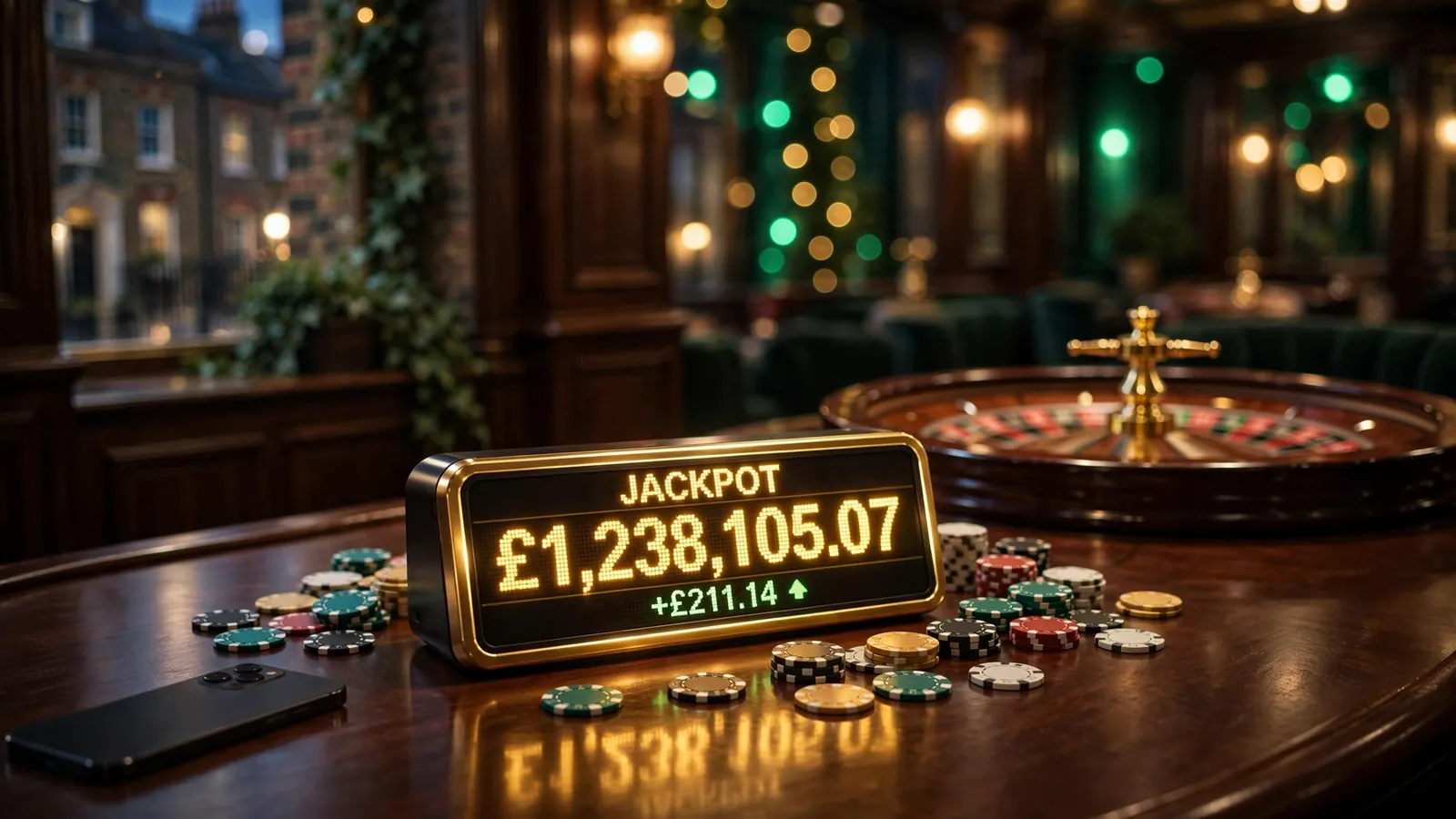
A progressive slot is defined by its jackpot, not by the appearance of its reels or the size of a displayed prize. The jackpot belongs to a pool that grows through play on connected machines. When the same progressive game is available through different operators, those operators can connect players to a shared network pool. The prize is therefore not necessarily built from activity at one casino alone.
That shared structure is the key to the progressive slots meaning. A game can look like an ordinary online slot while its jackpot is linked to a wider group of machines. The word “progressive” describes how the jackpot pool develops across connected play; it does not describe a particular theme, feature or style of graphics.
“Penny” is a different kind of label. In penny slots, it refers to the denomination associated with the game or its stake presentation, rather than to a separate jackpot system. A penny slot is not automatically progressive, and a progressive slot does not become progressive because it is described as a penny game. The two terms answer different questions: one concerns the jackpot structure, the other the denomination or scale of play.
That distinction matters when comparing progressive penny slots online in the UK. A low-denomination label alone says nothing about whether a game is connected to a shared jackpot pool. The progressive feature must belong to the game itself, and the pool may include play from other operators carrying that same title. A penny-style presentation, meanwhile, does not establish how widely the game is connected.
In practical terms, “penny” and “progressive” are not competing categories. One describes a play denomination; the other identifies a jackpot arrangement. Marketing can place both words together, but the label should not blur the difference. Separate ideas.
A progressive jackpot is funded as play happens. A defined portion of each qualifying wager is added to a prize pool, so the amount can grow while the jackpot remains unclaimed. Progressive jackpot slots typically direct between 1% and 3% of each wager to that pool. The rest of the wager is handled under the game’s other rules; the contribution is not a separate bet placed by the player.
That distinction matters when a displayed jackpot looks detached from the spin that appears on screen. The total is not simply a prize attached to one machine. It reflects contributions accumulated through play, and the game’s rules determine which wagers qualify and how a prize is awarded. The amount shown may therefore change as further qualifying play takes place. The mechanism is cumulative, not a promise that any particular spin will produce a payout.
Some progressive jackpots are attached to a single game, while others use a network pool. In a network arrangement, operators carrying the same progressive slot game contribute to a shared jackpot pool. A qualifying wager at one operator can add to the same prize that is displayed to players using that game elsewhere. The pool is connected through the game arrangement; it is not a collection of unrelated jackpots that happen to use similar names.
This can make the jackpot move without a player seeing every contribution that feeds it. The important point is the connection between the game and its pool. A slot title offered at different operators may be linked to the same network jackpot, but that does not mean every slot with a similar theme or provider shares one. The game’s own jackpot information is what establishes the relevant pool.
The trigger is a separate part of the design. Some progressive jackpots are triggered randomly. In those games, a qualifying event can occur without a particular visible winning combination being the cause. Other jackpots require a specific combination, or require entry into a bonus round before the jackpot can be won. These are different routes to the award, even though both can draw from a progressive pool.
A bonus round should not be mistaken for the jackpot itself. It may be the stage at which a jackpot opportunity appears, while the rules of that stage determine whether the prize is awarded. Likewise, seeing a combination on the reels does not establish that it is the jackpot trigger unless the game rules say so. The relevant conditions belong to the individual title, not to the word “progressive”.
From the operator’s side, the contribution and trigger rules have to work together: eligible play feeds the pool, and the game applies its stated award condition. From the player’s side, the visible total is only one part of the mechanism. The less visible part is what counts as eligible play and what event the game recognises as a jackpot win. That is where the wording matters.
A “shared” jackpot does not mean that a player’s stake is pooled with every other game on a site. It refers to a network of the same progressive slot title across operators that carry it. Nor does a growing prize mean that the next spin is closer to triggering it. The pool can increase while the trigger remains governed by the game’s design. Growth and likelihood are separate ideas.
When comparing online slots with progressive jackpots, the useful first distinction is therefore not the size of the displayed prize. It is whether the pool is linked across operators, and whether the jackpot depends on a random trigger, a specified combination or a bonus-round condition. Those details explain how the prize is funded and how it can be won without implying a strategy for making it happen.
The game rules, not the label, settle the mechanics. A large figure on screen can draw attention, but it does not explain which wagers feed the pool or what event awards it. Read the mechanism first. The headline number comes second.
When choosing a progressive slots site in the UK, payout timing is one practical detail to check alongside the games. This list notes the stated withdrawal speed for each operator.
Chanze
Chanze lists a payout speed of 1–3 business days.
Dieselwin
Dieselwin lists a payout speed of 1–3 business days.
SlotoSport
SlotoSport lists a payout speed of 1–3 business days.
Revery Play
Revery Play lists a payout speed of 1–3 business days.
BeOnBet
BeOnBet lists a payout speed of 1–3 business days.
Jetsetspins
Jetsetspins lists a payout speed of 1–3 business days.
NightWin
NightWin lists a payout speed of 1–3 business days.
Zombillion
Zombillion lists a payout speed of 1–3 business days.
Amunbet
Amunbet lists a payout speed of 1–3 business days.
SpinFormula
SpinFormula lists a payout speed of 1–3 business days.
Progressive slots sit within the same regulatory framework as other online casino games; the jackpot format does not create a separate class of operator or regulator. In Great Britain, the UK Gambling Commission is the sole regulator for commercial gambling. Its remit includes remote gambling offered to consumers there, even when the operator’s key equipment is located elsewhere.
That distinction matters when a casino presents itself as serving British players. The location of its servers does not remove the requirement for a relevant UK Gambling Commission operating licence. The Commission grants operating licences to gambling businesses and personal licences to individuals who perform regulated roles. It is the business’s operating licence that forms the central regulatory basis for offering online casino gambling in Great Britain.
The legal geography is not quite identical to the everyday use of “UK”. The Gambling Act 2005 applies in England, Wales and Scotland; Northern Ireland is outside that Act’s scope. So a statement about the Commission’s role in Great Britain should not automatically be extended to every part of the United Kingdom. The distinction is easy to miss in broad market descriptions. It is not a technical footnote.
For someone looking at progressive slots online, regulation concerns the operator and the gambling service, not whether a particular jackpot is local or shared across a network. A game’s availability does not, by itself, establish that the casino offering it is authorised for the relevant market. I separate those checks: the title belongs to the product catalogue; the operating licence belongs to the business.
Licensing
In Great Britain, an operator must hold a relevant UK Gambling Commission operating licence to legally offer online casino gambling.
“UK-regulated” is sometimes used as a broad label in promotional copy. What matters in Great Britain is the Commission’s licensing role and the operator’s status under that framework—not the wording of a banner. The regulator oversees commercial gambling activity, while the licence is issued to the business responsible for providing it. Different jobs. Clear boundary.
This is the useful context for progressive slots in the UK: the jackpot feature may be distinctive, but the market’s regulatory test is not. It begins with the operator’s authorisation and the territory in which the service is being offered.
A progressive title is encountered through a casino’s game catalogue, but a listing is not a permanent fixture. Availability can differ between operators, and providers update their catalogues, so the selection at one casino may not match the selection elsewhere—or remain unchanged over time. A specialist review describes this as a changing, operator-dependent picture; it is more useful to treat any catalogue as a snapshot than as a complete directory.
That distinction matters when a particular game is the reason for opening an account. A title may be present in one operator’s catalogue and absent from another’s. It may also be removed or added as a provider changes what it supplies. A casino’s general claim to offer progressive slots does not establish that it carries every progressive title, or that a named game will remain available.
In practice, the catalogue is the first place to confirm what can be opened at that operator. Searching by a game’s name can be more direct than browsing a broad category, if the site provides that function. A title such as Gladiator: Road to Rome is an example of a progressive game that can be named; its mention alone does not mean it appears in every UK casino catalogue. Availability needs to be checked where the game is actually offered.
I have learned not to read a provider’s portfolio as a promise about a casino’s menu. The provider makes games; the operator’s catalogue reflects what that operator currently carries. Those are related, but not interchangeable, lists. A game’s presence on a provider’s wider portfolio, or in a description elsewhere, does not confirm that it can be played through a specific casino.
The same caution applies to lists labelled “popular” or “featured”. Such labels can describe how a site presents its own selection, not a verified ranking across UK casinos. A featured position is not evidence that a title is available everywhere, nor that it is objectively the most played. The catalogue answers a narrower question: what this operator currently makes available.
When a game cannot be found, there is little value in assuming it is hidden behind a different label. The catalogue may simply not include it, or it may have changed since another page or review described it. Checking the operator’s current listing is more reliable than treating old mentions as live availability.
This is a practical point, not a recommendation to chase a particular title across multiple sites. Catalogue changes make availability a moving detail, and a game name is not a verdict on whether the game suits someone. Separate the two decisions: first establish whether the title is offered; then assess the game on its own terms. A listing confirms access at that point. Nothing more.
A “best” label is only useful when the comparison explains what is being judged. One player may care about a clear interface; another may prefer a particular theme or a less crowded screen. Those are different preferences, not evidence that one progressive slot is objectively superior. I have seen rankings flatten those distinctions into a single order, where the position looks precise but the criteria do the real work.
A more useful comparison starts with the game itself. Is the screen easy to read? Are the controls and bonus information straightforward to find? Does the presentation suit a short session, or does it rely on layered animations and frequent interruptions? These points can be assessed without pretending they predict a jackpot. They describe how a game feels to play, not what it will return.
The rules deserve a separate check. A slot’s paytable and help screen explain its features and conditions; promotional copy is not a substitute. Terms such as “mystery” may sound distinctive, but the label alone does not explain how a feature works. I treat the written rules as the meaningful comparison and the headline language as packaging. Small print matters.
A sensible shortlist can therefore compare like with like:
These are judgement calls, not a scoring system. A table that assigns points to them can create an impression of measurement without making the preferences any less personal.
The word “best” also shifts meaning between searches for the best progressive slots in the UK, the best online titles, or games that work well on mobile. Those phrases can point to different priorities: a familiar theme, a readable layout on a smaller screen, or rules that are easy to follow. They do not establish a shared standard. For mobile play, the practical test is whether the particular game’s screen and controls remain clear on the device in use; a desktop impression cannot settle that.
Nor does a long catalogue settle the question. A specialist review notes that progressive titles can differ between operators and that catalogues change when providers update them. That makes a static “best games” list a poor guide to what is available at a given moment. It is better treated as a snapshot than as a lasting verdict. No permanence there.
I would be wary of rankings that merge unlike qualities into one score, especially when the reasons for each position are not explained. A title can be visually polished and still be a poor personal fit; a simpler game can be easier to understand. Neither observation makes a universal winner. The useful outcome of comparison is a clearer sense of what each game offers in presentation and how its rules are described—not a promise that a ranked position means more chance, more value or a better result.
Assess whether the visual style and setting are appealing or distracting.
Evaluate how readily the rules, symbols, and feature descriptions can be understood.
Check if key information and controls are easy to locate on your screen.
Determine if the game's pace and visual activity suit your preferences.
That distinction keeps the choice grounded. Compare the features that can actually be inspected, decide which matter, and leave “best” as a personal conclusion rather than a claim made on everyone’s behalf.
A progressive jackpot can sit alongside the ordinary slot game, but the jackpot does not necessarily arrive through the same route as a regular line win. The trigger depends on the game’s rules. In one title, a random event may award the jackpot; in another, a particular symbol combination or entry into a bonus round may be required.
That distinction matters because a visible jackpot meter does not tell the whole story. The game’s rules determine what counts as an eligible spin and what event can produce the top prize. A bonus round may be part of that route, but entering it is not the same as winning the jackpot. The conditions are specific to the title.
The practical question is not simply how to win at progressive slots. There is no general sequence of spins or bet pattern that makes a jackpot due. A random trigger is not a signal that a win is approaching, and a combination-based trigger depends on the required result appearing. Neither route turns ordinary play into a reliable method for producing a jackpot.
Some games distinguish between jackpot tiers, and a qualifying bet can matter for access to the highest one. A specialist review describes certain random-trigger progressive games as requiring a minimum bet to qualify for that top tier. That is a game-specific condition, not a rule that can be applied to every progressive slot.
The distinction is easy to miss in a game interface. A player may be able to spin without meeting the condition for the highest tier, while still being eligible for other outcomes. The game’s own rules are therefore the point to check: they should explain whether a bet threshold applies, which tier it affects, and how the jackpot is triggered. A larger stake should not be treated as a general way to improve the chance of a win.
The phrase “must-hit-by” may sound like a promise that a jackpot is close to being won. On its own, though, the label does not explain the game’s trigger conditions or establish that a particular spin is more likely to succeed. Those details have to come from the rules for that specific game. Without them, the phrase is not enough to work out when or how a jackpot can be awarded.
The same limit applies to questions about how often progressive slots hit. The trigger type describes the event that can award a jackpot; it does not, by itself, give a timetable. A random trigger does not mean a predictable schedule, while a required combination or bonus round identifies a condition rather than a frequency.
Online progressive slots work through the same basic distinction: a game’s rules set the route to jackpot eligibility and the event that can award it. There is no universal jackpot mechanism. The details are in the rules.
RTP describes the proportion of stakes a slot is designed to return over extensive play, not the amount a particular player should expect to get back. In progressive slots, the published base-game RTP often sits between 88% and 92%. That figure does not mean a session will return a predictable share of its stakes; short-term results can differ sharply from the model.
The gap is connected to the jackpot. Progressive jackpot slots commonly route 1% to 3% of each wager into the pool, while the base game retains less of the theoretical return. The two figures describe related parts of the game, but they are not a personal forecast or a way to calculate when the jackpot will fall. A lower base-game RTP can indicate that more value is assigned to the jackpot feature, but it does not establish how likely any one spin is to win it.
That distinction matters when comparing progressive slots RTP figures. A stated RTP is not the same as the odds of winning a progressive jackpot. RTP combines the game’s theoretical returns over a large volume of play; jackpot odds concern the chance of a particular outcome or trigger. A game can publish a base-game RTP without making its jackpot probability clear in the same figure. The rules for the jackpot feature are a separate part of the game information.
I have seen players treat a larger advertised pool as if it meant a better chance of winning. It does not, by itself. The pool’s size is the prize available if the relevant condition is met; it is not a measure of how often that condition occurs. The game’s design determines the trigger, while the RTP describes expected returns across its features. Different questions. Different numbers.
Tier access can add another condition. A specialist review has reported that some randomly triggered progressive games reserve the top jackpot tier for wagers meeting a minimum bet requirement. That is a feature-specific term, not a rule that can be assumed across all progressive slots. The game’s own information is where the applicable tier conditions need to be stated.
For a meaningful comparison, RTP should therefore be read alongside the jackpot rules and tier eligibility. A high pool headline does not reveal the base-game return, and the RTP alone does not disclose the odds of winning the top prize. There is no dependable “top” ranking from those figures alone: a ranking would need comparable, current information about both the return model and the jackpot conditions. The numbers answer different questions.
A real-money jackpot win does not necessarily move straight from the game screen to a bank account. The casino has to process the withdrawal, and a large prize may involve additional verification before payment is released. That is a separate stage from the game result: the displayed win and the money reaching an account are not the same event.
A specialist review gives indicative withdrawal times by payment method: e-wallet payments may arrive within hours, debit-card withdrawals can take one to three working days, and bank transfers may take three to five working days or longer. These are reported timeframes, not a guaranteed schedule for every transaction. Payment handling can depend on the method and the operator’s process, so the listed estimate should not be read as a promise that funds will be available by a particular moment.
For a substantial progressive jackpot, the review also notes that the operator may request further checks and that some prizes can be paid in scheduled instalments over several years. The precise arrangement depends on the terms that apply to that game and payout. A headline jackpot figure, therefore, does not necessarily mean that the full amount will arrive as one immediate transfer.
From the operational side, verification is where expectations often need adjusting. A request for more information can extend the path from win to payment; it does not, by itself, change the result recorded by the game. The payment method matters too. A fast e-wallet estimate cannot be applied to a bank transfer, and the longer transfer estimate should not be mistaken for the time needed to complete any checks.
This is why “instant payout” language deserves a close read. It may describe one stage of a transaction, while a jackpot withdrawal can involve separate review and payment steps. The relevant terms are the operator’s withdrawal conditions and the payout rules for the progressive game, not a general claim attached to the game category.
For anyone comparing real-money progressive slots, withdrawal terms are part of the practical picture, but they are not a progressive slots strategy. They cannot improve the chance of a jackpot; they explain what may happen after a win. Keep the distinction clear. A win is one thing. Access to the funds is another.
“Free” covers several different arrangements, and they do not give the same thing. A demo version lets someone try a slot with virtual credits; promotional free spins are issued under an offer’s terms; a no-deposit bonus is promotional credit that may come with conditions on how it can be used or withdrawn. Treating all three as a way to win a progressive jackpot blurs an important distinction.
A free demo can show how a progressive slot looks and plays without staking real money. The balance displayed in the game is for the session; it is not a sum that can be withdrawn. A demo is useful for learning the interface or seeing the bonus features, but it should not be read as evidence that a real-money jackpot is available on the same terms.
Access without a download may simply mean the game runs in a browser rather than requiring separate software. That describes how the game is opened, not whether it is a demo, whether it is available to every account, or whether a displayed prize can be claimed. The important distinction is the mode of play and its terms, not the download button.
I have seen “free” do too much work in promotional copy. It can mean no stake for a particular spin, not a cash prize without conditions. The label is only the start.
Promotional spins are not the same as demo play. They may be limited to named games, and the offer terms determine whether progressive slots are eligible. A specialist review reports that most free-spin offers are restricted to non-progressive games. It also reports caps of £50–£100 on winnings from free spins on progressive slots. Those figures describe what that review reported, not a universal rule across UK casinos.
That distinction matters because a spin can be free while the resulting winnings remain subject to a cap or other conditions. If a promotion excludes progressive games, using its spins on a different slot does not make them eligible for a progressive jackpot. If a game is listed as eligible, the offer’s own terms still decide what can be won and retained.
A no-deposit bonus may provide promotional credit without an initial deposit, but “no deposit” does not mean “no conditions”. A specialist review reports wagering requirements of 40x–60x for such bonuses and maximum withdrawal caps of £50–£100 on winnings. These are reported terms, not fixed limits applying to every offer.
The practical point is to separate the bonus balance from withdrawable cash. Wagering requirements specify how much qualifying play must take place before a withdrawal can be requested; a maximum withdrawal cap can limit the amount retained even after those conditions are met. The offer’s terms also define eligible games and any other restrictions. A progressive title should not be assumed to count towards a bonus requirement, or to let bonus-funded play qualify for its jackpot, unless the terms say so.
A free-play label, then, is not a shortcut to an uncapped progressive prize. Demo credits are not cash, and promotional spins or bonus funds carry the conditions attached to the offer. The wording may be bright. The terms decide the value.
The practical difference between progressive slots and non-progressive slots is not simply whether a prize can grow. It is how the game allocates part of the money wagered. In a progressive game, a share of each stake is directed to the jackpot pool; in a non-progressive game, there is no progressive jackpot contribution being added to a shared prize.
That allocation affects the base game. Progressive jackpot slots commonly send 1% to 3% of each wager to the pool. As a result, the base-game return is often lower than it would be if that contribution stayed within the game’s ordinary payouts. The stated base-game RTP for progressive slots often falls in the 88%–92% range, with the difference going towards the jackpot pool.
I have found that promotional descriptions can make the pool sound like money added on top at no cost to the rest of the game. It is not. The contribution is part of the game’s payout structure, so the jackpot feature and the base game have to be considered together. A growing headline prize does not tell the whole story.
A non-progressive slot has no accumulating jackpot pool funded by a slice of connected wagers. Its payout structure is contained in the game rather than split between ordinary play and a progressive prize. That does not, by itself, establish that one format returns more overall or is a better choice: the relevant comparison is the individual game’s terms, not the label alone.
For online casino progressive slots in the UK, the distinction is therefore about where a portion of the stake is assigned. Progressive means part of the allocation supports a prize that can grow; non-progressive means there is no such contribution. The trade-off is structural. No extra money appears from nowhere.
They may suit players attracted to a growing jackpot, but the base-game RTP is often 88%–92%, with 1%–3% of each qualifying wager typically going to the jackpot pool. The growing prize does not mean a jackpot is more likely on the next spin.
No. Availability varies by operator and changes as providers update their catalogues. The same progressive title may connect players at different operators to a shared jackpot pool.
Check the game’s jackpot rules: how the pool is funded, whether the trigger is random or requires a combination or bonus round, and whether a minimum bet is needed for the highest jackpot tier. The base-game RTP is also worth checking.
E-wallet withdrawals can take hours, debit card withdrawals typically take 1–3 working days, and bank transfers often take 3–5 working days or longer. Large jackpot payouts may require extra verification and can be paid in structured instalments over several years.