Payment options differ in availability and offer eligibility, but none changes the rules that apply to deposits at UK-licensed casinos.
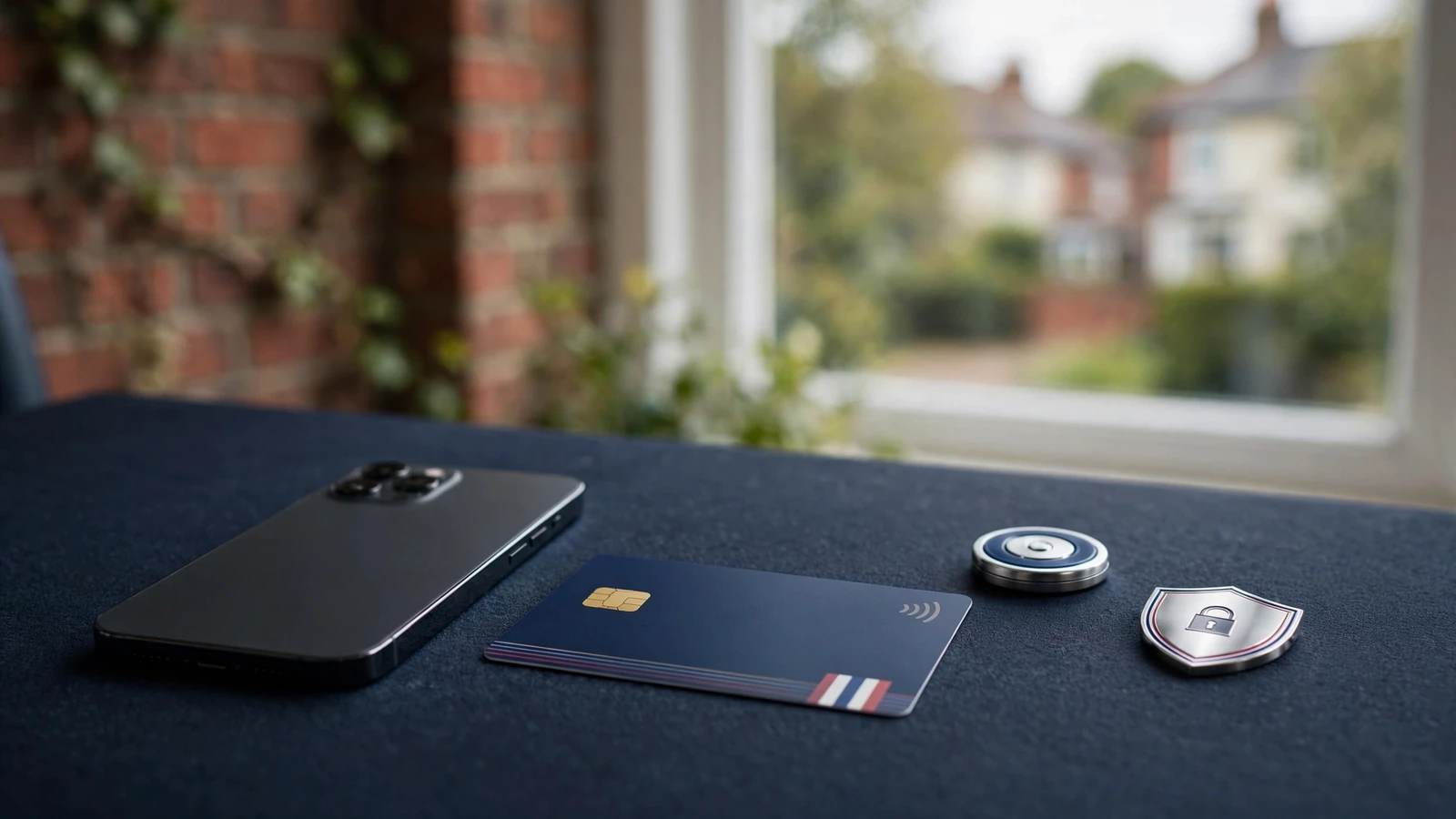
Before comparing online casino payment methods in the UK, it helps to separate the rules that apply across licensed operators from the features of any particular deposit method. A casino can present several routes at checkout, but none changes the basic requirements: the operator must verify age before accepting a deposit, and it cannot accept credit-card payments for gambling.
That restriction covers credit-card funding routed through a money service business as well as a direct card payment. The route may look different on a payment screen, but the underlying source of funds still matters. UK-licensed remote gambling operators cannot use an intermediary to make a prohibited credit-card gambling payment acceptable.
This is why a list of the best online casino payment methods for 2026 cannot be judged only by how familiar a brand looks or how many buttons appear at checkout. The relevant starting point is whether the casino is operating within the UK licensing system and whether its deposit process follows the rules. A payment label is not a regulatory shortcut.
Choosing a casino payment method means weighing how you deposit against how quickly you can withdraw. This guide highlights the payout-speed information available to help you assess your options.
Chanze
Chanze lists a payout speed of 1–3 business days, a useful detail when planning withdrawals.
Dieselwin
Dieselwin lists a payout speed of 1–3 business days, giving readers a timeframe to consider for withdrawals.
SlotoSport
SlotoSport lists a payout speed of 1–3 business days. This provides a stated timeframe for its payouts.
Revery Play
Revery Play lists a payout speed of 1–3 business days, which can help set expectations for withdrawals.
BeOnBet
BeOnBet lists a payout speed of 1–3 business days. That is the available payout detail to consider.
Jetsetspins
Jetsetspins lists a payout speed of 1–3 business days, offering a stated timeframe for withdrawals.
NightWin
NightWin lists a payout speed of 1–3 business days, a relevant detail for readers considering payout timing.
Zombillion
Zombillion lists a payout speed of 1–3 business days. This gives readers a stated timeframe for payouts.
Amunbet
Amunbet lists a payout speed of 1–3 business days, which is useful to note when considering withdrawals.
SpinFormula
SpinFormula lists a payout speed of 1–3 business days. This is the available detail about its payout timing.
Age checks come before the first deposit, not after a customer has started playing. Operators must verify that a customer is old enough to gamble before allowing funds into a gambling account. In the UK, the legal age for online gambling at a properly licensed casino is 18. The check is part of account access, rather than an optional extra attached to one particular deposit method.
From the operator’s side, this can make the first payment feel less immediate than a checkout elsewhere. That is deliberate. A deposit is not supposed to be the point at which age verification begins; the account must pass the required check first. A payment method may be available in principle, but it cannot override a restriction on the account.
The same principle applies to credit cards. A payment route is not acceptable simply because it passes through another service or appears under a different name in the cashier. The rule follows the funding source and its use for gambling. In practice, that means the choice of deposit method begins only after the customer’s age has been verified and excludes credit-card gambling payments.
I have seen the cashier treated as if it were a neutral menu. It is not. It sits inside the operator’s compliance process, so the options shown must fit the account and the rules. A familiar payment name does not prove that the operator is licensed, and an available button does not make every use of that route permissible.
The welcome offer is another separate layer. A deposit method can work for funding an account without qualifying for a promotion attached to that account. A specialist review of casino offers has described welcome deals as being restricted to new customers, limited to one per household, and potentially excluding some deposit methods, including e-wallets. Those terms are offer-specific, not part of the general credit-card or age-verification rules.
That distinction matters when a page advertises several deposit routes alongside a welcome bonus. The payment route answers how funds may reach an account; the offer terms determine whether a qualifying deposit through that route triggers the promotion. Neither should be read as a promise about the other.
So the baseline is narrower than a comparison of brands: age must be verified before deposits are permitted, credit cards cannot fund gambling, and payment options operate within the operator’s licensing obligations. The details of individual methods can be assessed after that foundation is clear. No cashier overrides it.
“Mobile payment” can describe two different things. It may mean making a deposit from a phone, using a deposit method also available on a computer. Or it may mean charging a payment to a mobile account. Those are not interchangeable descriptions. The first concerns the device used to reach the casino; the second concerns how money is routed. I keep that distinction clear because the screen can change while the underlying payment method does not.
A casino’s mobile site or app is an interface to the gambling account, not a separate set of rules. A deposit made on a phone is still a deposit into that account. It does not become a different kind of transaction because the casino has a compact layout, a saved login or a button designed for touchscreens. Nor does a phone turn an unavailable deposit method into an available one. The operator’s accepted routes and the terms attached to them remain the relevant details.
This matters when a page uses broad phrases such as “mobile casino payments”. The wording may describe the convenience of reaching a cashier on a handset, rather than identify a particular payment rail. In practical terms, the process still has distinct parts: the customer signs in, selects an available deposit route, enters or confirms the required details, and the account is credited if the transaction is accepted. The phone is the access point. It is not evidence of how the funds are being transferred.
I have found that this separation helps make sense of claims about a casino with mobile payment. The phrase alone does not tell whether the casino accepts a particular method, whether the method is compatible with the customer’s account, or whether it has conditions attached. Those points belong to the operator’s cashier information and the terms for the specific route. The mobile interface can make those details less prominent, especially where the screen is small, so the account and transaction information deserves the same attention as it would on a desktop.
The rules around opening and funding an account also apply on mobile. Operators must verify a customer’s age before allowing a deposit into a gambling account. Online gambling in the UK is for adults aged 18 and over at sites holding the relevant UK Gambling Commission licence. A phone does not create an exception to that requirement, and a quick registration flow does not remove the need for verification.
There is also a required step before a new customer’s first deposit: the operator must prompt them to set a financial limit. The account must also provide accessible controls for setting limits. This is different from a limit imposed by a bank, card issuer or other payment provider. It is an account-level control concerning gambling activity, so it remains relevant regardless of which device is used to reach the account or which permitted deposit route is selected.
On a phone, that prompt and those controls should be understood as part of the account experience, not as optional features of a particular mobile payment method. A customer might deposit through a route that is familiar from other online purchases, but the gambling account still has its own responsible-gambling settings. The distinction is operational: one set of details concerns moving money into the account; another concerns managing play within it. They should not be confused simply because both appear in the same mobile interface.
The same logic applies to mobile slots. Playing a slot on a handset does not change the rules that apply to the game. In Britain, online slot autoplay is banned, and each online slot spin must last at least two and a half seconds. The maximum stake per game cycle is £2 for customers aged 18 to 24 and £5 for customers aged 25 or older. These are rules about online slots, not features of a particular phone or deposit method. A smaller screen does not alter them.
Slot Rules
In Britain, online slot autoplay is banned, and each spin must last at least two and a half seconds. Maximum stakes are £2 for customers aged 18–24 and £5 for those 25 or older.
That is the point often obscured by the language of “mobile-first” convenience. A handset can make an account easier to reach, but it does not replace the checks, limits or game rules that apply to the account. I treat the mobile experience and the payment route as separate questions: what can be done through the interface, and what method actually funds the account. Different questions. Same account.
Paysafecard and SMS billing describe different ways to fund an account. Paysafecard is a prepaid option; an SMS-billed deposit places the charge through a mobile-phone billing route. Those labels explain something about how a deposit is made. They do not, by themselves, establish what the casino will allow afterwards.
That distinction matters because a deposit method is only one part of the account arrangement. The casino sets the terms for deposits, play, withdrawals and promotions. A prepaid label cannot tell me whether a particular account can withdraw by the same route, whether a bonus is available, or what checks may apply before funds can be released. Those details belong in the operator’s terms and account information.
A prepaid method may appeal to someone who wants to keep a deposit separate from a direct card transaction. But “prepaid” is not the same as anonymous, risk-free or accepted everywhere. It does not establish what information the operator requires, how it records account activity, or whether the casino is properly licensed. Nor does the method’s name tell me how a casino handles a withdrawal.
The same caution applies to claims of privacy or convenience. Those words describe a selling point, not a complete account policy. Before treating a Paysafecard deposit as suitable, the relevant questions are practical: is the method available at that casino, are there conditions attached to using it, and what does the casino say about withdrawals and verification? The deposit route answers only part of the picture.
A Visa debit deposit is a different category from a prepaid voucher or phone-billed charge. Comparing the labels does not establish which option a casino accepts or which will suit a particular account. Availability and conditions have to be checked with the operator.
SMS billing can sound like a small detail of the mobile experience, but it refers to the route by which the charge is made, not simply to using a phone to visit a casino. The device and the deposit method are separate things. A casino accessed on a mobile browser may offer several deposit routes; a phone-billed option does not make every mobile casino deposit an SMS payment.
The name of a billing route also cannot settle what happens beyond the deposit. It does not establish the operator’s rules for withdrawing, account checks, or promotional eligibility. Those conditions may be different from the mechanics of placing the deposit. The distinction is easy to miss when a payment option is presented as a neat button at the cashier.
A deposit going through successfully does not necessarily mean that it qualifies for a welcome bonus. The promotion has its own conditions, and the operator can define which deposit methods are eligible. A specialist review of welcome deals reports that offers may be restricted to new customers, limited to one per household, and exclude some methods, including e-wallets. That is a reason to check the individual offer, not to assume that every prepaid or phone-billed deposit is included or excluded.
The method’s label does not decide the answer. Paysafecard being prepaid does not automatically make it eligible; an SMS-billed deposit is not automatically disqualified. Only the offer terms can say whether a particular route counts, whether a qualifying deposit is needed, and whether an opt-in step applies.
This is where promotional wording can do more work than the cashier screen. The cashier shows routes that may be available for a deposit. The offer rules determine whether using one of those routes meets the promotion’s conditions. They are related, but not interchangeable.
I treat the deposit method as a description of the transaction, not a promise about the whole account. That keeps the decision grounded: check the casino’s stated payment conditions separately from the welcome offer, and do not infer account privacy, withdrawal options or bonus eligibility from a payment brand alone. The label is only the label.
Apple Pay and Google Pay are digital wallets, but that label does not settle whether a UK-licensed casino can accept a deposit through them. The key question is how the wallet can be funded and whether credit-card funds can be used for gambling. British rules bar remote gambling operators from accepting credit-card payments for gambling, including when the payment is routed through a money service business. They also cannot accept wallet payments where the wallet allows credit-card funds to be used for gambling.
That is a restriction on a particular funding route, not a blanket ban on digital wallets. I would not read “Apple Pay accepted” or “Google Pay accepted” as proof that every card linked to the wallet is usable at the casino. Nor does the rule mean that every wallet transaction is automatically prohibited. The operator must not accept the wallet payment if its functionality allows credit-card funds to reach gambling.
The distinction can be easy to miss because a wallet can sit between the customer’s device, a card or other funding source, and the casino’s checkout. The screen may show a single wallet button, while the underlying funding route is not obvious from that label. From the operator’s side, the payment setup has to prevent a prohibited credit-card gambling payment; presenting a wallet as a convenient checkout option does not remove that responsibility.
This is why the answer to “Can Apple Pay be used at an online casino in the UK?” depends on the casino’s actual payment arrangement, not merely the brand name. The same applies to Google Pay. A casino may list one wallet and not the other, and an option shown in a cashier does not establish that all linked funding sources are accepted. Availability can also differ between operators. There is no general rule that every UK casino must offer either wallet.
The practical boundary is narrow but important: a digital wallet is not prohibited simply for being digital, while a wallet route that lets credit-card funds be used for gambling cannot be accepted by a UK-licensed operator. Where the funding source is unclear, the wallet name alone cannot resolve the question. The payment terms or cashier details need to explain what funding routes the operator accepts.
I have seen payment labels do more work in a checkout than they do in the rules. “Wallet” describes the interface; it does not necessarily tell the whole story about the source of funds. The legal test is tied to credit-card use for gambling, not to whether a payment is made on a phone or through a familiar wallet brand. Different mechanism. Same boundary.
This also means the restriction should not be stretched into a claim that Apple Pay or Google Pay is illegal for casino deposits in every circumstance. The rule addresses wallet payments where credit-card funds can be used for gambling. It does not turn every digital-wallet payment into a credit-card payment, and it does not require casinos to offer these wallets. The operator’s configuration and the funding route matter.
A deposit method and a welcome bonus are separate parts of a casino account. The method moves money into the account; the offer’s terms decide whether that deposit qualifies for a promotion. I have seen the distinction get lost in “deposit now” messaging, where the button is clear but the eligibility rule sits in the terms.
A specialist review reports that some welcome deals are restricted to new customers, limited to one per household, or unavailable when a particular deposit method is used, including some e-wallets. Those are terms to verify for the specific offer, not a rule that applies to every casino. A payment option appearing in the cashier does not prove that it qualifies for the welcome bonus.
That matters across online casino payment options in the UK. A debit-card deposit, an e-wallet transfer or another listed route may be accepted for ordinary funding while being excluded from a promotion. Conversely, an offer may specify a qualifying deposit route or require a particular action during registration or payment. The operator’s terms are the deciding document.
I treat the offer as a separate transaction with its own conditions. Its value depends on what is awarded, who is eligible, the deposit that qualifies, which games count towards wagering, when the reward expires and what must happen before winnings can be withdrawn. A headline amount leaves most of that unanswered.
The figures can change the practical value sharply. Under the Great Britain licensing rules, wagering requirements on bonus funds cannot exceed ten times the bonus amount. So a £20 bonus at that maximum would require £200 in total stakes before the wagering condition is met. That calculation does not establish whether a deposit qualifies, or whether every game contributes equally.
The same care applies to free spins and other rewards. A qualifying deposit may be required before spins are credited, and some offers require a promotional code while others apply automatically. A specialist review also reports that bonus funds and free spins can have set expiry periods, and that some free-spin winnings may carry a withdrawal cap. These details belong to the offer, not to the deposit rail.
When comparing casino payment options, the useful question is therefore not simply which route is available. It is whether the chosen route is accepted for the offer, whether an opt-in or code is required, and whether the deposit meets the stated conditions. The best payment option for an online casino is the one that suits the account’s funding needs without accidentally disqualifying a promotion that was intended to be claimed.
I would check the cashier and the welcome bonus terms together before depositing, then keep the wording that applied at the time. If the terms are unclear, the operator’s support team can confirm whether a specific deposit method qualifies. A bonus label is not a payment promise. It is a contract with conditions.
Trustly is a name that may appear among a casino’s deposit methods, associated with the bank-payment category. That label describes a route for funding an account; it does not describe the operator’s regulatory status. The distinction matters because payment branding can look like a trust signal when it is only a description of how a transaction is arranged.
I have seen those two ideas run together in casino copy. A recognisable deposit option can make the surrounding service feel established, but the presence of Trustly does not show that the casino holds the licence required to serve customers in Great Britain. Nor does the absence of the name tell anything conclusive about the operator. The payment choice and the operator’s permission to offer gambling are separate checks.
For a Trustly casino payment, the useful question is therefore narrow: is this route listed by the particular casino, and what does that casino’s own payment information say about its use? Availability can differ between operators. A name appearing on one site is not evidence that it will appear on another, and it says nothing by itself about processing times, withdrawal arrangements or guarantees. Those details need to be stated by the operator and checked in its terms.
The licence check is independent. Remote operators offering real-money gambling to customers in Great Britain must hold the relevant UK Gambling Commission licence. Before depositing, the operator’s licence number should be checked against the Commission’s public register. A deposit page, a polished interface or a familiar payment name cannot substitute for that check.
There is also a practical distinction between a payment provider’s role and the casino’s obligations. The casino remains responsible for operating under its licence and for the account it provides. If a transaction is disputed, the existence of a branded payment route does not replace the licensee’s internal complaints process or access to approved Alternative Dispute Resolution. Those protections attach to the licensed operator, not to the mere appearance of a name at checkout.
I treat “bank payment” as a category label, not a verdict. It may help identify the sort of deposit route being offered, but it cannot establish that the casino is safe, licensed or suitable. The same principle applies to Trustly casinos in the UK: check the operator, then assess the payment terms separately. A familiar name is not a licence.
Neteller is an e-wallet deposit method, but its presence in a casino’s cashier does not establish that a Neteller deposit qualifies for a welcome offer. Those are separate decisions: the cashier describes a route for moving funds, while the promotion’s terms define which deposits count towards its conditions.
That distinction is easy to miss. A deposit may be accepted into an account while remaining ineligible for a particular offer. The result can be a valid cash balance without the advertised welcome bonus being attached. From the operator’s side, the eligibility wording determines which transactions trigger a promotion; from the player’s side, the payment logo alone cannot answer that question.
A deposit may be accepted into an account while remaining ineligible for a particular offer. This can result in a valid cash balance without the advertised welcome bonus.
A specialist review has described welcome deals as restricted to new customers, sometimes with a one-per-household condition, and noted that e-wallets can be excluded. That is a report about offers covered by that review, not a rule applying to every UK casino or every promotion. Neteller’s treatment needs to be checked in the current terms for the specific offer.
The useful wording is often found under qualifying deposits, excluded methods or bonus eligibility rather than beside the Neteller button. It may distinguish between making a deposit and making a deposit that counts for the promotion. If Neteller is listed among excluded methods, choosing it can mean the deposit does not qualify, even when the transaction itself is accepted. If the terms do not make the position clear, the promotion should not be treated as confirmed merely because Neteller appears in the cashier.
The same care applies when comparing e-wallet casino payment methods. A method’s availability is account- and operator-specific; a list of online casino deposit and withdrawal methods does not, by itself, prove that each route can be used for both functions or that each qualifies for a bonus. Neteller’s role in a casino account should therefore be read from the cashier and the relevant terms, not inferred from its name.
I apply the same distinction to questions about a Revolut casino payment: the brand or account label does not settle whether a casino accepts that route, or whether a welcome offer counts it. The terms decide. Check before depositing. No assumptions.
PayPal may appear among the deposit options at an online casino, but its presence in a cashier does not make it a universal option. The list is specific to the operator and can differ between casinos. A casino with PayPal payment available is simply one where the route is offered; the label alone says nothing about whether a particular transaction will be accepted or how it will be handled.
I separate that question from the welcome bonus. A deposit method and a promotion are related only where the offer’s terms make them so. A PayPal deposit might be accepted as a deposit while not qualifying for a welcome bonus. Conversely, eligibility cannot be inferred merely because PayPal appears beside the offer or in the cashier. The terms decide. Read the qualifying-deposit conditions before opting in or depositing.
A specialist review reports that welcome deals may be restricted to new customers, limited to one per household, and exclude some deposit methods, including e-wallets. That is a description of offer conditions, not a rule that every casino applies in the same way. The operator’s own terms are the relevant check for an individual offer.
This distinction matters because payment branding is often presented as a simple convenience feature. In practice, it answers a narrow question: is this route listed for deposits? It does not establish that the route is eligible for a promotion, nor does it promise a particular deposit or withdrawal experience. I have seen those questions blurred together in casino copy. They are not the same.
For PayPal casinos in the UK, the useful comparison is therefore not just whether the name appears. It is whether the casino offers it for the intended transaction and whether the welcome bonus terms include deposits made that way. If the conditions are unclear, the offer should not be treated as eligible by assumption. Check the wording before committing funds.
A payment option is not a promotion term.
Boku is the phone-billed route in this group of casino deposit methods. The defining feature is the billing channel: a deposit is associated with a mobile account rather than being made through a bank transfer or a card payment entered directly at the casino. That is different from simply opening a casino on a phone. A mobile device is only the point of access; phone billing describes how the deposit is charged.
I have seen those two ideas blurred in payment descriptions. “Mobile deposit” can mean that a customer uses a phone to reach a bank, wallet or card service. It does not, by itself, mean the amount appears on a phone bill. With Boku, the relevant question is whether the casino presents phone billing as an available deposit route and explains how the charge is handled.
The label does not settle every practical detail. It does not establish whether a particular casino accepts Boku, what transaction conditions apply, or whether the route can be used for a withdrawal. Those points belong to the operator’s cashier information and terms. A method name is not a service guarantee.
Nor does phone billing create an exception to UK gambling rules. A UK-licensed casino must verify a customer’s age before allowing a deposit. It cannot accept credit-card payments for gambling, including credit-card funding routed through a money service business. Phone billing should not be treated as a way around that restriction; the operator remains responsible for applying the rules to the deposit route it offers.
I would also keep the casino’s licence separate from the payment brand. Seeing Boku in a cashier tells nothing on its own about whether the operator is authorised to serve customers in Great Britain. The deposit route and the operator’s regulatory status answer different questions.
In short, Boku describes a billing mechanism, not the whole mobile experience and not a judgement on the casino. Check the operator’s terms for the route’s conditions, and assess the casino independently. Different questions.
“Fast” describes a claimed feature of a transaction, not proof that the casino is dependable. A payment brand may indicate which route is used to move funds, but it cannot establish how quickly a particular deposit or withdrawal will be handled. That depends on the operator’s process as well as the route. I learned to separate the two: a familiar name on a cashier page is not a service guarantee.
The same distinction applies to safety. A recognised deposit method does not show whether the gambling business holds the required UK licence, handles complaints properly or provides tools for managing play. Nor does a reassuring label such as “secure” answer those questions. It describes a claim about the payment experience; it is not a substitute for checking the operator.
There is no universal safest casino payment method that can make an unlicensed site trustworthy. For payment methods at online casinos, the useful question is narrower: what does the method do, and what protections belong to the operator rather than the payment brand? That boundary is easy to miss when a cashier presents every option as part of one polished process.
Before depositing, I check the operator’s licence number against the UK Gambling Commission’s public register. A casino serving British customers for real-money gambling must hold the relevant UKGC licence. The register check matters more than the familiarity of a logo.
Licensed operators must also provide an internal complaints process and access to an approved Alternative Dispute Resolution service if a complaint remains unresolved. They must make responsible-gambling tools available, including self-exclusion. These are operator obligations, not features supplied by a card, wallet or bank route.
Fast casino payment methods may be useful when the operator’s processing supports them. But speed and safety are separate questions. Check the licence first. Then check the protections.