Cashier acceptance is only one part of paying by debit card; deposits, withdrawals, card checks and account limits can also affect the process.
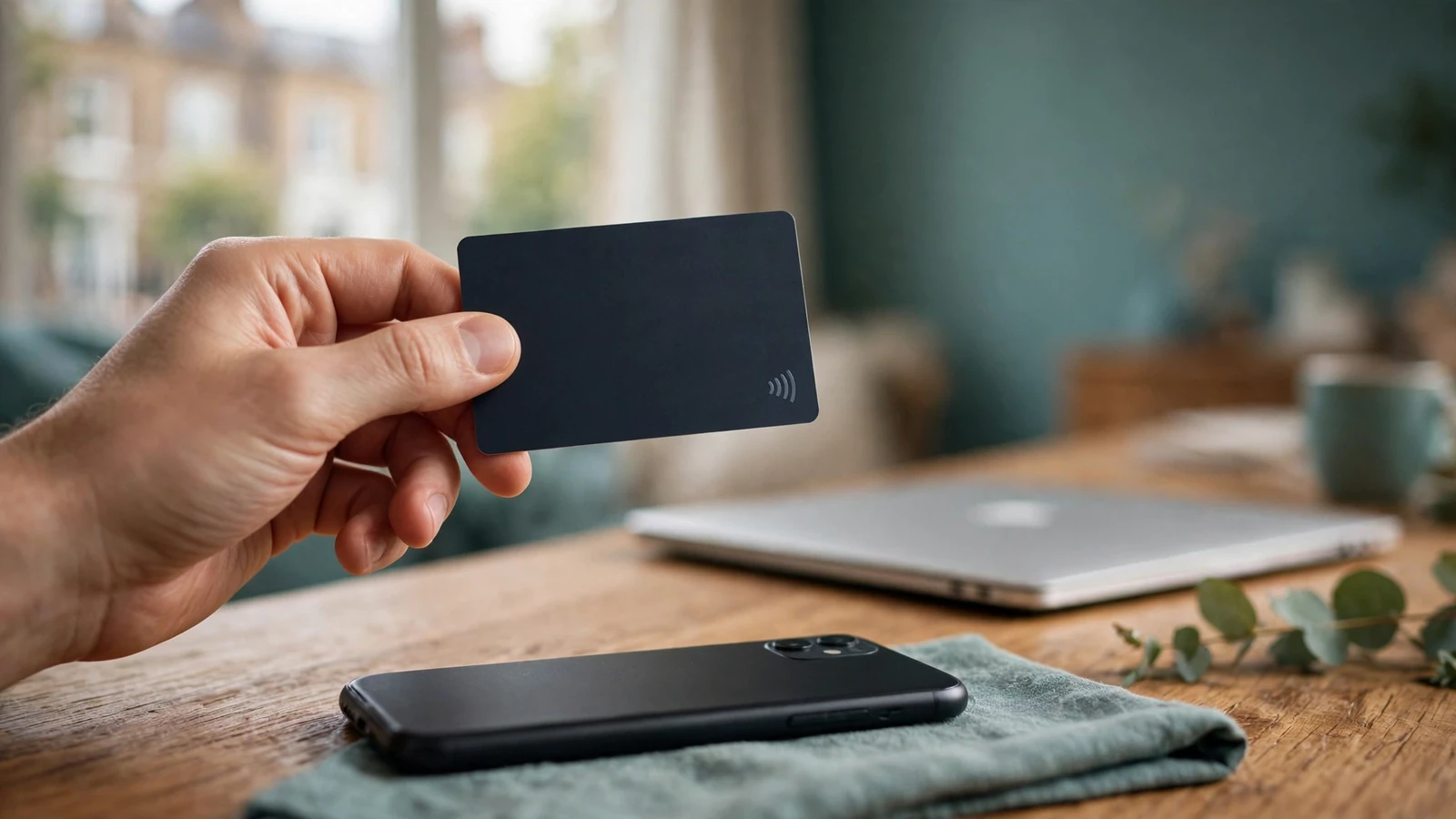
Debit cards sit within the ordinary payment set-up at UK casinos. Visa and Mastercard debit cards are commonly accepted, so a card linked to a bank account is a familiar way to fund a casino balance. That does not make every card payment identical, or every card product interchangeable. It means debit cards are a regular part of the market’s payment infrastructure, alongside other routes that may appear in an operator’s cashier.
The basic distinction is where the money comes from. A debit-card payment draws on funds associated with the cardholder’s bank account; it is not a request to borrow against a credit facility. At the casino end, the payment is recorded as a card transaction, but the customer is using a debit product. That difference matters in the UK because credit-card payments for gambling are prohibited. The ban took effect on 14 April 2020 and remains in force. A card’s familiar brand name does not, by itself, make its underlying payment type irrelevant.
When choosing a UK casino site that accepts debit cards, check the payment details as well as the games and terms. The payout information below gives one practical point to consider.
Chanze
Chanze lists a payout speed of 1–3 business days.
Dieselwin
Dieselwin lists a payout speed of 1–3 business days.
SlotoSport
SlotoSport lists a payout speed of 1–3 business days.
Revery Play
Revery Play lists a payout speed of 1–3 business days.
BeOnBet
BeOnBet lists a payout speed of 1–3 business days.
Jetsetspins
Jetsetspins lists a payout speed of 1–3 business days.
NightWin
NightWin lists a payout speed of 1–3 business days.
Zombillion
Zombillion lists a payout speed of 1–3 business days.
Amunbet
Amunbet lists a payout speed of 1–3 business days.
SpinFormula
SpinFormula lists a payout speed of 1–3 business days.
In practice, a casino account has a balance, and a deposit is the step that moves funds into it for gambling. The card is one possible route for making that deposit. This is different from treating the card as a casino account in its own right: it is a means of payment, not a separate place where winnings or an operator’s obligations are held. The payment route shapes how money enters the account, while the casino balance is the amount available within the gambling service.
That distinction is easy to lose in promotional language. “Card accepted” sounds like a complete answer, but it only describes a broad payment category. It does not explain whether a particular card product is supported at a given moment, nor does it make all transaction stages equivalent. The cashier is where an operator presents the payment choices for its service. The list may include cards and other methods, but the presence of one route does not imply that another route works in the same way.
I have seen payment copy flatten these differences into a single reassuring phrase. It tends to make the choice sound universal, when the underlying arrangements belong to separate systems: the casino account, the card network and the bank account connected to the card. Each has its own role.
A debit-card deposit also should not be confused with a bank transfer merely because both may ultimately involve a bank account. The customer initiates them differently, and the casino identifies them as different payment routes. Nor is an e-wallet itself a debit card, even if an account with that service can be funded through a card. Payment labels describe the route used at the cashier; they do not necessarily describe every institution involved behind the transaction.
The same care applies to the word “casino”. For real-money gambling offered to customers in Great Britain, the remote gambling operator must hold the relevant UK Gambling Commission licence. A payment method does not confer that status. A site accepting a familiar debit card is not thereby shown to be authorised for the British market; licensing and payment acceptance are separate questions. That is an operational distinction, not a technicality.
I would therefore read debit-card availability as a useful starting point, not as a verdict on the whole payment arrangement. Visa and Mastercard debit products are common in the sector, while the specific options and their presentation belong to each operator’s cashier. The wider system includes payment routes with different structures, but naming a route does not establish that it is suitable for every customer or available for every account. Those details sit at the transaction level.
For a reader trying to understand the landscape, the central point is that an online casino with debit-card deposits is not a special category of gambling service. It is a casino whose payment set-up includes a common bank-card route. The card is not credit, and UK rules bar credit-card payments for gambling. Beyond that foundation, the cashier’s current payment menu is the practical record of what the operator offers. General acceptance is real; it is not a promise that every card will be treated identically.
A casino’s payment page can name Visa and Mastercard without confirming that every debit card carrying either logo will work. The practical test is the cashier’s current list of available methods, followed by whether the particular card product can be selected and used. Brand recognition is only the starting point.
I have seen payment descriptions treated as if they were guarantees. They are not. A page may describe a method the operator supports while the cashier applies the live conditions for that account, location or card product. The gap is important: a general statement about Visa or Mastercard does not establish that a specific debit card is eligible at that moment.
A specialist review may list Visa and Mastercard for a casino, but that description is not a substitute for checking the operator’s cashier. Availability can change, and the cashier is where the current options are shown. The relevant question is not simply whether the site accepts debit cards; it is whether the available card option matches the product being used.
The cashier usually presents the payment methods available to the account. Before starting a transaction, the method name and any accompanying terms should be read together. If a card option is absent, a general reference to Visa or Mastercard elsewhere on the site does not make it available through that account’s cashier.
Where a card method is listed, the next check is whether the card is actually a debit product on the relevant network. A logo alone does not settle that point. Nor does a search result, a review page, or an old description on the casino’s website. Those sources can help identify what to look for, but the current cashier listing is the operational check.
The cashier is also where an operator may present conditions that are specific to the transaction. Those details should be read before confirming a payment rather than inferred from the name of the payment method. If the interface does not make the card’s eligibility clear, the operator’s support team can clarify whether that particular product is supported. A generic answer that “Visa is accepted” may still leave the product-level question unresolved.
That distinction avoids a common mistake: treating network acceptance as universal acceptance. Payment processing has more than one point of decision. The casino may offer a card route, while the issuing bank or the card product’s own settings affect whether a payment is authorised. A failed attempt therefore does not, by itself, show that the casino rejects all debit cards or that the card network is unsupported. It shows that the transaction did not complete; the reason needs to be established rather than guessed.
A separate check concerns ownership. Casino account information and the payment route should belong to the same customer. When those details align, basic ownership mismatches are less likely to create avoidable friction. If the account is registered under one person’s details but the card belongs to someone else, the payment may raise a question that a matching card would not.
This is not a way to make an unsupported card eligible. It is a way to avoid adding a preventable identity discrepancy to the compatibility check. The account name and the payment details should be accurate and consistent, and any difference should be resolved with the operator before attempting a deposit. Entering altered details to make a card appear to match would create a more serious problem, not solve the original one.
I would separate three checks on the cashier screen: whether the card method is currently offered, whether the specific debit product fits that option, and whether the payment belongs to the account holder. They answer different questions. A positive answer to one does not automatically settle the others.
If the cashier lists Visa or Mastercard but does not identify which card products it supports, the sensible step is to pause and ask the operator a precise question: is this debit product accepted for this account? The network name alone is not precise enough. If the method is missing, asking whether it is currently available is more useful than relying on a broad statement that the casino accepts cards.
The same discipline applies after a declined transaction. Repeating the attempt without knowing why it failed can leave the actual issue untouched. The operator can confirm whether the payment route is available; the card issuer can explain an authorisation decision on its side. Neither explanation should be assumed from the logo displayed in the cashier.
Acceptance is therefore a current, account-level and product-level check, not a permanent promise attached to a brand. The cashier gives the clearest indication of what the casino is offering at the time, while matching ownership details helps keep the transaction internally consistent. Logos are a clue. The live option is the test.
A payment method can look attractive for one reason and prove less suitable for another. In casino payment decisions, the useful comparison is not a league table of cards and wallets; it is whether a route fits the transaction, the promotion terms and the costs attached to it. A debit card may be familiar, while an e-wallet may be presented as quicker. Neither label settles the question on its own.
I separate the comparison into three parts: how the route moves money, whether it qualifies for an offer, and what it costs from end to end. Operators’ payment pages often give only part of that picture. A cashier may show the available routes, while the promotion terms and payment-provider conditions contain separate restrictions. The detail is where the decision sits.
PayPal is often described in specialist casino reviews as a convenient, quick route. That description can matter when the aim is to move money without entering card details at the casino each time. But speed is not a complete measure of usefulness, and a fast payment route does not automatically qualify for a welcome offer or another promotion.
The same reviews note that PayPal can be excluded from bonus eligibility. That is a conditional point, not a rule that applies to every offer or operator. The promotion’s terms determine which payment methods qualify. A deposit made through a convenient route may therefore be treated differently from one made through another method, even when the amount and timing are otherwise the same.
Open banking and bank transfers also appear in discussions of faster payments. A specialist review may describe them as supporting prompt deposits or withdrawals at particular sites, but that is not a reason to assume identical performance across operators. The route, the operator’s process and the provider’s handling all matter. A payment label is not a timing guarantee.
Debit cards have a different practical appeal: they connect the casino transaction to a bank account rather than a separate wallet balance. That can make the source of funds straightforward to recognise. It does not establish that a card route is faster, cheaper or more promotion-friendly in every case. Those are separate conditions to check.
A bonus can make a payment route appear preferable, but only if the route is eligible and the offer itself suits the account. Specialist reviews report that Skrill and Neteller are available at some casino sites and are often excluded from promotions. Availability and bonus eligibility are distinct questions: a wallet can be listed in the cashier while still being left out of a particular offer.
That distinction applies more widely. The terms for a promotion may name excluded methods, set conditions for deposits, or specify what happens when an ineligible route is used. A headline offer does not establish that every cashier method qualifies. I would treat the payment section of the terms as part of the price of choosing the route, not as small print to examine after making a deposit.
Where the offer is not relevant, the comparison changes. A method’s value may then rest on convenience, cost or its role in managing money. Where a promotion matters, eligibility can outweigh a minor difference in ease of use. There is no single route that wins both tests by default.
The amount shown at the cashier may not capture the full cost of a transaction. A specialist review of payment routes points to several possible sources of charges: the casino, the payment provider, the card issuer or bank, currency conversion and, for some routes, network costs. Which ones apply depends on the route and the transaction.
A fee displayed beside a payment option is only one part of the calculation. Currency conversion can involve a spread in the exchange rate rather than a clearly itemised charge, so a route with no obvious flat fee is not automatically the least expensive. Provider or bank terms may also affect the final amount. The comparison has to use the same transaction amount and currency to be meaningful.
For a debit card, the relevant questions include whether the casino applies a charge and whether the issuer or currency conversion adds another cost. For an e-wallet, provider charges may matter; for a bank route, the provider’s terms and any conversion may be relevant. The point is not that one category always costs more. It is that the cost can sit in different places.
A specialist payment review makes the practical conclusion clear: costs have to be checked against the actual route and amount, rather than assigned to a universal cheapest method. The visible cashier fee, if there is one, is not the whole comparison. Small distinction. Real money.
Before settling on a route, I would put the same questions against each option: does it work for the intended transaction, does the relevant promotion allow it, and what charges or conversion costs could apply? The cashier, offer terms and provider information answer different parts of that check. Reading just one of them can leave an important condition hidden.
This is why a list of supposedly best debit-card casinos would not answer the payment question by itself. A casino’s available routes and promotion rules may suit one person’s priorities and not another’s. Even where a card is accepted, another route might be more convenient for a particular account; conversely, a wallet’s speed may matter less than its bonus exclusion or provider costs.
The better comparison is specific, not absolute. A familiar card, an e-wallet or a bank-based route can each make sense under different conditions. The deciding detail is the combination of transaction purpose, promotion eligibility and total cost—not an advertising label attached to the payment button.
A debit-card deposit and a withdrawal are two separate stages, even when they appear in the cashier under the same payment method. The deposit moves money from a bank account into the casino balance. A payout has to pass the casino’s checks and then travel back through a route the operator can use for returning funds. The word “card” can make that sound like a single, mirrored transaction. It is not.
UK anti-money laundering rules generally require a casino to return funds to the original payment source. This is part of the closed-loop approach: money should go back along the route from which it came, rather than being redirected to an unrelated account. In practice, the payment record matters as much as the card’s appearance in the cashier.
When a debit-card deposit is accepted, the casino records the payment route and the customer account associated with it. If a withdrawal is later requested, the operator considers that history alongside its checks on the account and the funds. A successful deposit therefore confirms only that money entered the account; it does not establish that a later payout will be approved immediately or delivered in the same way.
I have seen the distinction cause confusion in cashier wording. A card can be shown as a deposit option without that being a promise that every withdrawal will be sent to it in an identical fashion. The operator may need to apply its return-of-funds process, and an alternative route can involve further checks. The exact handling depends on the casino’s payment arrangements and the account’s transaction history.
That is why one named account, used consistently for deposits and withdrawals, is often the cleanest route. The account name and payment details line up, and the transaction history is easier to follow. It does not remove the casino’s checks or guarantee a particular delivery time. It simply avoids an avoidable mismatch between who funded the account and where the payout is being sent.
The original card remains central to the payout record, but card payments do not always behave like a direct transfer in reverse. A casino may have to process the withdrawal internally before its payment provider handles the return. If the original route cannot receive the funds in the way required, the operator may ask for another method or supporting details. That is not automatically a refusal to pay; it can be a control intended to establish that the destination belongs to the same customer.
The account holder’s identity is therefore relevant at both ends. A payout to a different person’s card or account can create questions that were not present when the deposit was made. Keeping ownership details aligned reduces the chance that basic payment information becomes a source of friction. Where an alternative is proposed, the casino may require additional verification before using it.
A common mistake is to treat the cashier as a menu of interchangeable routes. In withdrawal handling, the deposit trail can constrain the available options. An e-wallet or bank account appearing elsewhere in the cashier does not necessarily mean winnings can be moved there without review. The payment sequence matters.
A debit-card payment may appear in the casino balance immediately, while a withdrawal can take several business days. A specialist review describes that contrast, but it should be read as an illustration of how the two stages can differ, not as a timetable that applies to every casino or transaction.
The delay can begin before the payment leaves the operator. The casino has its own approval process, and a payout request may remain pending while checks are completed. The payment provider then has to handle the transfer back to the source. A deposit that cleared quickly does not tell much about either stage: the incoming transaction and the outgoing one use different processes.
First withdrawals can take longer where verification is still being completed. That is particularly important because the first payout may be the point at which the operator needs to resolve account or payment details that were not settled earlier. A specialist review reports this as a reason first withdrawals can take longer; the practical point is to distinguish casino approval from the time taken for the money to arrive.
The cashier’s status labels can help identify where a request is sitting, but “processed” and “received” are not necessarily the same event. Processing may mean the casino has approved and sent the payout onward. The receiving bank or card-payment route still has to complete its part. A pending request, by contrast, may still be within the operator’s review stage.
The useful mental model is not “deposit method equals payout speed”. It is a chain: original funding source, casino approval, any outstanding verification, and return through the payment route. Keeping that chain consistent makes the transaction easier to trace. No shortcut.
A debit card can be used to fund an online gambling account where the casino accepts that card and the payment is made from the customer’s own funds. The important distinction is between debit and credit: a debit transaction draws on money held in a bank account, while a credit-card payment borrows money from the card issuer.
That distinction has a firm legal boundary in the UK. The Gambling Commission’s prohibition on credit-card gambling took effect on 14 April 2020 and remains in force. Remote gambling licensees must not accept credit-card payments for gambling, including where credit-card funds are routed through a money service business. A payment does not become permissible simply because it passes through another service.
Credit Card Ban
UK Gambling Commission rules prohibit the use of credit cards for gambling, including funds routed through money service businesses.
Debit cards are not covered by that credit-card ban, but this does not mean every card or transaction will work at every casino. The payment route must be one the operator supports, and the transaction must comply with its account and payment checks. I have seen the distinction cause confusion: the word “card” is often treated as if it describes one payment type, when the source of the money is what matters.
Ownership details matter too. The casino account and the payment route should belong to the same customer. When names and basic account details align, there is less scope for a transaction to be held up over a question of who owns the funds or payment instrument. Using someone else’s card is not a harmless workaround; it can create avoidable friction and prompt further checks.
This is a practical safeguard, not a promise that every matching transaction will pass without review. Operators still apply their own controls, and a debit card’s acceptance depends on the casino’s supported payment options. The underlying principle is straightforward: the account holder should fund gambling from a payment method in their own name, using their own money.
In my experience, the clearest explanation is also the least complicated: debit is not credit, and the UK restriction concerns credit-card payments for gambling. A debit card may therefore be used where the casino supports it and the ownership details match. That answers the basic permission question without turning card acceptance into a guarantee.
The entry point for a deposit is not a fixed feature of every casino account. Specialist casino reviews report minimums in the £10–£20 range, with the precise threshold depending on the payment method selected. A debit-card deposit may therefore have a different minimum from another route at the same operator. The cashier’s displayed amount is the practical figure to check before confirming a transaction; a general site description may not reflect the option currently available to a particular account.
The upper end is less uniform. Specialist reviews describe maximum deposits as varying by payment method and account status, and operators may apply caps per transaction, per day or per month. These are separate controls: a transaction cap can prevent one large payment, while a daily or monthly ceiling limits the total over a period. Account status can also affect what is available. A published maximum should not be read as a promise that every customer can deposit that amount.
I have seen payment limits treated as routine cashier settings, but they sit alongside a separate control over gambling spend. UKGC requirements mean remote gambling licensees must present new customers with a prompt to set a financial limit before the first deposit. They must also make account-level limit controls accessible, so the customer can manage limits from the account rather than relying only on payment restrictions.
That distinction matters when assessing casino sites that accept debit-card deposits. The card’s deposit ceiling and the account’s financial limit are not interchangeable: one governs the transaction or payment route, the other is an account control. A payment might fall within the cashier’s stated maximum and still be blocked by an account limit. Conversely, changing a payment method does not by itself change an account-level limit.
I regard the figures shown in the cashier and the controls displayed in the account as the operative terms, not a generic headline attached to a casino. Limits can differ across accounts and payment methods. Read them separately. No single threshold tells the whole story.
A debit-card deposit and a withdrawal are different processes, even when the same card is involved. A deposit may appear in the casino balance as soon as the payment is authorised. A payout cannot start on that basis alone: the casino must first approve the withdrawal and confirm that the account is fully verified.
That gap is easy to miss when the cashier describes deposits as “instant”. The word concerns the money entering the account, not the time needed to release winnings. From the operator’s side, a withdrawal is also a review point. The payment request may wait for internal approval, and an account that still needs KYC checks can take longer to clear.
A specialist review identifies debit cards connected to fast-payout systems, alongside PayPal and open banking services, as methods that can be among the quicker withdrawal options. That is a description of potential payment speed, not a guarantee for every casino or account. The casino’s approval stage still comes first; the payment route cannot remove it.
I have seen timing treated as one figure in promotional copy, when it is really two clocks: the time before the casino releases a payout and the time after release for the funds to reach the account. A “fast” method may shorten the second clock without changing the first. Verification status matters.
The practical distinction applies whether the balance came from a slot session or another game. Playing slots with a debit card may make the deposit straightforward, but it does not make a later withdrawal automatic. The account must pass the casino’s checks, and the selected payout system must be available for that transaction.
For a realistic expectation, the cashier’s deposit speed is not a reliable guide to withdrawal speed. Look for the stated payout process, including any approval stage, and make sure account verification is complete. The method matters. So does clearance.
A debit-card logo says something about a payment route, not about the casino’s regulatory status. The same distinction matters when a site describes itself as “non-GamStop”: that label does not establish whether it holds a UK Gambling Commission licence or what protections apply. Payment acceptance and self-exclusion are separate questions.
Remote gambling licensees offering real-money gambling to customers in Great Britain must hold the relevant UKGC licence, wherever the business is based. Online gambling is legal in the UK only through licensed and regulated sites. An offshore casino outside the UKGC system does not become a licensed British operator because it accepts a UK debit card. Nor does a card transaction remove the risks of using a site without the protections attached to UK regulation.
Self-exclusion is not a payment preference. UKGC-licensed casinos must offer responsible gambling tools, including self-exclusion. Someone who has chosen to exclude themselves should not treat a different card or a site’s “non-GamStop” wording as a way to undo that decision. I have seen payment teams handle transactions; they cannot determine whether gambling is safe for a customer, and a successful payment is no endorsement.
The licence is the dividing line. A UK-facing site’s payment page may display Visa or Mastercard, but that alone cannot confirm the operator’s standing. The UKGC public register is the place to verify a licence before depositing. If a site is outside the regulator’s system, the licensing and self-exclusion protections available through a UKGC licensee should not be assumed to carry across.
There is also a control built into the licensed journey: remote operators must invite new customers to set a financial limit before the first deposit, with account-level controls available afterwards. That requirement is part of the regulated framework, not a feature of debit cards. The cashier cannot substitute for it.
The practical distinction is simple, though often blurred in promotional wording: a debit card may be accepted by a site, while the site itself may not be licensed for the British market. Those are different checks. One concerns payment; the other concerns legality and safeguards. Payment success proves only that a transaction was accepted.
Visa debit is a familiar option at UK casinos, but the logo alone does not confirm that a particular card will work. A specialist review may list Visa among a site’s payment methods; current availability in the UK and eligibility for a specific card product still need to be confirmed in the casino cashier. The payment list is not a guarantee.
I have seen the distinction matter at the point of payment: a cashier can display a card brand while the issuing bank, card type or account settings prevent a transaction. The practical check is whether Visa debit appears as an available deposit option after signing in, and whether the card details are accepted without being treated as another product. No logo settles that question.
The second check is the casino account currency. Specialist review pages may state that pounds sterling are supported, but that does not establish the currency selected for an individual account. Confirm that the account is set to GBP before making the first transaction. If the account and card operate in different currencies, conversion may enter the payment chain and add a cost that is not obvious from the deposit amount alone.
This is a small check with a useful purpose: it separates card eligibility from currency handling. Visa acceptance concerns whether the card route is available; the currency setting concerns how the amount is processed. Both details belong in the cashier or account settings, not in assumptions drawn from a familiar card logo. Check the actual setup.
A debit card does not, by itself, open a casino account. Joining involves registration first; the payment step comes later. In my experience, treating those as separate checks avoids a common mistake: assuming that a card shown in a payment menu means an account is already ready to fund.
For real-money gambling in Great Britain, the operator must hold a current UK Gambling Commission licence. I would check the operator’s licence number against the Commission’s public register before creating an account or depositing. A familiar brand name is not a substitute for that check.
Registration also starts the operator’s age and identity checks. Remote gambling operators must establish that a customer is old enough before allowing a deposit. If age verification is incomplete, the deposit stage may not be available until the account checks are resolved. That is an access condition, not a card-processing fault.
There is another step before the first deposit: the operator must prompt a new customer to set a financial limit. The account must also make its limit controls accessible afterwards, so the setting is not a one-off screen that disappears once registration is complete. I regard this as part of opening the account, rather than an optional cashier preference.
Only after those checks does the choice of funding route become relevant. A casino can be suitable for someone joining with a debit card only if its current terms and cashier make that route available; the account still has to pass the operator’s access checks first. The sequence matters. Licence, account, age check, limit, then deposit.
No. Visa and Mastercard debit cards are commonly accepted, but the logo alone does not confirm that a particular card is a debit product or that it is eligible; check the cashier.
A casino must process and approve the withdrawal before the payment method delivers it. First withdrawals may take longer while verification is completed, and an unverified account can slow the process.
Yes. Skrill is available at some UK-friendly casino sites, though it may be excluded from promotions.
There is no universally cheapest method. Compare casino and provider charges, bank or issuer fees, currency-conversion spread, and any network costs for the amount you plan to transfer.
Returning funds to the original payment source is a common anti-fraud and anti-money-laundering control. Using another route may require extra verification.
PayPal, open banking services, and debit cards linked to fast payout systems are generally among the quickest. The casino’s approval process and whether your account is verified also affect the timing.
Verification may be needed before a withdrawal is approved, and first withdrawals can take longer while checks are completed. Having a fully verified account can help avoid delays.