A practical guide to single-zero odds, roulette bets, online and live formats, and how European roulette compares with other wheels.
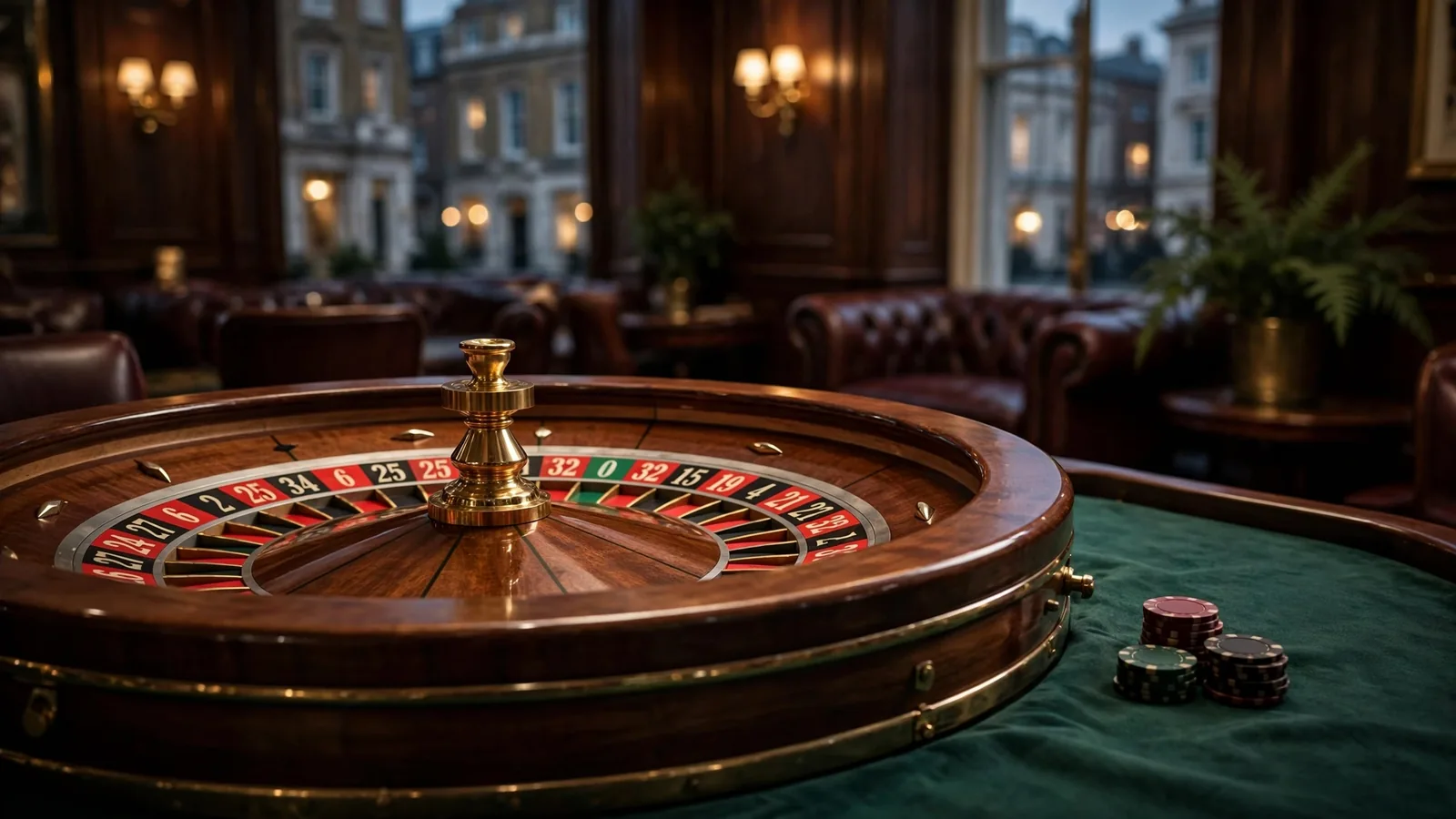
European roulette has 37 pockets: the numbers from 1 to 36 and one pocket marked zero. That extra green pocket is the detail that sets the game’s basic mathematics. It is not a numbered result, but it is still an outcome the wheel can produce. Every spin has to account for it.
The house edge for European roulette is 2.70%. In plain terms, that is the game’s theoretical advantage for the casino, measured across play over time. It does not mean that a fixed share is removed from each stake, or that a particular session will finish down by that amount. Short runs can move in either direction. The figure describes the underlying odds, not a forecast for an individual player.
I find it useful to separate the wheel’s structure from the impression created by a run of results. A sequence of reds can feel as if black is becoming overdue; several zeros can make the green pocket seem unusually active. Neither impression changes the set of possible outcomes on the next spin. The wheel does not remember what came before.
Choosing a UK casino for European roulette involves more than the game itself; payout timing is one practical detail to consider. Use this list as a reference when deciding which operators to explore.
Chanze
Chanze lists a payout speed of 1–3 business days, a useful detail to consider when choosing a casino for European roulette.
Dieselwin
Dieselwin lists a payout speed of 1–3 business days, giving readers a clear point of reference as they explore European roulette options.
SlotoSport
SlotoSport lists a payout speed of 1–3 business days. This timing may be relevant when considering where to play European roulette.
Revery Play
Revery Play lists a payout speed of 1–3 business days, a practical detail for readers comparing casino options for European roulette.
BeOnBet
BeOnBet lists a payout speed of 1–3 business days. Keep this in mind when reviewing European roulette casinos.
Jetsetspins
Jetsetspins lists a payout speed of 1–3 business days, offering a specific detail to consider while exploring European roulette.
NightWin
NightWin lists a payout speed of 1–3 business days. This may help inform your choice of a casino for European roulette.
Zombillion
Zombillion lists a payout speed of 1–3 business days, a useful practical point when considering its casino offering.
Amunbet
Amunbet lists a payout speed of 1–3 business days. Readers exploring European roulette can use this as one point of reference.
SpinFormula
SpinFormula lists a payout speed of 1–3 business days, providing a concrete detail for readers considering European roulette options.
The single zero matters because it occupies a pocket alongside the numbered results. If the wheel had only numbered pockets, the distribution of outcomes would be different. With the zero included, a stake’s return is calculated against all 37 possible pockets, while the terms of the game determine what happens when a particular result occurs. The casino’s mathematical advantage comes from that relationship between the available outcomes and the game’s returns.
That is why the European roulette label is more than a name on a game tile. It identifies a particular wheel structure, and that structure supports the stated 2.70% house edge. The figure is a useful baseline for understanding the game, but it should not be read as a promise about what happens after a handful of spins. Probability describes repeated play; it does not guarantee a tidy pattern in the short term.
A practical mistake is to treat the edge as though it were a fee charged at the moment a bet is placed. It is not a visible deduction from the balance. Instead, it is embedded in the game’s mathematical terms. Results can be favourable or unfavourable to a player on any given spin, and the order of those results can be uneven. The edge becomes meaningful as a long-run measure, not as a script for one session.
That distinction also explains why a casino’s presentation can feel more decisive than the mathematics really is. A wheel graphic, recent-results panel or run of wins may encourage a story about momentum. The underlying structure remains unchanged: 37 pockets, including the single zero. Past results may be displayed, but they do not make one pocket more likely on the next spin.
I have seen players read a short sequence as evidence that a wheel is “due” to turn. The word sounds like a calculation; it is really an interpretation layered over chance. A fair spin does not correct an earlier run. Nor does a win prove that a method has identified a pattern. The result is determined by the spin, not by the player’s confidence in the sequence.
The house edge is therefore best treated as a measure of the game’s design. It helps explain why the casino has a long-term mathematical advantage without saying what any individual session must produce. It also prevents a common confusion: a favourable result does not remove the edge, and an unfavourable result does not show that the edge has suddenly increased. Both are compatible with the same underlying odds.
For someone looking at online European roulette in the UK, the useful starting point is not a claim that one game is “fairer” because it has been winning lately. It is the wheel’s stated structure and the house edge attached to it. A European roulette casino may present the game through different interfaces, but the name alone does not alter the mathematics described here. The details of table rules and game presentation need separate attention.
This is the baseline, not a prediction. The single zero is one pocket among the 37, and the 2.70% edge expresses the casino’s theoretical advantage over time. Nothing in that figure tells a player which number will appear next. Chance has no memory.
“Best” is a useful advertising word because it avoids saying what is being measured. A table may suit someone looking for a familiar ruleset but not someone comparing game information, limits or terms. When I compare European roulette options, I start with what can be checked on the table itself and the operator’s account and policy pages. A headline rating tells little on its own.
The first check is whether the operator is entitled to serve the British market. The UK Gambling Commission is the sole regulator of online casino activity in Great Britain. Remote operators selling into that market must hold the relevant UKGC licence; an offshore licence is not a substitute. The public register allows the operator’s licence status to be checked before an account is funded. That is a basic threshold, not a sign that every game or condition will suit every player.
Then I look for the actual table rules. “European roulette” identifies a format, but the game page or help panel should make its rules available before play. The wording should be clear enough to establish which version is being offered and how its stated rules apply. If the information is buried, incomplete or difficult to reconcile with the table display, that is a comparison point in itself. I do not treat a familiar game name as a substitute for reading the rules.
RTP information matters, too. A UKGC-licensed operator should make the relevant game information accessible, rather than leaving a player to infer it from promotional copy. The figure should be tied to the specific game, with an explanation available in its rules or information panel. RTP is a theoretical return calculated across many game outcomes; it does not forecast an individual session or promise a particular result. A percentage without a clear connection to the table is less useful than a plainly presented explanation.
This is where “best European roulette casino” becomes the wrong test. There is no meaningful universal winner if one operator makes its rules and RTP easy to inspect while another makes account conditions easier to understand. Those are separate qualities. I compare like with like: the same game format, the same rule information and the same type of terms. Otherwise, the comparison can quietly become a comparison of different products.
Account conditions deserve the same attention as game details. Deposit and loss limits, session reminders, reality checks and cool-off options are part of the practical environment in which play takes place. UKGC licensees must provide responsible gambling tools, including self-exclusion, and remote operators must give new customers a prompt to set a financial limit before their first deposit, alongside accessible account-level controls. These are not features to infer from a badge or a banner; the controls should be findable in the account interface.
I also check how the operator handles a dispute. UKGC licensees must provide an internal complaints process and access to an approved Alternative Dispute Resolution service. The route should be stated in the operator’s terms or complaints information, not left as a vague promise of support. Clear procedures matter because the wording tells how a complaint moves from the operator’s first response to independent review.
There is no need to rank tables to make a sound comparison. I would record whether the operator’s licence can be verified, whether table rules are readily available, whether RTP information is attached to the specific game, and whether account protections and complaint routes are clearly explained. A table that scores well on those checks is easier to assess; that is a more defensible claim than calling it the best online casino for European roulette.
The same discipline helps separate roulette from products that only borrow its name. A European roulette slot, for instance, is not a roulette table simply because its theme uses a wheel or familiar symbols. The rules and return information belong to the particular game being offered. Labels set expectations; the game information confirms what is actually being played.
I have found that comparison often turns on what is visible before the first bet, not what the promotional page makes prominent. If the core rules, RTP, account controls and complaint terms are accessible without guesswork, the table can be judged on its own terms. No podium needed.
A roulette payout is quoted as odds against the stake, not as the total amount returned. A winning bet at 35:1 earns thirty-five times the stake in winnings, with the original stake returned as well. That distinction matters when comparing the number printed in a paytable with the balance credited after a result.
The same principle applies across the main European roulette bets. The difference is how many outcomes a bet covers and how much it pays if one of them wins. A narrow bet covers fewer numbers and offers a larger stated payout; broader bets cover more outcomes and return less. The payout does not make any outcome more likely. It describes the payment conditional on the bet winning.
A straight-up bet selects one number. If it wins, it pays 35:1. A split bet covers two adjacent numbers and pays 17:1. A street bet covers a horizontal row of three numbers and pays 11:1. These are inside bets: they concern individual numbers or small groups rather than broad characteristics of the result.
The stated return falls as the covered group grows, but that should not be read as a promise of steadier results or as a forecast. Each spin is resolved on its own. When I check a table’s paytable, I look for the payout attached to each bet rather than relying on a general label such as “standard.” The number of covered outcomes and the return both need to be clear.
Red or black, even or odd, and high or low are outside bets. Each pays 1:1: a winning stake earns an equal amount in winnings, and the stake is also returned. These bets cover broad categories, which is why their stated payout is lower than that of a straight-up, split or street bet.
That simple comparison is useful when deciding how a stake is divided, but it does not change the nature of the game. A 1:1 return is not a guarantee of frequent wins, and a higher payout is not evidence that a particular number is due. The payment applies only when the result satisfies the bet’s conditions.
For anyone learning how to play European roulette, the practical first step is to match the bet name to its coverage and then read the associated odds. When playing European roulette online in the UK, the paytable should be available before a stake is placed. I have seen confusion arise when players treat the displayed odds as the full cash return; checking whether the original stake is included clears that up.
“Simple” is not the same as risk-free. The payout tells what a winning bet returns, not how often it will win or how long a balance will last. That is the useful distinction: coverage, payout, then uncertainty.
RNG roulette produces outcomes through a random number generator rather than a ball landing on a physical wheel. The software selects the result, then presents it through a wheel animation and a betting interface. The wheel is a visual representation of the game: it helps make the result legible, but it is not evidence that a physical wheel has spun behind the screen.
That distinction matters when comparing online casinos with European roulette. In a digital game, the result comes from the software’s random process; the animation shows the result in a familiar form. A European-style wheel shown on screen can display the game’s 37 pockets, including its green zero, without being a real object in a studio. The image and the mechanism are separate.
RNG games can move quickly because they do not need a dealer to complete each round. They can also have lower minimum stakes; some start at 10p. That may make the format accessible, but speed changes the pace of decisions, not the underlying uncertainty. Each result remains chance-based. A sequence on screen does not indicate what the next result will be.
Speed roulette is a faster format with a more compressed round cycle. A specialist review reports rates above 150 spins per hour for speed roulette, against 80–100 spins per hour at a standard table. Those figures describe a format comparison, not a promise about every game or session. The practical difference is the time available between rounds: shorter pauses can make it easier to place wagers repeatedly without much reflection.
The word “speed” sells tempo. What it really changes is how quickly a player can make another decision. It does not make the result more predictable, and a higher number of rounds does not improve the odds of any individual outcome. The pace is part of the product design.
A virtual wheel also gives the interface a familiar visual centre. Numbers, colours and the movement of the marker make the result easy to follow, while the software handles the selection. In some games, the animation may be brief or stylised; that does not turn the screen into a live feed. A game generated by software remains RNG roulette even when its graphics resemble a casino wheel.
This is different from a streamed table, where a camera shows a physical wheel and dealer. Here, the screen is rendering a software-generated round. That distinction is useful when a game tile or title uses words such as “wheel” or “roulette”: the image alone does not establish how the outcome is produced.
For a casino with European roulette, the practical comparison is therefore not only between themes or graphics. It is between a software-generated round and a physical-wheel format, and between a measured pace and a compressed one. The interface can make both look similar. The mechanism is not.
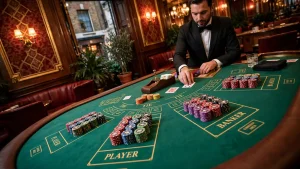
On a European roulette table, the numbered betting area is arranged as a grid, while the single zero sits apart in its own green space. That arrangement gives inside bets their name: the chips are placed on numbers or on the lines and spaces connecting them within the grid. The bet is defined by where the chip sits, not by a prediction that the layout makes more likely.
A straight-up choice covers one number. A split covers two adjacent numbers; a street covers a row of three. These are different ways of grouping possible outcomes on the same single-zero wheel. The grid makes those groupings visible, but proximity on the felt is not a hint about what the ball will do. Nor does a cluster of selected numbers become a system simply because the chips form a pattern.
Outside bets sit in separate areas beyond the numbered grid. They cover broader categories rather than specific numbers, such as red or black, odd or even, and high or low. That distinction is practical: inside bets express a narrower selection, while outside bets cover a wider one. Neither changes the underlying chance-based nature of the spin. The single zero remains part of the wheel whatever position or pattern is chosen on the table.
This is where bet selection and betting systems are often blurred in casino copy. Choosing a number, a line, or an outside category describes what is being backed on a particular spin. A system describes how the stake is changed from one spin to another. The two ideas can be used together, but they answer different questions: what to bet on, and what to do with the next stake after a result.
The Martingale is the familiar example. It calls for doubling the bet after each loss, on the assumption that a later win will recover the earlier losses. In practice, a losing streak can push the required stake upward and put serious pressure on a bankroll. A sequence of losses does not make a win due. The wheel has no memory of the previous bets.
That point matters more than the neatness of the staking rule. A system can organise decisions and make a pattern of staking easier to follow, but it cannot alter the odds or forecast the final outcome. Roulette results are determined by chance. A previous run of red, black, wins or losses does not provide information that predicts the next result.
I have seen systems presented as if discipline were the missing ingredient. Discipline can keep a player within a chosen plan; it cannot turn a plan into an advantage. The single-zero layout offers several ways to place a bet, but none of its shapes carries predictive power. Keep the distinction clear. Bet choice is not a forecast.
A European roulette demo is useful for learning how the game interface works without staking real money. Free online European roulette can show the wheel and betting controls, but practice results do not create cash winnings or establish what will happen in later play. A “free” label describes the play mode, not a way to turn demo results into funds.
Real-money European roulette is different in one basic respect: stakes and any resulting returns are monetary. In Britain, online gambling is legal through operators holding a current UK Gambling Commission licence. Operators must verify a customer’s age before allowing a deposit. The separation matters when a game page offers both demo and cash play: the same roulette rules can sit behind two different financial arrangements.
Bonuses add another layer. A wagering requirement specifies how much qualifying play is needed before bonus funds, or winnings subject to the offer’s conditions, can be withdrawn. Roulette may count towards that requirement, but the weighting is set by the operator’s terms and can depend on the game format. An operator may count roulette wagers at 10% to 20%; another format or offer can use a different rate.
A specialist review reports that some operators assign live roulette a 10% or 20% game weighting while RNG roulette may count at 100%. Those figures should not be treated as a universal schedule. The offer’s own terms determine what applies, including whether a particular roulette game is excluded. A high weighting also does not make roulette an efficient way to clear a bonus: the game remains chance-based, and wagering can involve losses before the requirement is met.
There is a regulatory ceiling as well as operator-specific terms. Regulatory guidance taking effect in January 2026 caps bonus wagering requirements at a maximum of 10 times the bonus value for licensed operators. That cap limits the requirement; it does not promise that a player will retain funds or complete wagering without losses.
When comparing a demo with real-money play, the useful distinction is not simply whether the wheel looks identical. Demo mode is practice; cash play brings financial risk, and bonus play adds conditions that can affect which wagers count and whether resulting funds are withdrawable. Read the relevant game-weighting and withdrawal terms before treating roulette as part of a bonus plan. No shortcut.
A European roulette table is easier to read when treated as two connected areas: the numbered grid and the spaces around it. The grid carries the numbers from 1 to 36, while the single zero is set apart. Together, those labels represent the wheel’s 37 possible pockets. The felt is a map for placing selections, not a prediction of where the ball will land.
On a digital table, the same structure may be compressed or rearranged to fit a screen. The numbers remain grouped in a grid, and the zero remains visually distinct. I look first for those features, then for the betting areas attached to the grid. Small changes in spacing or colour can make a screen feel unfamiliar, but the labels show what each position represents.
The spaces directly on or between number boxes are used for selections tied to particular numbers or groups of numbers. The larger marked areas beyond the grid are for broader choices, such as colour or whether a number falls in an indicated range. Those areas may be labelled with words, symbols or both. The useful habit is to read the label before placing a chip; position alone is not a reliable guide when a layout has been scaled down.
A chip placed on a number box is different from one placed on a line or in a wider betting area. The interface may show the selected position with a chip marker, highlight or betting slip. Before confirming, the displayed selection should match the intended space. On a crowded screen, a chip close to a boundary can be difficult to assess at a glance.
I have seen players treat the felt as decoration and focus only on the spin button. That skips the part where an accidental placement happens. Reading the table means identifying the number grid, locating the zero, and distinguishing the marked spaces around them. It does not make a result more predictable. It makes the choice being recorded clearer.
The term “strategy” can make table-reading sound like a way to influence the wheel. It is not. Knowing where a selection sits helps explain what has been chosen; it does not change the chance outcome. The layout is an interface, and its job is to translate a decision into a wager. Clear labels matter. The wheel remains separate.
A roulette-themed slot borrows the look of roulette, not its underlying game. The screen may show a wheel, numbered pockets, a ball or a casino-style table, but the result is generated under the slot’s own rules. European roulette odds therefore cannot be applied to a slot simply because its graphics resemble a single-zero wheel.
That distinction matters when labels promise a “3D” experience or use words such as “gold” and “platinum”. These describe a presentation or a product title; they do not establish that a physical wheel is involved, that roulette bets are available, or that European roulette’s probabilities govern the result. I have seen presentation do a lot of work in casino marketing. It can make two different products look like close relatives. They are not.
The practical test is the game’s own information panel. Its rules explain what counts as a spin, how wins are determined and what the displayed return information applies to. A roulette wheel’s number of pockets and payouts tell nothing by themselves about a slot’s mechanics. Nor does a roulette-themed graphic make a slot a way to practise table roulette. Different product. Different rules.
British restrictions reflect that product distinction. Online slot autoplay is banned, so a slot cannot be set to continue spinning automatically. Each online slot spin must also last at least 2.5 seconds. Those requirements apply to slots, including ones dressed in roulette imagery; they do not turn them into roulette tables.
The wording around odds deserves the same care. A slot’s return information, where provided, concerns that particular slot and its mechanics. It should not be read as the house edge for European roulette, or as a promise about what a session will return. A roulette-themed title is not evidence of roulette odds.
There is also a practical difference in how play feels. A roulette table offers choices tied to the wheel and the betting layout. A slot presents its own interface and result process, even if a familiar roulette motif sits behind it. The visual language is borrowed; the rules are not. That is the point to keep in view when comparing products with similar names or casino styling.
A live European roulette game brings a physical wheel into a studio broadcast. A human dealer spins the wheel and releases the ball; a camera feed shows the action while the betting interface sits alongside it. The outcome comes from that ball drop, not from a random number generator producing a simulated spin. The screen connects the two parts: the studio event and the digital record of bets and results.
That distinction matters when choosing a format. With live play, the pace includes the dealer’s actions and the broadcast, rather than only the time software needs to generate a result. The wheel is visible, but the stream does not change the underlying chance of where the ball lands. It changes how the game is presented and how quickly a new round becomes available.
Minimums depend on the table and format. A specialist review reports UK live roulette minimums starting at 10p, while auto-roulette and speed formats sometimes begin at 5p. Those are reported entry points, not a promise that every table offers them. The interface should show the minimum stake before play starts. Small stakes can make a table accessible; they do not make a session harmless. A quick sequence of rounds can still use a balance faster than expected.
The studio presentation is only one part of the service. A platform without a valid UK Gambling Commission licence cannot legally offer real-money live roulette to people in Britain. UKGC-licensed live casino operators must provide deposit and loss limits, session-time reminders, reality checks, cool-off periods and access to GamStop self-exclusion. These are operating safeguards, not decorative settings.
I have seen limits treated as a box to tick rather than a real control. Their value depends on being easy to find and usable at account level, before play becomes a routine. UK rules also require a new customer to be prompted to set a financial limit before making a first deposit. Operators must verify age before allowing deposits, and UK gambling accounts are for adults aged 18 and over.
The camera is not the safeguard. The controls are. A live European roulette casino should make the dealer and wheel visible, but its account tools and UKGC status matter just as much when real money is involved.
The clearest difference between the main roulette variants is the wheel. European roulette has 37 pockets: numbers from 1 to 36 and one zero. American roulette adds a double zero, giving it 38 pockets. That extra pocket changes the chance of a winning result without changing the familiar number bets.
On a standard European wheel, the house edge is 2.70%. On an American wheel, it is 5.26%. The difference comes from the additional losing pocket: it gives the casino a larger mathematical advantage across standard bets. The displayed payout for a winning number does not compensate for that change.
That is the practical point in a European roulette casino game, whether played online or at a physical table: the wheel’s pocket count matters more than its appearance on screen. When comparing European roulette with American roulette, the double zero is the detail to check first. A green pocket is not merely decoration.
French roulette shares the single-zero layout with European roulette, but its rules can alter what happens when the ball lands on zero. La Partage returns half of an even-money bet in that circumstance, bringing the house edge on eligible bets down to 1.35%. En Prison can also reduce the casino’s advantage on qualifying bets by holding the stake for a possible return on the next spin. These protections apply to eligible bets, not every wager on the layout.
French roulette therefore has the lowest house edge among the standard variants, because La Partage and En Prison soften the effect of zero. The important qualification is “eligible”: a rule that benefits even-money bets should not be treated as a blanket improvement to every bet on the table.
I treat the variant name as a starting point, not a guarantee about the rules in force. A table labelled French may show which zero rule applies in its information panel; the wording matters. Small print, real consequence.
For a straightforward comparison, European roulette offers the single-zero baseline, American roulette carries the extra double zero and higher edge, while French roulette can reduce the edge on qualifying bets through its special zero rules.
European roulette has the lower house edge: 2.70%, compared with 5.26% for standard American roulette. Some American tables with a third green pocket have a 7.69% edge.
Choose an operator licensed to serve Great Britain and check its status on the UK Gambling Commission’s public register. An offshore licence is not a substitute for a UKGC licence.
Inside wagers cover specific numbers or small groups of numbers, such as a straight-up bet or a split. Outside wagers cover broader groups, such as red or black, odd or even, and high or low.