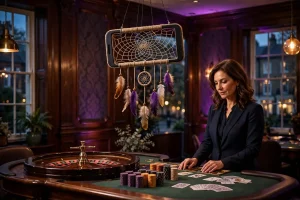
A live dealer runs the physical table while on-screen controls carry player bets; the live format alone does not define added rules.
Online live roulette combines a studio broadcast with a separate betting interface. The game is streamed in real time, with a human dealer running the table, while players submit their bets through controls on the screen. That division is the basic format: the studio supplies the live game, and the interface carries each player’s decisions to it.
I find it useful to separate those two parts because casino pages often fold them into one “experience”. The stream is what is happening at the table; the interface is how an online player takes part. A live dealer game is not simply a roulette animation presented with a human face attached. The gameplay comes from a studio and is shown as it happens. The player does not place chips on the physical table; the on-screen controls are the means of placing bets.
For a search such as Lightning Roulette online, the word “live” describes that delivery format. It indicates a live studio game with a dealer, rather than a fully computerised roulette presentation. It does not, on its own, tell the player what special rules or features apply to a particular version. Those details belong to the game’s own rules and table information, not to the general meaning of live dealer roulette.
Choosing a live casino for Lightning Roulette means considering practical details alongside the game itself. This reference card highlights the available payout-speed information to help inform your shortlist.
Chanze
Chanze lists a payout speed of 1–3 business days, a practical detail to consider when choosing a casino for Lightning Roulette.
Dieselwin
Dieselwin lists a payout speed of 1–3 business days. This provides a clear point of reference when considering it for Lightning Roulette.
SlotoSport
SlotoSport lists a payout speed of 1–3 business days, giving readers a useful detail to weigh when exploring Lightning Roulette.
Revery Play
Revery Play lists a payout speed of 1–3 business days. That stated timeframe is the available practical detail for this listing.
BeOnBet
BeOnBet lists a payout speed of 1–3 business days, which may help readers assess its practical fit for Lightning Roulette.
Jetsetspins
Jetsetspins lists a payout speed of 1–3 business days. This is the available payment-related detail to consider.
NightWin
NightWin lists a payout speed of 1–3 business days, offering a stated timeframe for readers considering Lightning Roulette.
Zombillion
Zombillion lists a payout speed of 1–3 business days. The timeframe is a useful practical consideration when reviewing this listing.
Amunbet
Amunbet lists a payout speed of 1–3 business days, the available detail to factor into a Lightning Roulette shortlist.
SpinFormula
SpinFormula lists a payout speed of 1–3 business days. This stated timeframe is the available practical point to consider.
The distinction matters because a title can make a game sound self-explanatory when it is not. “Lightning” is a name associated with a particular roulette variant, but the live format alone does not explain how that variant works. A player should not infer a special outcome, bonus or payout from the word in the title. The stream tells what format is being shown; the displayed rules explain the specific game. Keep the two separate.
In practical terms, the player watches the studio feed and uses the on-screen interface to make a bet. The interface is not incidental decoration. It is the route by which a decision is entered into the game. The studio and the player’s screen work together: the dealer conducts the live game, while the interface presents the means of participation. If either part is misunderstood, the whole format can seem more mysterious than it is.
This also explains why a live game should not be treated as though it were an ordinary digital roulette game with a different visual style. In a computerised game, the presentation and game operation are generated digitally. In live dealer roulette, the gameplay is streamed from a studio with a human dealer. The screen still matters, but its role is to connect the player to that live presentation and accept bets. The human presence is part of the format, not a guarantee about outcomes.
From the operator’s side, “live” is a product category as well as a description of what appears on screen. A real-time studio stream has to be paired with a system that lets online players participate through the interface. That is why the page may show the table and the betting controls together, even though they perform different jobs. The dealer does not take a player’s bet verbally; the player uses the interface. No mystery there.
The UK legal position is also part of the format’s context. Live dealer casinos can operate legally in the UK when they hold a licence from the UK Gambling Commission. Remote gambling operators serving the British market need the relevant Commission licence, wherever the operator is based. A studio stream does not, by itself, establish that a site is authorised to offer gambling to UK players; the operator’s licensing status is a separate matter.
I have seen marketing blur these distinctions with words such as “immersive” or “authentic”. Those are descriptions, not mechanics. The concrete points are plainer: a studio sends a real-time stream, a human dealer runs the live game, and bets are placed through an on-screen interface. That tells what the live format is. It does not settle the variant’s rules, predict a result or make the game a different kind of decision from roulette.
For anyone considering a real-money session, the interface is also where the chosen bet is committed, so the amount and selection need to be understood before submission. Setting a budget in advance helps keep play within a planned limit. This is entertainment, not gambling advice, and no live presentation changes the underlying uncertainty of gambling.
The core arrangement is simple once the components are separated: studio, dealer, stream, interface. The name Lightning Roulette may identify a specific version, but its particular features should be read from the table’s own rules rather than guessed from the live label. That is the useful starting point before considering the wheel, the ball or the way roulette bets are settled.
A live casino Lightning Roulette game still rests on a simple sequence: the wheel turns, the ball comes to rest in a numbered pocket, and a bet wins when it matches the number that has landed. The live presentation may give that sequence a studio setting, but the result is determined by the roulette wheel and the ball, not by a player’s impression of where either one is heading.
That distinction matters because live and computerized roulette reach a result in different ways. In live roulette, a dealer spins a physical wheel and releases the ball. In a computerized game, a Random Number Generator (RNG) produces the result instead. Both formats present a roulette outcome, but the mechanism behind it is not the same. The live version shows a physical spin; the computerized version relies on generated numbers.
I used to see the two formats treated as interchangeable because the betting interface can look similar. That misses the important difference. A displayed wheel does not establish that a physical wheel is being used: the relevant distinction is whether the game is streamed from a real wheel or generated by software. The mechanics of selecting a number and placing a bet remain recognisable, while the source of the result changes.
The ball’s landing number is the outcome against which the bets are settled. A chosen number either matches it or does not. That is the central test for a straight-up bet: it selects one number. Other bet types cover a broader selection of outcomes, but the broader coverage does not mean every type carries the same house edge. The edge reflects the game’s built-in advantage over time, rather than a prediction about the next spin.
For straight-up bets, the house edge is 2.9%. For other bets, it is 2.7%. The gap is narrow, but it is a real difference in the stated edge by bet category. It should not be read as a promise about an individual result, nor as a measure of how often a particular player will win during a short session. A ball can land on a selected number, or elsewhere; the house edge describes the underlying game mathematics across repeated play.
That distinction is easy to lose in promotional language around a Lightning Roulette casino. A dramatic presentation can make the game feel as though each spin carries a special pattern or momentum. The mechanics do not support that conclusion. Each result is the number where the ball stops, and a past landing does not establish what the next one will be. A streak is a description of what has already happened, not evidence that the wheel is due to behave differently.
The same caution applies to statistics displays. A record of previous numbers can describe past outcomes, but it cannot make a future number more likely to land. I have seen players give recent sequences more weight than they deserve, particularly when the screen makes the information prominent. It is still historical information. The physical wheel is not responding to the display, and an RNG is not guided by a tracker.
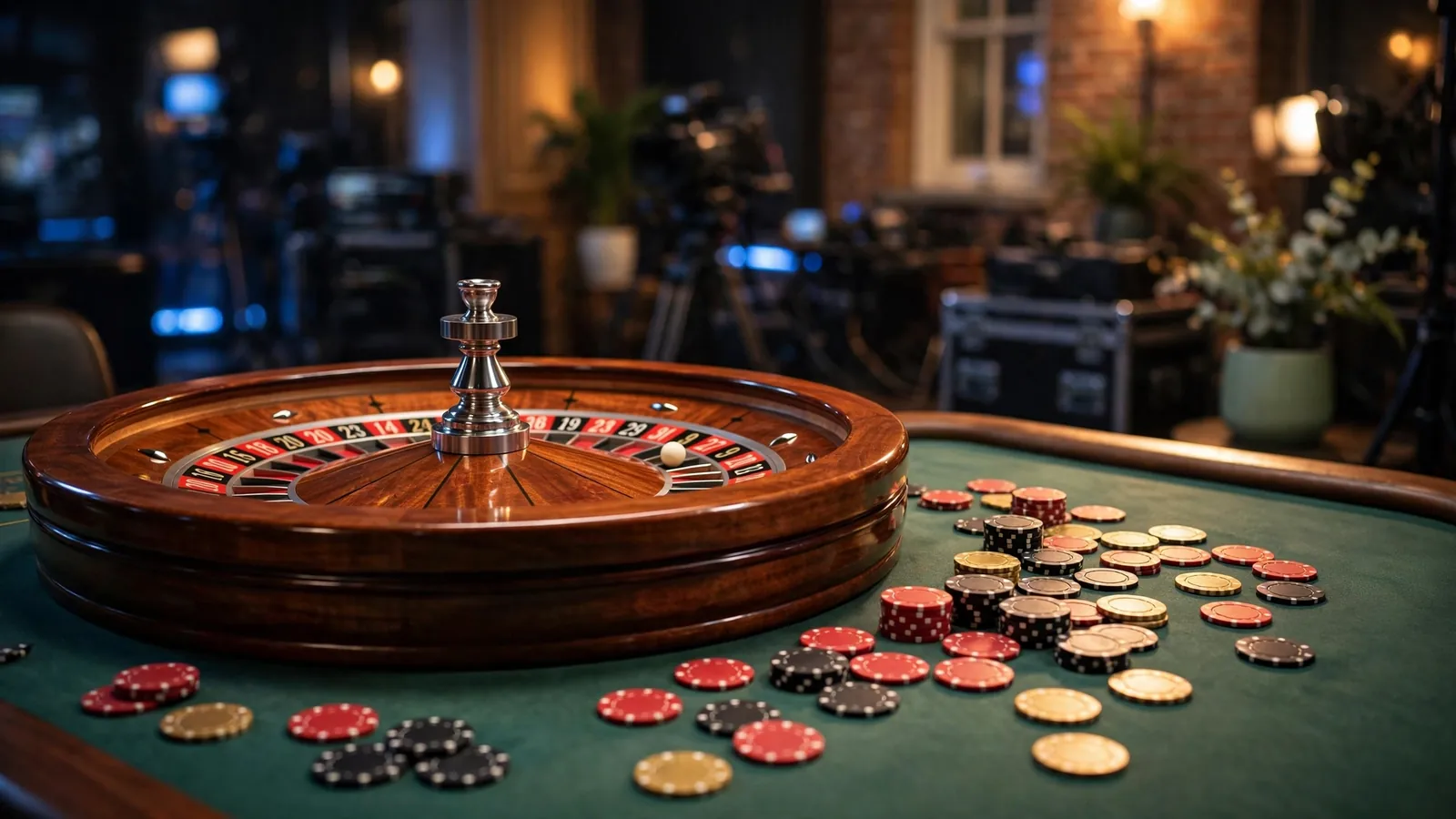
A dealer spins a physical wheel and releases the ball in a studio stream.
A Random Number Generator (RNG) produces the result digitally.
The house edge also needs to be kept separate from the chance of winning a particular bet. A bet may cover more outcomes than a straight-up selection, but the relevant edge remains the stated figure for that class of bet. The figures do not tell a player which number to choose, and they do not guarantee a loss or a win on any one spin. They describe the casino’s mathematical advantage, not a schedule of results.
For a live casino Lightning Roulette game, the practical reading is therefore restrained: the ball determines the result, the selected outcome determines whether the bet wins, and the house edge varies by bet category. The live wheel and computerized roulette differ in how the result is produced, even where their interfaces make them appear alike. The game’s presentation can be distinctive. The underlying roulette logic remains the point.
No system can turn a previous result into a reliable forecast. I have watched the same mistake take different forms: a player follows numbers that have appeared often, avoids numbers absent from the recent record, or treats a run as a signal. None changes the wheel’s mechanics or the RNG’s role in a computerized game. A recorded pattern belongs to the past.
That is the useful way to assess Lightning Roulette casinos: separate the visible drama from the underlying process. A physical live spin is not the same process as an RNG result, but neither format makes a number predictable. The house edge figures describe the game’s long-run structure; they are not a personal forecast. A single spin remains a single outcome.
A “best” live roulette casino is not a universal category. A site may suit someone looking for a particular table format and be a poor fit for someone comparing rules or table information. I would start with the basic checks, then compare what is actually offered rather than relying on a ranking or a promotional label.
The first check is licensing. Real-money online casinos serving UK players must hold a current operating licence from the UK Gambling Commission. The licence is a condition of legal operation, not a badge that proves every table will suit every player. I would confirm the operator’s legal identity and licence status through the regulator’s own records, rather than treating a logo or a claim on a casino page as sufficient.
Then I would look at the roulette information provided before play. A table description should identify the game variant and make its rules available. If those details are difficult to locate, that is a practical reason to pause: the name of a table alone does not explain how its outcomes are handled. Rules and the paytable matter. A polished studio presentation cannot replace them.
The variant is one useful point of comparison. European Roulette has a single green zero pocket; American Roulette has both 0 and 00. The stated chance of winning is 1 in 37 on the European wheel and 1 in 38 on the American one. Those differences are easy to miss when tables are presented with similar titles or graphics. I would compare the actual table rules, not assume that two options with “roulette” in the name are interchangeable.
Table information also helps distinguish a real choice from a cosmetic one. Check whether the page names the variant clearly, explains the available rules, and displays the relevant paytable before bets are placed. Where the information is scattered or unclear, a comparison becomes harder and there is less reason to take a promotional description at face value. “Premium” is a label; the table details are what count.
I would also separate site-level claims from game-level facts. A casino can advertise a broad live dealer selection, but that does not establish which roulette variants are available or what rules apply to a particular table. The useful comparison is specific: the named game, its rules and the information visible before play. There is no need to turn that into a league table of supposedly superior sites.
From working around these decisions, I have found that the small print often carries more practical value than the headline. A clear rules page lets a player understand what is being offered before committing money; a vague one leaves important details to be discovered at the table. The difference is not glamorous. It is still decisive.
Finally, I would treat the choice as entertainment, not a way to make money, and set a budget before playing. A licence confirms that an operator is authorised to serve the market; it does not remove the chance of losing. Checking the licence, variant and table rules is a sounder basis for choosing than an unsupported claim to be the best.
“First-person” sounds like a precise description of a camera view. In practice, the label needs to be read carefully. It may suggest that the game is seen from the player’s position, but that wording alone does not establish where a camera is placed, what appears on screen or how the controls are arranged. A title can set an expectation; it does not explain the actual presentation.
The established live format is more specific. Gameplay is streamed in real time from a studio, where a human dealer is present, and bets are submitted through an on-screen interface. That gives the experience a live visual element alongside digital controls. It does not, by itself, confirm a first-person viewpoint. A stream showing a dealer and a table can be filmed from different angles, and the phrase “first-person” is not enough to identify which one is used.
That distinction matters when considering a first-person Lightning Roulette casino game. The phrase combines a camera-style description with a particular roulette title, but those are separate claims. The live-dealer format can be described without assuming that the game uses a player-eye view. Nor does the name alone establish whether the interface puts the betting controls beside the video, overlays them on it or presents them in another arrangement. Those details depend on the actual game presentation.
I have seen how quickly a descriptive label can turn into an implied feature. “Immersive” may sound like a promise of a particular perspective, while the practical meaning could be no more than a live stream displayed within a betting interface. The difference is not cosmetic if the camera angle is the reason someone chooses a table. Marketing language is not a camera specification.
A sensible description of first-person roulette should therefore separate what is visible from what is inferred. A live feed with a human dealer supports the claim that the game is streamed from a studio in real time. It does not prove that the viewer sees the wheel from the dealer’s side, from above, or from a position resembling that of a player at the table. Unless the product itself clearly demonstrates the view, those details should not be treated as settled.
The same care applies to claims about interaction. Bets are placed through an on-screen interface in live dealer games. That confirms a digital betting method, not a particular control design or a special first-person feature. A close camera shot, table view and betting panel might all appear within one experience, but the general format does not specify how they are combined.
For anyone looking to play first-person Lightning Roulette in the UK, the useful distinction is between a live-dealer game and a verified first-person camera mode. The first describes a real-time studio stream with a human dealer; the second requires evidence in the presentation itself. A title or short promotional description cannot settle that question on its own.
This is a narrow point, but an important one. “First-person” is meaningful only when the view can be seen and assessed. The live format is clear; the promised perspective may not be.
A welcome offer can look generous in its headline and still be a poor match for live roulette. The deciding detail is not the advertised value but the terms governing which games count towards wagering requirements. Live games may receive only a small weighting. Where the terms assign them 10%, for instance, only a limited share of qualifying live-game stakes is credited towards the requirement. The rest of the offer may need to be played on eligible games instead.
That distinction matters when the intended game is Lightning Roulette. A bonus can be available at the same casino without being usable at that table, or without making much progress towards its wagering conditions. “Casino bonus” is a broad label, not a promise that every game contributes equally. I have seen that wording do a lot of work in promotional copy. The terms do the real work.
A specialist review of UK welcome offers describes many as slot free spins, which cannot be used at live tables. That is a reported pattern, not a guarantee about every offer or every operator. The offer’s own terms determine whether it consists of free spins, bonus funds, or another promotion, and which games are eligible. A slot free spin has no practical use at a live roulette table.
Before opting in, the useful checks are specific: whether live roulette is eligible, what weighting applies to it, and what wagering requirements must be met. Any maximum-bet condition also matters while a bonus is active. These provisions can sit apart from the promotional headline, so the headline alone cannot establish whether the offer suits live play. If the rules exclude the table, or give it a low weighting, the advertised offer may contribute little to the intended session.
This is why a “best” Lightning Roulette casino cannot be identified by its welcome offer alone. A promotion that looks substantial may be aimed at slot play, while a smaller or absent offer may be less restrictive for someone focused on live roulette. The point is not to treat a bonus as extra cash with no conditions attached. It is a package of eligibility rules and wagering terms, and its value depends on whether the chosen game fits them.
I used to read promotional copy from the top down. The more useful habit is to start with the exclusions and game-weighting table, then compare those details with the actual game being considered. That does not make an offer better; it makes its limits clearer. No guesswork.
A bonus should not change a pre-set gambling budget or justify extending play to meet a requirement. This is entertainment information, not gambling advice.
A roulette name can suggest a particular style of play, but the rule that matters most for an even-money bet is what happens when the ball lands on zero. In French Roulette, that outcome does not necessarily take the whole stake: an even-money bet loses only half. The distinction is easy to miss when attention is on the main bet options rather than the rule attached to the green pocket.
Even-money bets cover outcomes such as red or black, odd or even, and high or low. Their appeal is straightforward: the chosen outcome either appears or it does not. Zero is the exception. Under the French rule, a zero result reduces the loss on these bets instead of treating it like an ordinary losing number. That changes the settlement of a specific spin, not the basic choice of what to back.
I have seen players focus on the colour or range they have selected and leave the zero rule until later. That is where the table wording matters. The same-looking even-money option can settle differently depending on the roulette rules in use. Check the table information before placing a bet, particularly when switching between tables or versions. A familiar interface is not proof of identical rules.
American Roulette presents a different issue: its wheel and table layout include an additional double-zero number, marked 00. That is a separate pocket from 0, and it can affect whether a selected outcome wins. A bet that covers a colour, parity or range must be judged against the numbers shown on that particular layout; 00 is not simply another label for zero.
This is relevant when comparing a standard roulette table with a themed title such as Lightning Roulette. The name alone does not establish whether French Roulette’s half-loss rule applies, or how the table treats 0 and 00. Those details belong to the rules for the specific game. In the UK, a live casino game is offered by an operator holding a UK Gambling Commission licence, but the licence does not make every roulette table use the same settlement rules.
The practical distinction is narrow but consequential: French Roulette reduces the loss on an even-money bet when zero appears, while American Roulette adds 00 to the wheel and layout. Neither detail should be inferred from the game’s branding. Read the table rules and paytable before play, and set a budget that remains fixed. Roulette is entertainment, not gambling advice. The wording on the table decides.
A request to play Lightning Roulette in demo mode sounds straightforward, but the label alone does not establish what a particular casino provides. I cannot confirm that a demo version is available in the UK, whether it uses the live dealer format, or how its controls and play conditions work. Those details need to be stated by the operator for the specific game.
That distinction matters because “demo” can describe a free-play option without explaining what sits behind it. It does not, by itself, confirm that the game is streamed from a studio, that a physical wheel is in use, or that the experience matches a real-money table. Nor does a familiar title establish that the same version is offered across different sites. No assumption should fill those gaps.
Free play is not a route to real winnings. Any balance or result shown in a demo should not be treated as withdrawable money, and play in that mode should be understood as entertainment rather than gambling advice. A display that resembles a casino balance is not evidence of a cash payout.
The practical point is to separate what is visible from what is promised. A game page may identify a demo option, but its wording and instructions determine whether that option is actually available and what it allows. If the page does not explain the mode, its presence should not be inferred from a promotional image, a game name, or a general description of live casino play.
For the same reason, “Lightning Roulette demo UK” is not a guarantee of a particular format or feature set. Availability may be specific to an operator or table, and the general description of live dealer games does not settle how a free-play version works. Clear operator information is the only sound basis for that distinction.
I would treat any claim about demo play narrowly: a stated free mode may allow practice, but it does not establish access to a live stream or real-money results. The missing detail matters.
The defining feature of live dealer roulette is not a more elaborate screen; it is the physical wheel in the studio and the person who spins it. A computerized roulette game replaces that wheel with a Random Number Generator (RNG). The two formats may present similar betting interfaces, but the event producing the result is different.
That distinction matters when a table is described as a live dealer experience. The dealer is part of the actual game process, rather than an animated figure beside a computer-generated result. The wheel is physical, and the dealer sets it in motion. By contrast, in computerized roulette, the result comes from the RNG. A visual wheel or ball on screen does not, by itself, make a game live.
I have found that promotional labels can blur this boundary. “Live” should describe the game’s operation, not simply its appearance. For a Lightning Roulette table, the useful distinction is still whether the roulette game is being run with a dealer and a physical wheel, rather than produced by a computer. The name alone does not establish how a particular table operates.
The dealer’s presence also changes what the game feels like to watch. The wheel and the person operating it are visible parts of the table, while an RNG-based version has no physical spin taking place. That is a difference in format, not evidence that one result is more favourable or that the dealer can influence where the ball lands. A live presentation should not be read as a promise of control.
In practical terms, the table information should identify the game as live dealer roulette and make its format clear. The distinction is simple, but worth keeping intact: a real dealer spins a real wheel; a computerized game uses an RNG. No mystery.
This is entertainment, not gambling advice. The distinction between live and computerized play describes how a game is produced; it does not make roulette predictable or remove the financial risk.
Playing Lightning Roulette online involves a different rhythm from using a digital roulette game. A live table has to accommodate the dealer and the sequence of play, so rounds move more slowly. That can make it easier to follow what is happening, but it also means fewer decisions fit into the same stretch of time. The pace is part of the format, not a setting that can be sped up.
Connection quality matters for the same reason. The game is delivered as a live stream, and an unstable internet connection can interrupt the view or make it harder to keep track of a round. I would treat reliable access as a practical requirement rather than a minor convenience. If the stream is repeatedly freezing, continuing to place bets can become confusing.
Table stakes are another point to check before joining. Live games can have higher minimum bets than digital versions, and limits differ between tables. A specialist review has cited live roulette and baccarat tables starting at around 20p, while blackjack tables often have higher starting limits. That is a source-specific reference, not a promise that a particular table will offer the same entry point. The displayed table information is what matters for the session.
This is where the phrase “play online” can conceal a simple mismatch: a table may be accessible on a phone or computer, yet its minimum stake or pace may not suit the way someone intends to play. The online format removes the need to be at a casino, but it does not remove table conditions. Check the minimum before joining and allow for the slower rhythm when deciding how long a session might last.
I have seen small practical details matter more than the headline name of a game. Set a budget before playing and keep to it; do not extend a session to recover losses or pursue winnings. This is entertainment, not gambling advice. A live table can be watched in real time, but the stream does not change the underlying financial risk. Clarity first. Limits second.
When comparing an online roulette game, the key distinction between European and American layouts is the number of green pockets. European Roulette has a single green pocket, marked 0. American Roulette has two: 0 and 00. That extra pocket changes the stated chance of winning: the odds are 1 in 37 on the European layout and 1 in 38 on the American one.
The difference is easy to miss when a game is presented with a particular theme or feature. A name or visual treatment alone does not tell me which layout is in use. I check the table’s rules and layout before treating two online games as equivalent. The green pockets are the detail that matters here.
For anyone considering an online Lightning Roulette casino game, the same check applies: confirm whether its table uses the European or American layout rather than assuming from the game’s branding. The figures above describe the odds associated with those two layouts; they are not a prediction of an individual spin. A result remains uncertain, and a previous outcome does not determine the next one.
This is a rules comparison, not a reason to stake more on one version. I have seen how a small difference in a table layout can be overlooked when attention is on a game’s presentation. The numbers on the table deserve equal attention. Before playing, set a budget and stick to it, and treat gambling as entertainment, not financial advice.
No. In roulette, it varies with the bet and wheel: the stated house edge is 2.9% for straight-up bets and 2.7% for other bets, while American and European roulette have different odds because their wheels have different numbers of pockets.
The types covered here are American, European and French Roulette. American Roulette has both 0 and 00, European Roulette has a single 0, and French Roulette gives half back on an even-money bet when the ball lands on zero.
The dealer does not always win: players can beat the dealer by making a hand closer to 21 without going over. Blackjack still has a house edge, so a player can lose even when using a staking system.
Watch the dealer spin the physical wheel and use the on-screen controls to place your bet before the result. You win when the ball lands on the number you selected.