Learn how digital fruit games use independent RNG outcomes, and what demos, features and safeguards can tell you before play.
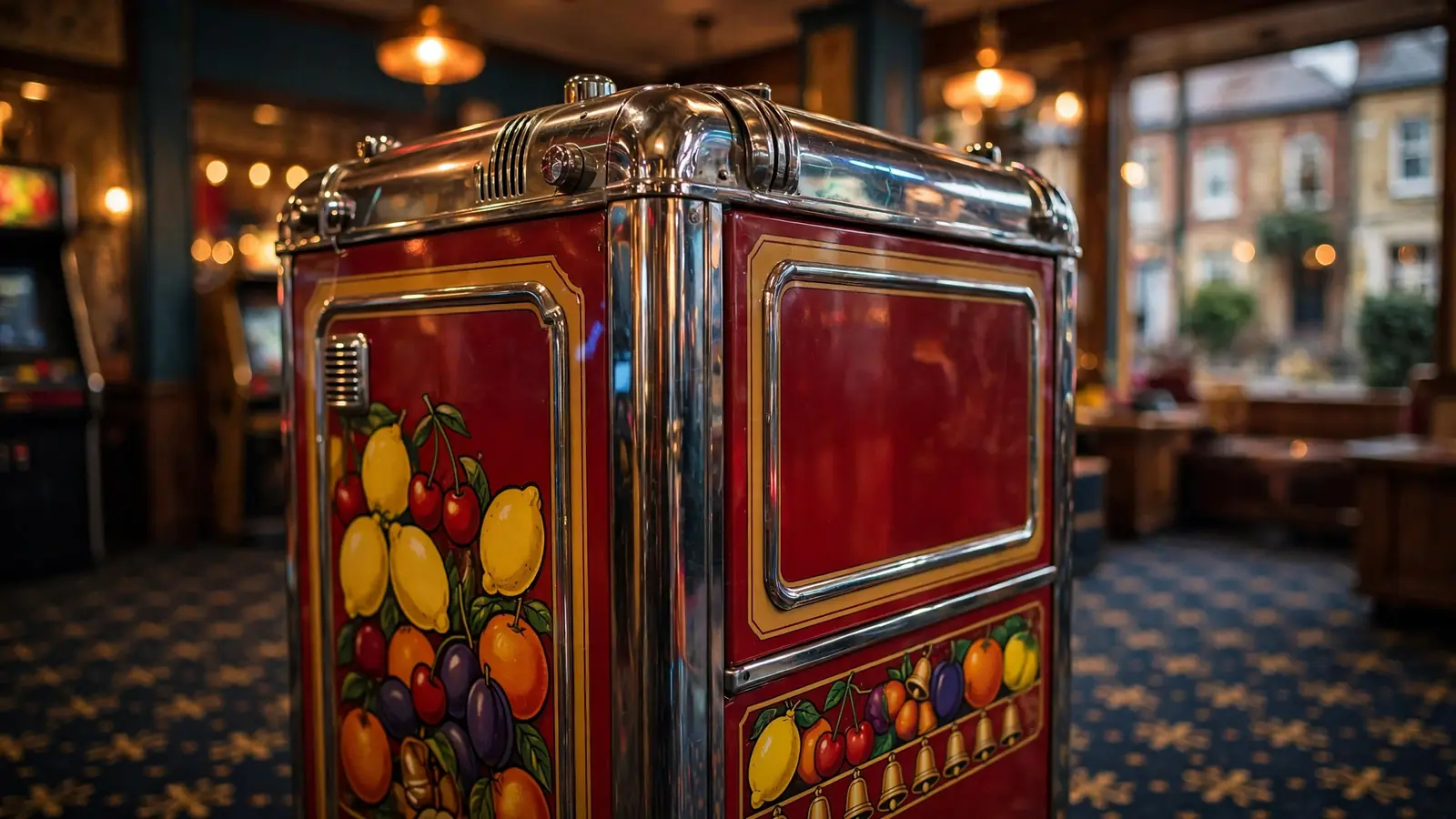
The familiar fruit machine began as a physical cabinet: reels turned behind a screen, symbols settled into view, and a payout depended on the combination shown. Online versions carry that basic visual idea onto a digital screen, but the cabinet’s visible movement is no longer the mechanism deciding the result. Software runs the game, and a random number generator (RNG) produces independent outcomes. A spin is not a continuation of the previous one, and a near miss does not make a win more likely next time.
That distinction matters because an online game can look and sound like a traditional pub fruity while operating through a different medium. Reels may animate, symbols may bounce, and a winning combination may trigger a celebratory sequence. Those are ways of presenting an outcome, not evidence that the game has remembered earlier spins or is due to pay. The old machine’s physical rhythm remains part of the appeal; the digital version uses software to determine what appears.
The screen can also accommodate layouts that would have been awkward to fit into a compact cabinet. Many modern fruit-machine-style games use five reels arranged in three rows. A symbol combination can win when it lands along one of the game’s fixed paylines: routes across the grid that determine which positions count together. A title may have between 10 and 50 such lines. More lines create more possible routes for combinations, but they do not mean every visible group of matching symbols pays. The paytable explains which symbols qualify and where they must land.
A fixed-payline layout is only one way to count wins. Some games use 243 ways to win, where matching symbols can form combinations across adjacent reels without following a single marked line. The grid may still look like reels and rows, but the rule for checking combinations is different. It is worth separating the appearance of a game from its maths: two screens can show similar fruit symbols and reel shapes, yet use distinct ways of deciding whether a result qualifies.
Megaways takes a further step away from a fixed-looking grid. Its reel system changes the number of symbols displayed on each reel from spin to spin. As a result, the number of possible winning routes changes too, reaching as many as 117,649 ways to win. That figure describes the maximum number of routes available under the system; it is not a promise that a spin will produce a win. The moving shape of the grid can make each result look less uniform, but the RNG still determines the outcome independently.
From the counter side, the most important change was not simply that a machine moved online. The game’s rules became something presented through menus and help screens rather than only through a cabinet’s visible layout. A player can see reels and symbols before understanding whether the game uses fixed paylines, 243 ways to win, or a changing Megaways grid. Those labels are not interchangeable. They describe different methods for identifying combinations.
The same point applies to the phrase “more ways to win”. It describes the number of routes by which a qualifying combination may be counted, not a guarantee of frequent wins or larger returns. A greater count of routes does not remove the independent nature of each spin. The game’s animation can make a result feel connected to the ones before it; mechanically, it is a fresh outcome.
Online fruit slots therefore sit between an old visual language and newer digital systems. The cherries, bells and familiar reel movement recall physical fruit machines, while the software can support several grid and win-counting formats. The useful starting point is to identify the format on screen, then read how its combinations are evaluated. Looks are not rules.
The fruit machines shown in a casino lobby may look familiar, but the lobby itself matters too. In the UK, an online casino targeting local players must hold a valid licence from the UK Gambling Commission. That requirement applies to the operator, not merely to the game artwork or the software name displayed on screen.
I have seen how easily a polished lobby can make different businesses look alike. A familiar fruit-machine title, tidy menus and confident claims about service do not establish who is legally offering the game. The operator’s status is the first distinction to make: a casino serving UK players without the relevant Commission licence sits outside the local regulatory system, however accessible its website may appear.
A licence is held by the operator offering gambling, rather than being a general badge that automatically covers every company or product mentioned on a site. The practical question is whether the business taking the customer relationship is authorised to serve the UK market. Brand names and corporate names may not be identical, so the legal entity behind the casino matters.
That distinction prevents a common misunderstanding. A software supplier’s licence, or a game’s presence at a licensed casino, does not by itself establish that a separate operator is licensed. Nor does a game-provider logo prove that every version of a title is available at every casino. The casino’s own status remains central.
For a fruit slot casino in the UK, this is not decorative paperwork. The licence places the operator within the British regulatory framework. It is the basis on which the business is permitted to offer online casino gambling to people in the market. Without it, the operator is not a UK-licensed casino, even if the site accepts access from the country.
A sensible check concerns the operator named in the casino’s legal information, not just the trading brand at the top of the page. The name should correspond to the business holding the licence. If the wording is difficult to follow, that is a reason to pause rather than assume the brand itself settles the matter.
A current UK Gambling Commission licence tells something important about the operator’s regulatory position. It does not mean that every game is identical across casinos, that every title is available in every lobby, or that an advertised description answers every question about a particular game. Those are separate matters.
The licence should not be read as a promise of a win, a guarantee of a particular return, or an endorsement of a casino’s marketing. It marks the legal framework for the operator. Claims about a specific fruit machine still need to be assessed on their own terms, and promotional language should not be confused with regulatory status.
I have found that the distinction is useful because casino pages often put everything in one visual frame: game tiles, promotional banners and account links sit side by side. The presentation suggests one seamless product. In practice, the operator’s authorisation, the game provider and the individual game version are different parts of the arrangement.
A supplier may hold a relevant licence, but that alone does not prove that every build, return setting or title is live at every UK casino. The game’s own help screen and the casino’s information are more relevant to those specific details. That is separate from the question of whether the casino operator itself is licensed.
Offshore casinos can be reachable from the UK, but access is not the same as local authorisation. A site operating outside the UK Gambling Commission system does not gain a UK licence simply because its pages load or its games resemble those offered by licensed businesses.
Unlicensed Sites
Players at offshore casinos lose access to UKGC protections, GAMSTOP, and IBAS dispute resolution, leaving them with no legal recourse if payouts are withheld.
That difference has consequences if something goes wrong. Players at offshore casinos lose access to UKGC protections, GAMSTOP and IBAS dispute resolution. Unlicensed sites may manipulate games or withhold payouts, and a player may have no legal recourse. A familiar fruit-machine title cannot make those risks disappear.
The practical comparison is therefore not simply between two lobbies with similar games. One operator is subject to the UK licensing framework; the other is outside it. Advertising or a large selection of casino fruit machine games does not erase that difference, and an offshore site’s own claims are not a substitute for local authorisation.
A careful reading starts with the operator’s identity and licence status, then treats the rest of the lobby as separate information to assess. That keeps the order straight: first establish who is offering the gambling and whether it is authorised for the UK market; then consider the games and their terms. Familiar graphics come later. The licence comes first.
There is no reliable universal list of the best fruit slots. A title that looks familiar or has a lively presentation may still be a poor fit for someone focused on its published return. I start with the game information, then check whether the figure shown applies to the version actually offered at that casino. The label on the game is not enough.
RTP, or return to player, is a theoretical percentage describing how a game is designed to return stakes over extended play. It is not a forecast of what will happen in an individual session, and it does not promise that a particular player will receive that share back. For UK fruit-machine-style games, published RTP figures commonly sit between 94% and 97%, although some titles are outside that range. That range can help put a figure in context; it cannot settle whether a game is “best”.
The comparison only means something when the figures refer to the same game version. A specialist review has noted that the published RTP can differ between versions of one title. That is why the paytable or game information at the casino matters more than a figure copied from an old review, a provider page, or another operator’s listing. The live version is the one that counts.
I have seen how a small detail in a game listing can do a lot of work in an advert. A title is presented as familiar, the headline return is displayed prominently, and the qualification behind that number is easy to miss. It may apply to a different build. It may not match what is loaded at the casino. The check is plain: open the game information and find the RTP for that version. If the casino does not make it clear, there is no sound basis for comparing that title with another.
A sensible comparison keeps the conditions consistent. Compare the published figures shown for the versions available at the same casino, rather than putting one casino’s game information against another site’s older review. If two versions have different figures, treat them as distinct offers of the game, even if the name and artwork are identical. The name is not the specification.
RTP is one part of an assessment, not a quality mark. A higher published percentage does not mean a game will produce more frequent wins, pay a particular amount, or suit every style of play. Nor does a familiar pub-style presentation establish what the online version returns. Those are separate matters, and the paytable is where the game’s own details belong.
I also avoid treating a polished lobby description as a substitute for the game’s information screen. Promotional wording such as “generous” or “high return” sounds definite, but it can conceal the practical question: which version is being described? The useful detail is the published RTP attached to the game currently available, with the paytable serving as the place to verify it. If the wording and the game information do not line up, the game information should guide the comparison.
For anyone weighing up fruit slots at UK casinos, the same standard applies whether the title is an old favourite or a newer release. Check the figure in the actual game, note that some titles fall outside the broad typical range, and avoid carrying a number across from one version to another. This does not create a ranking. It creates a fairer comparison.
That distinction matters because “best” can mean different things: a player may be looking for a familiar style, while another may care mainly about the published return. The RTP alone cannot answer every preference, and it cannot remove the uncertainty built into play. It can, however, prevent a straightforward mistake: assuming that a figure attached to a game name must apply to every version.
My own rule is simple. I do not rank fruit slots from a headline figure, and I do not rely on a number without checking where it appears. I compare like with like, using the paytable at the specific casino as the reference point. Less guesswork.
Real-money fruit slots in Great Britain sit behind checks that begin before the first spin. Players must be at least 18 and register using a verified identity. This is more than a formality: age and identity checks connect the account to the person using it, and the account is where the controls on play are applied.
The stake cap depends on age. Players aged 25 or over can stake no more than £5 on a spin; for those aged 18 to 24, the ceiling is £2. A specialist review of the rules notes that these limits apply to online slots, including fruit-machine-style games. They are maximums, not recommended stakes, and choosing a lower amount does not change the underlying uncertainty of each outcome.
The practical detail is enforcement. Operators must apply the cap at account level, so a player cannot get around it by switching between fruit slots or changing the stake settings in a game. The game interface may display stake options, but it does not override the account restriction. If the chosen stake would cross the applicable ceiling, the operator must prevent that play. No workaround.
I have seen limits treated in promotional language as though they were simply settings to personalise a session. That misses the point. A personal deposit limit is a voluntary control selected for an account; the statutory per-spin cap is a boundary the operator has to enforce. They do different jobs. Neither makes gambling a way to earn money, and a stake that fits within the cap can still add up across a session.
Many UK-licensed operators also provide tools intended to make time and spending more visible. These can include deposit limits, session reminders and reality checks. A reminder may appear every hour or every 30 minutes, depending on the operator’s arrangement. These prompts do not decide whether a session should continue. Their value is that they interrupt the rhythm of repeated spins with a clear point at which activity can be reviewed.
A deposit limit can help keep spending within a planned budget, while a session reminder or reality check draws attention to time spent playing. In my experience, the useful control is the one set before the pace of a session takes over. A limit is not a prediction of winnings, and reaching it should not prompt a search for another account or payment route. Set a budget, treat any winnings as a bonus rather than income, and do not chase losses with money needed elsewhere.
For someone who wants to stop online gambling across participating operators, GAMSTOP is a separate option. Once registered, the person is blocked from gambling with every operator on the scheme for the period selected: six months, one year or five years. A specialist review of the service describes these as the available exclusion periods. This is broader than a reminder or deposit setting: it is intended to prevent access to gambling accounts covered by the scheme during the chosen period.
Self-exclusion is not the same as pausing one fruit slot or closing a single game window. Its scope is the participating operators, so it matters when the aim is to stop online gambling rather than limit one session. The control only works as intended when the decision is made before another round of play begins.
When looking at fruit machine slots in the UK in 2026, payout timing is one practical detail to check. This list gives a brief reference point based on the information available for each operator.
Chanze
The stated payout speed is 1–3 business days.
Dieselwin
The stated payout speed is 1–3 business days.
SlotoSport
The stated payout speed is 1–3 business days.
Revery Play
The stated payout speed is 1–3 business days.
BeOnBet
The stated payout speed is 1–3 business days.
Jetsetspins
The stated payout speed is 1–3 business days.
NightWin
The stated payout speed is 1–3 business days.
Zombillion
The stated payout speed is 1–3 business days.
Amunbet
The stated payout speed is 1–3 business days.
SpinFormula
The stated payout speed is 1–3 business days.
The online fruit-slot category carries the memory of the physical fruit machine, but familiar artwork does not mean the two versions operate on identical terms. Rainbow Riches shows how a title could cross that divide: it first appeared on Barcrest cabinets in 2006, then moved online around 2009. Its recognisable name links the formats; the return figures show why they should not be treated as interchangeable.
The online version has a 95% return to player (RTP). Physical Rainbow Riches machines are generally configured to pay out less. That is a difference in the games’ stated long-run return, not a promise about what any one session will produce. The comparison matters because a game’s identity can stay recognisable while its configuration changes between physical and online versions.
I have seen how easily a familiar title can blur those distinctions. The cabinet version may be what people remember, while the online game is the one they encounter now. But “the same game” is a convenient shorthand, not a guarantee that the underlying settings match. RTP is one concrete point of difference here.
For the wider UK fruit-slot landscape, that history explains both the appeal and the need for precision. Physical fruit machines supplied the cultural reference; online play carried familiar titles into a different format. A name or theme can travel intact, while the figures attached to a particular version do not. Small distinction. Important one.
Originally appeared on Barcrest cabinets in 2006; generally configured to pay out less than the online version.
Moved online around 2009 with a 95% return to player (RTP).
Rainbow Riches is a useful case, not a template for every fruit title. The comparison does not establish that all online versions pay more than their physical counterparts, nor does the online figure describe every build offered under the same name. It applies to the versions in this comparison. In practice, a title’s label alone cannot settle what its return is; the version matters.
That is why the shift from cabinet to screen is more than a change of setting. It is part of a longer UK story in which familiar fruit-machine names have entered online casinos, but their physical history remains relevant context rather than a guide to every detail of the digital game. The category is neither wholly new nor simply a cabinet reproduced on a screen. It is a continuation with differences that count.
“Free” can describe two different things on a fruit slot: a way to try the game without staking personal funds, or promotional spins attached to an offer. They are not interchangeable. One is a play format; the other is a promotion with terms.
In free-play mode, the game runs without a real-money stake from the player. It can show how the reels behave and what features appear, but any balance or winnings displayed in that mode are not a cash balance to withdraw. I treat it as a way to get acquainted with a title, not as a preview of money that can be won or a promise about what will happen in paid play. The distinction matters: the display may look much the same, but the purpose of the session is different.
Promotional free spins, by contrast, are an offer from a casino. Their value depends on the live promotion terms, including which game they apply to and what happens to any resulting winnings. Those conditions are part of the offer, not fine print that can safely be ignored. A promotion should be treated as current only when it appears in the operator’s official terms. A headline saying “free” does not mean there are no conditions.
There is another use of the phrase: free spins can be a feature inside the game itself. A specialist review may report that an online fruit machine includes free spins, a pick-style mini-game, autoplay or quick spin; those options are title-specific, not a checklist that every game fulfils. Some games may also be designed to work on mobile devices. The useful distinction is whether spins are being offered as part of a game feature or supplied through a casino promotion.
These options change the way a session is presented, not the basic uncertainty of a spin. A free-play session can help make a game’s pace and presentation more familiar; a promotional offer can add a separate set of eligibility and wagering conditions. Neither makes a fruit slot a source of income. I have seen the word “gift” do a lot of work in promotional copy. The terms still decide what it means.
Keeping the categories separate avoids a common misunderstanding: trying a game without staking real money is not the same as accepting free spins, and neither should be confused with a feature triggered during play. Check the offer terms where a promotion is involved. For the game itself, treat free-play as orientation, not evidence of future results. Different purpose.
Free-play mode is a format to try a game without staking funds, where winnings are not withdrawable. Promotional free spins are casino offers with specific terms and wagering conditions that determine how winnings are handled.
Holds and nudges bring a piece of the old pub fruity into some online fruit machine games. They look like choices made between spins, but the choice is narrower than the presentation can suggest.
A hold keeps a selected reel in place while the other reels spin again. The point is to retain a symbol that might help complete a line, rather than let every reel move. A nudge works differently: after a spin, it shifts a reel by one position so a symbol just above or below the payline can move into it. The aim is to form a winning line, but the feature does not promise that result.
The controls and conditions are not identical across titles. A specialist review describes games where the number of available holds or nudges differs, and where access depends on particular circumstances. That is a reason to inspect the game’s own information rather than assume a familiar control will work the same way elsewhere. A button shown on screen is not necessarily available on every turn.
There is a useful distinction between having a decision and controlling the outcome. A hold can preserve a reel while the others re-spin; a nudge can change which symbol sits on a line. Neither changes the random process determining outcomes. The feature adds a decision point and a different way to experience the spin, not a method for steering the result.
I have seen these controls carry more weight in the presentation than they do in the underlying mechanics. A flashing nudge prompt can make a near miss feel like an opportunity that is almost within reach. The practical question is what the rules permit on that particular spin, not what the animation implies. Read the feature description, then treat the result as uncertain.
That distinction matters whether a title is being played for free or with a stake: the visual choice is part of the game, not evidence that a win is due. Holds and nudges can add texture to a fruit machine, but they do not turn a random result into a predictable one. The mechanics stay random.
“Fruit-themed” can describe more than pictures of fruit on a screen. In the UK, the phrase also points to a style of game shaped by the familiar fruit machine: a title’s identity may come from its connection to that pub, arcade and betting-shop tradition, rather than from a theme alone.
Rainbow Riches gives that connection a clear history. Barcrest first put the game on cabinets in UK pubs, arcades and betting shops in 2006. It moved online around 2009. That route matters: the title was not simply designed for a casino lobby and given a nostalgic label afterwards. It began as a physical machine in familiar local venues, then crossed into online play.
From behind the counter, the distinction between a game’s name and its origins is useful. A title may be grouped with fruit machine games because of its place in that tradition, even when the online version is encountered as a digital casino game. The category is therefore partly cultural: it carries associations with the pub fruity and the cabinet experience, as well as describing what appears on screen.
Games shaped by the tradition of pub, arcade, and betting-shop fruit machines, often carrying a cultural connection to physical cabinets rather than just using fruit imagery.
That does not mean every online game described as fruit-themed shares Rainbow Riches’ history. Nor does the label establish that all titles use the same format or features. It is a broad description, not a technical specification. The route from cabinet to website is the more concrete point here.
Rainbow Riches is a UK example of that transition, with its physical-machine roots preceding its online arrival. The lineage is specific. The label is broader.
Traditional fruit machine games have a deliberately compact format. A classic title often places three reels side by side and uses one payline, with a limited set of features around the spin. The result is easier to read than a more elaborate game: the line is visible, the symbols are familiar, and the screen has less competing for attention.
That simplicity changes what matters during play. With a single payline, the relevant question is whether the symbols form a paying combination across that line, rather than how many routes across a larger grid might count. The paytable explains which combinations qualify and what each pays. I have found that this is where the plain appearance can mislead: a basic layout does not mean every symbol combination is self-explanatory.
There is less to learn before a spin, but less room for extra layers of play too. These games are not defined by a long sequence of bonus stages or a crowded set of options. Their appeal is the direct connection between the reels and the result. No elaborate detour.
The word “traditional” describes the structure, not a promise that every game bearing the label behaves identically. Titles can differ in their symbols, paytable and any added features, so the game’s own information remains the authority. A three-reel layout alone does not tell the whole story.
For anyone comparing traditional fruit slots in the UK with more feature-heavy releases, the practical distinction is straightforward: fewer reels, one line to follow, and a more restrained feature set. That does not make the outcome predictable. The format is simple; each result is still determined by the game.
A demo is useful as a viewing tool: it lets the game run without staking real money, so the layout and available features can be inspected before a paid session. The point is not to judge a fruit slot by a short run of results. Random outcomes can make one brief session look unusually generous or unusually quiet, neither of which establishes what the game will do later.
I use a demo to see how the screen is organised. The reel grid, payline display and controls are easier to understand when they are visible in play rather than described in a promotional caption. Feature symbols and bonus screens can also be observed if they appear, although a demo run cannot guarantee that every feature will show up.
The paytable deserves more attention than the first few spins. It sets out symbol combinations and their stated prizes, alongside details of the game’s rules. I have seen players treat a familiar title as if every casino carried an identical build. That assumption is shaky: a specialist review notes that published RTP can differ between versions of the same game. The casino’s own paytable or game information is therefore the relevant reference for the version actually on offer.
A fruit slot demo in the UK can make that inspection easier, but it is not a substitute for checking the live game information. The demo may show the mechanics clearly while leaving the paid version’s stated RTP or other details to the help panel and paytable. Those are worth opening before staking money.
I treat demo play as a quiet inspection, not a forecast. It shows how a game is presented and what its controls do; it does not tell anyone whether the next spin will win. Read the screen. Then decide.
Yes. You must be at least 18 and register with verified identity, and the casino must hold a valid UK Gambling Commission licence.
The online version is listed at 95% RTP, though the RTP can differ between versions, so check the paytable for the specific game at the casino.
A hold keeps selected reels in place while the others spin again; a nudge shifts a reel by one position to try to bring a different symbol into the payline. Their availability and conditions vary by game, and they do not change the underlying random process.
UK-licensed online casinos must hold a Gambling Commission licence, and online fruit slots use random number generators to produce independent outcomes. Holds, nudges and animations do not alter that underlying random process.
Online fruit slots use random number generators, so each spin is an independent outcome rather than a result made more likely by previous spins. For UK play, check that the casino operator holds a valid Gambling Commission licence.