A Litecoin payment method, access to slots and bonus eligibility are separate conditions that require confirmation in the operator’s terms.
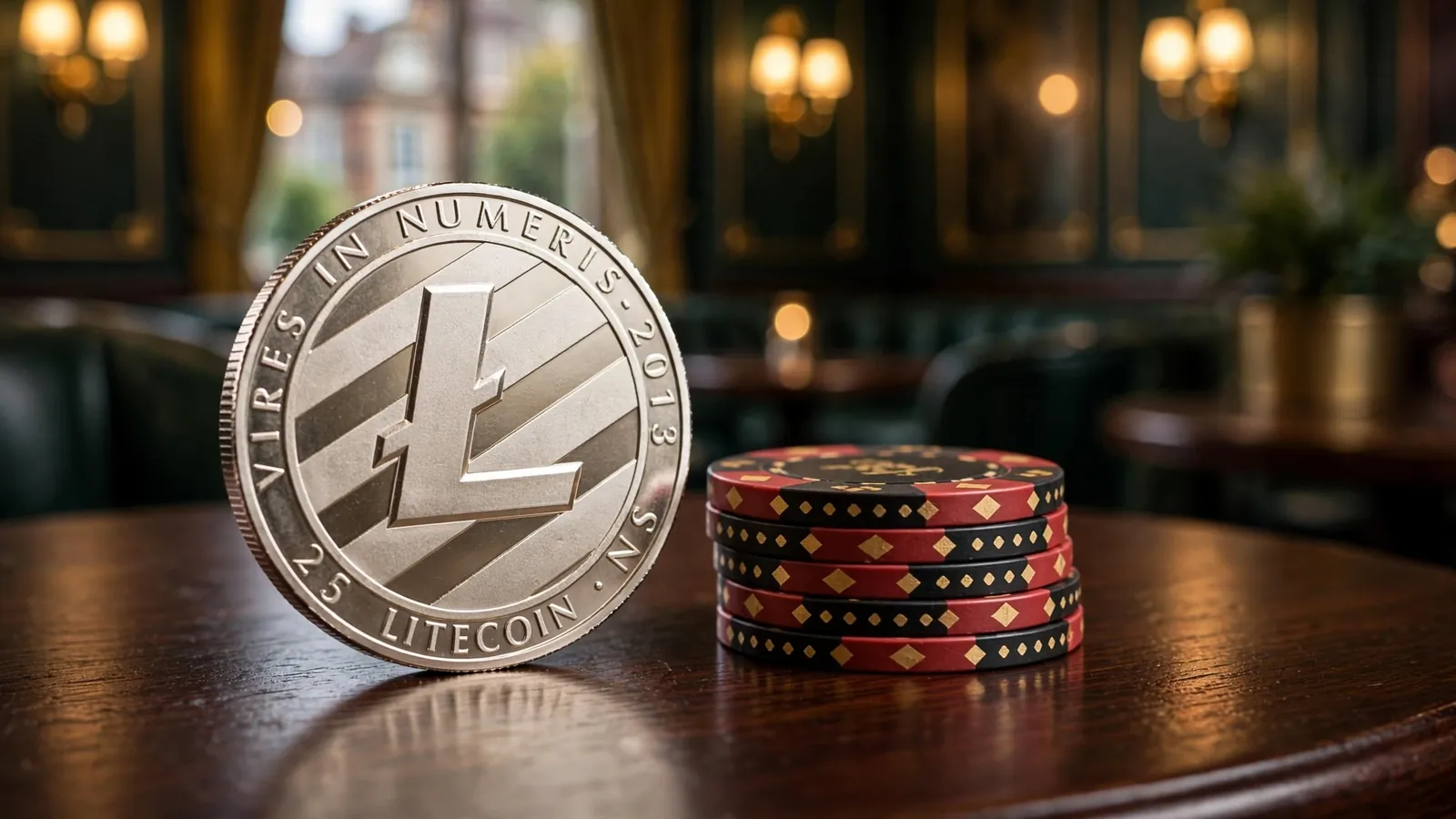
A Litecoin payment option, where an operator offers one, would not by itself establish that the deposit can be used for online slots or that it qualifies for a promotion. Those are separate conditions. The payment method concerns how funds enter an account; game access and bonus eligibility are governed by the operator’s own product and promotion terms. Treating them as one feature is an easy way to read more into a headline than it says.
That distinction matters because “crypto casino” is a broad label, not a complete description of an account. It does not tell us which digital currencies are supported, whether they can be used for every product, or what happens to a deposit when a bonus is active. Nor does a general reference to Litecoin confirm that a particular casino currently accepts it from UK customers. For any claimed combination of Litecoin, slots and a bonus, each part needs its own confirmation.
Bonus wording is where the conditions become especially important. An offer may specify which deposit methods qualify, which games contribute to any requirements, and whether opting in is necessary. Those details are not interchangeable. A casino could describe a promotion as available to new customers while setting payment or game restrictions in the full terms. The headline is the invitation; the conditions are the operating rule.
When choosing a UK casino for Litecoin, check that its payment options and withdrawal terms suit your needs. The payout times below are the only operator-specific details available here.
Chanze
Chanze has a listed payout speed of 1–3 business days.
Dieselwin
Dieselwin has a listed payout speed of 1–3 business days.
SlotoSport
SlotoSport has a listed payout speed of 1–3 business days.
Revery Play
Revery Play has a listed payout speed of 1–3 business days.
BeOnBet
BeOnBet has a listed payout speed of 1–3 business days.
Jetsetspins
Jetsetspins has a listed payout speed of 1–3 business days.
NightWin
NightWin has a listed payout speed of 1–3 business days.
Zombillion
Zombillion has a listed payout speed of 1–3 business days.
Amunbet
Amunbet has a listed payout speed of 1–3 business days.
SpinFormula
SpinFormula has a listed payout speed of 1–3 business days.
I have seen how these distinctions get blurred in promotional copy. “Play with crypto” sounds like a single, broad permission. In practice, a payment method, a game category and an offer can each be subject to separate rules. A Litecoin deposit should not be assumed to unlock a slot bonus, and a bonus advertised alongside casino games should not be assumed to apply to a Litecoin-funded account. The language may sit close together on a page, but proximity is not proof of compatibility.
The same caution applies to claims about “the best” slots for Litecoin users. Without confirmation of the operator, the payment route, the game catalogue and the relevant promotion terms, there is no sound basis for presenting a particular slot as suitable for Litecoin play. Payment support does not prove that a named game is available, and a list of games does not prove that Litecoin deposits can fund them. Those are different checks, not one combined feature.
For a UK audience, the legal context is part of the picture. Real-money online gambling is legal in Great Britain through operators holding the relevant UK Gambling Commission licence. The licence governs the operator’s gambling activity; it does not certify that a particular cryptocurrency deposit is accepted, that a promotion applies to it, or that every game is accessible through every payment route. Those details remain operator-specific.
The responsible way to read a Litecoin-related bonus claim is therefore narrow. It may indicate that the operator is discussing cryptocurrency, but it does not settle whether Litecoin is currently supported for a UK account, whether the deposit is eligible for a specific offer, or which games are covered by that offer. Even an offer’s visible summary may omit conditions that change the outcome. The terms attached to that exact promotion matter more than a general marketing label.
There is also a difference between being able to open a casino account and being able to use a particular payment method or promotion within it. Account access alone says nothing about the funding route. A site’s general casino content says nothing about whether a Litecoin deposit qualifies for its bonuses. Each connection has to be stated, rather than inferred from the fact that the words appear together.
This is why broad claims about Litecoin casinos and slots deserve a close reading. A page may join crypto payments, slot play and a welcome offer in one sentence, while the detailed conditions address each separately—or leave the relationship unclear. That is not proof of a problem, but it is not confirmation either. No leap from label to entitlement.
For now, the defensible position is simple: Litecoin support, slot access and bonus eligibility are separate questions. A claim that answers one does not answer the others. Without terms confirming the full combination, there is no reliable basis to promise that a Litecoin-funded account can use a particular slot offer. In gambling, the small print does the work. The headline does not.
A casino’s payment page can mention cryptocurrency without showing that Litecoin is available for a deposit. The cashier is the useful point of distinction: it shows the payment routes the account can actually select at that moment, rather than a general description of what a site may support. A broad label such as “crypto” does not settle the question. The specific Litecoin option needs to appear among the available deposit methods.
I have seen payment information become less useful the further it gets from the transaction itself. A review page may describe a site’s methods; a help page may group several assets together; a cashier presents the choices configured for the account. Those are not interchangeable forms of confirmation. A method named in general information may be unavailable to a particular account, while a list of cryptocurrencies says nothing by itself about which ones are enabled for deposits.
That distinction matters when comparing casinos presented as suitable for Litecoin users. The presence of a cryptocurrency section is not enough to establish that Litecoin is accepted, and it does not identify whether the option is a deposit route or something else. The cashier must name Litecoin as a selectable method. If it does not, there is no sound basis for treating the casino as a confirmed Litecoin deposit site.
The operator’s own cashier is the most direct check, but even that should be read carefully. A payment tile may open a provider page, display a supported-asset list, or lead to a step where the transaction amount and currency are chosen. The relevant evidence is the complete route as shown to the account—not a logo, a banner, or a generic statement about digital currencies. If the option is unclear, the payment instructions or customer support can clarify what the cashier is offering. No assumption required.
A specialist review of casino payment pages recorded references to Visa, Mastercard, bank transfer, e-wallets and several cryptocurrencies across the websites it examined. That is a description of those pages, not proof that every named site accepted every method, or that Litecoin was one of the available assets at the time of a deposit. Payment menus change, and a review cannot substitute for the current account cashier.
The same care applies to UK-facing casino apps. An app and its website may belong to the same operator, but the payment choices need to be checked in the account being used. A general app-store description or a site-wide payment graphic cannot confirm the method shown after sign-in. If the cashier is accessible only after registration, the method remains unconfirmed until that menu can be inspected. The label “instant banking” is also not a substitute for a Litecoin listing; it describes a different kind of payment route.
The cashier also helps establish the account’s transaction currency. A specialist review of supplied payment pages reported GBP support, but that does not establish that every account is denominated in pounds. Currency should be visible in the account or payment flow before a deposit is made. If an account is set to another currency, a Litecoin amount may be converted or displayed against that currency, changing what the transaction means in practical terms. A cryptocurrency option and a GBP account setting answer separate questions.
Deposit thresholds and ceilings are equally method-specific. A specialist review described minimum deposits as starting in the £10–£20 range, depending on the selected payment method; this is not a fixed Litecoin minimum for every casino. The cashier’s displayed minimum is the relevant figure for the chosen route. Maximum deposits may also be set per transaction, per day or per month, and can depend on both payment method and account status. A limit shown for a card or bank transfer should not be assumed to apply to Litecoin.
This is why a polished payment page can create a false sense of certainty. It may accurately list a casino’s broader payment infrastructure while omitting account-level restrictions, unsupported assets or methods that are not currently enabled. For someone looking specifically for a Litecoin deposit, the useful check is narrow: does the live cashier identify Litecoin, does the deposit flow let that method proceed, and which currency and limits does it display? Anything short of that is background, not confirmation.
A casino described as accepting “crypto” has not necessarily confirmed that it accepts Litecoin. The word can cover different assets, and a general reference does not identify which ones are available for deposits or other transactions. Litecoin may be familiar to cryptocurrency users, but familiarity is not evidence of support at a particular casino.
A specialist review of casino payment information noted Visa, Mastercard, bank transfer, e-wallets and several cryptocurrencies. That establishes only that cryptocurrency was mentioned in the material it examined. It does not establish that Litecoin appeared in the list, that the information remains current, or that any particular operator accepts it from UK customers.
That distinction is easy to lose in a short promotional claim. “Crypto accepted” sounds definite, but it leaves the important detail unstated: which cryptocurrency, for which transaction, and under what conditions? A broad category can be accurate while still being insufficient to answer whether Litecoin is accepted. It should not be treated as a substitute for an explicit Litecoin reference.
The same caution applies to lists that group several digital currencies under one heading. A list may describe a wider payment offering without naming every supported asset. Conversely, a mention of a cryptocurrency somewhere on a site does not necessarily mean it is available as a casino payment method. Context matters. A general article, an old review and a current payment statement do not carry the same evidential weight.
I have seen how a payment label can travel further than the detail behind it. A summary gets repeated, shortened and turned into a broad claim; the qualification disappears. The reader is left with a confident-sounding statement that does not say whether Litecoin itself is included. The wording may be technically true, yet still fail to resolve the practical question.
A reliable claim needs to name Litecoin specifically and connect it to the relevant casino payment function. Without that, the careful conclusion is not that the casino accepts Litecoin, nor that it does not. It is that the available wording has not established either position. That is a narrower answer than a list of supposed Litecoin casinos, but it avoids presenting an inference as a confirmed fact.
This also matters when comparing claims about casinos serving UK customers. Mention of cryptocurrencies in casino material does not, by itself, establish a UK-specific Litecoin option. Nor does a general statement about digital assets confirm that every customer, account or transaction can use the same method. The wording has to be specific enough to support the conclusion being drawn.
In short, “cryptocurrency” is a category; Litecoin is one named asset within it. Treating the two as interchangeable turns a broad reference into a claim it cannot support. A mention is a lead, not confirmation.
A debit card and a cryptocurrency payment are different kinds of transaction, even when both appear under the same casino cashier heading. A debit-card payment is routed through a card network and the customer’s bank. A Litecoin payment uses a cryptocurrency network instead. One route being available says nothing about whether the other is supported.
UK casinos commonly accept debit cards, including Visa and Mastercard. That does not make every card product eligible at every operator, nor does a brand appearing on a payment-method list establish that it is currently available to UK customers. A specialist review may list Visa or Mastercard, but the live cashier is where current UK availability and the specific card’s eligibility are determined. Card acceptance is not a blanket approval of every card bearing that logo.
The distinction matters when a casino advertises several “payment options”. That phrase can group together methods governed by entirely different rules: a bank-issued debit card, an e-wallet, or a cryptocurrency are not interchangeable simply because each can move funds. Litecoin is not a debit-card variant, and a card’s acceptance does not provide a way to pay in Litecoin. Equally, a cryptocurrency reference does not establish that card deposits are available.
Credit cards have a separate legal boundary. The UK regulator banned credit-card payments for gambling on 14 April 2020, and that restriction has not been relaxed. UK-licensed casinos cannot accept credit-card payments for gambling. This is not a matter of an operator choosing to exclude a card from a promotion; it is a payment rule that applies to gambling transactions.
That boundary also cannot be sidestepped by changing the label on the route. Credit-card funding routed through a money service business remains prohibited for gambling, and remote operators cannot accept wallet payments where the wallet allows credit-card funds to be used for gambling. The relevant issue is the underlying source of the funds, not merely the name displayed at checkout.
UK Credit Cards
UK-licensed casinos are prohibited from accepting credit-card payments for gambling; this rule applies regardless of the payment label used.
For Litecoin-related searches, the useful distinction is therefore between payment type and payment availability. A casino may support ordinary debit-card deposits without supporting Litecoin; a site that mentions cryptocurrency does not thereby confirm Litecoin, and neither statement establishes that a particular card product can be used. “Multiple payment methods” sounds broad. It is not a compatibility guarantee.
This is why card information should be read narrowly. Visa and Mastercard are familiar debit-card routes in the UK market, but the logo alone cannot settle whether a particular product is accepted at that moment. Nor does a debit-card option answer questions about a separate cryptocurrency route. They sit in different payment systems and are subject to different checks.
The practical distinction is simple: debit-card acceptance concerns a bank card and its eligibility; Litecoin acceptance concerns a cryptocurrency route. Credit-card payments for gambling remain prohibited in the UK. No shared branding, combined payment menu or general reference to digital payments changes those boundaries.
A casino’s payment options and its game catalogue are separate things. Seeing Litecoin mentioned as a way to fund an account does not establish that the site offers a particular slot, table game or live casino title. Nor does a game being available at a casino prove that Litecoin can be used to deposit. These are different claims, and each needs its own confirmation.
That distinction matters when comparing claims about the best Litecoin casinos for games. A useful comparison would identify actual titles and show that they are available at the named casino, while separately establishing that Litecoin is accepted. Without both, a ranking can make a payment feature look like evidence of a game selection. It is not.
I have seen how easily a broad label gets treated as a complete product description. “Litecoin casino” sounds as though it answers every practical question; in reality, it says nothing by itself about which games appear in the lobby. A list of sites using that label is not a verified catalogue of Litecoin slots. No named slot can be recommended on the strength of the payment label alone.
The same applies to mobile play. A casino being accessible on a phone does not prove that a particular game works on that device, and a mobile-friendly game does not establish anything about how the account can be funded. Those details should not be merged into one claim. A mobile Litecoin recommendation needs evidence for both the payment route and the relevant game access.
“New” is another word that can carry more weight than it deserves. A recently launched site, a newly added payment method and a newly released game are separate developments. One does not establish the others. A site described as new to Litecoin deposits cannot automatically be treated as a new source of Litecoin-compatible games.
For a claim about the best games, the minimum useful detail is the game’s name and confirmation that it is currently available at the casino being discussed. For a claim about a Litecoin slot, there must also be a clear connection between the payment method and that operator, rather than an assumption based on a general cryptocurrency reference. A title list copied from a provider or another casino would not settle availability at the site in question.
This is why game-specific wording should be read narrowly. “Slots available” might refer to the casino’s wider selection, not to a special category of games tied to Litecoin. Likewise, a site advertising crypto payments does not thereby offer a distinct Litecoin game library. The payment method is part of the cashier; the game catalogue is part of the casino lobby. Different evidence. Different check.
For UK players, the broader legal setting also matters: remote gambling operators serving Great Britain must hold the relevant UK Gambling Commission licence. That requirement concerns the operator’s authority to offer gambling, not proof of a particular title or payment feature. A licence and a Litecoin label still do not amount to a game-by-game confirmation.
So the reliable way to describe Litecoin casino games is restrained: game availability must be established at the individual casino, and payment compatibility must be established separately. Without named, checked titles, claims about the best Litecoin slots or a specialist game catalogue remain unsubstantiated. No shortcuts.
A Litecoin option is not the only way to fund a UK casino account. The alternatives include bank-based payments, e-wallets, debit cards and prepaid vouchers, but the cashier determines which routes are available at a particular site. A payment method appearing in general casino information does not establish that it will be offered for every account.
Bank transfers and open banking are worth distinguishing. A specialist review reports that these can provide instant deposits and fast withdrawals at many sites; that is a report about the methods, not a promise for every operator or transaction. The cashier’s available options and the payment screen are more relevant than a general claim about speed. A bank route is a conventional alternative, not a way of using Litecoin.
PayPal is another recognised option. A specialist review describes it as popular for speed and convenience, while also noting that deposits made through it may be excluded from bonus eligibility. That qualification matters: a payment can be accepted and still be treated differently under a promotion’s terms. The terms, rather than the brand name on the cashier button, determine eligibility.
E-wallets such as Skrill and Neteller are offered by some sites. A specialist review reports that they are often excluded from promotions, so the deposit method and the bonus conditions need to be considered together. “Flexible” does not mean universally compatible. Availability and promotional treatment can differ between operators.
Paysafecard works differently from an account-based wallet: it is a prepaid voucher for deposits only. That makes it a funding route, not a complete payment cycle. It should not be assumed to support cashing out merely because a casino accepts it for deposits.
For a Litecoin alternative, the practical comparison is therefore about what the cashier supports and what the method is intended to do. Bank-based routes may suit customers who prefer a direct connection to their account; PayPal, Skrill and Neteller are wallet options where offered; Paysafecard is deposit-only. None of these provides Litecoin functionality, and none should be treated as a substitute for confirming Litecoin support.
I have seen the same distinction matter at the counter: a method can be present in a casino’s payment information but unavailable for a particular account, or carry conditions that are easy to miss until a promotion is selected. The deposit screen and the applicable terms are the operative details. Marketing labels are not.
There is no universal “best” alternative. The useful choice depends on the methods actually displayed, whether the intended use is deposit-only or broader, and whether bonus terms change the value of the route. Availability varies by site. Check the specific cashier.
A payment route is not confirmed by a general reference to digital currency elsewhere on a site. The cashier is the practical place to check whether Litecoin is presented for the account and transaction in question. That is a narrower test than reading a payment-method page: the cashier shows the options available at the point of use.
I treat the displayed method and the account details as one check. A route may appear available, but the account still needs to belong to the person making the payment. Using account information and a payment route tied to the same customer reduces the chance that basic ownership details cause avoidable friction. It is a small point with practical consequences. Names should match.
The same principle applies to the payment account used over time. The cleanest route is often one named account used consistently for both deposit and withdrawal. Switching between accounts or using details that do not clearly belong to the casino customer can make an otherwise straightforward transaction harder to reconcile. Consistency does not guarantee that a payment will be accepted, but it removes a basic source of uncertainty.
For a Litecoin deposit, this means checking the specific route shown in the cashier rather than assuming that a card, bank account or other payment account can be used to access it. Litecoin is a cryptocurrency, not a debit-card brand or a bank transfer. A search for casinos that accept Litecoin in the UK may bring up broad claims, but the relevant practical question is whether the route is actually offered for that account when a deposit is being set up.
I would also keep the account identity and payment details aligned before starting. If a casino account is registered under one person’s details while the payment route belongs to someone else, the mismatch can prompt questions that have nothing to do with the currency itself. That is avoidable friction, not a shortcut to faster handling.
The cashier should therefore be treated as a point of confirmation, not as a promise about every later transaction. Availability can be specific to the account and the route displayed; a general mention on a page does not settle that. If Litecoin is not shown there, the payment method has not been established for that transaction. If it is shown, the account and payment details still need to correspond.
This is the part of the process where a careful check is more useful than a broad claim. Confirm the named route, keep ownership details consistent, and avoid treating the word “supported” as a substitute for matching the payment to the account. Simple, but important.
A deposit method does not, by itself, establish how a casino pays winnings. That distinction matters when considering Litecoin: a site mentioning cryptocurrency, or accepting a crypto deposit, is not confirmation that it supports Litecoin withdrawals. Nor does a label such as “instant” explain what happens between requesting a payout and receiving it.
UK anti-money laundering controls generally require funds to go back to the payment source used to deposit. This is often called a closed-loop rule. In practice, the casino may need to return money through the original route before considering another destination. Where an alternative payout route is permitted, further checks may be required. A request to send funds directly to a Litecoin wallet should therefore not be treated as an available option unless the operator’s own withdrawal terms and account cashier confirm it.
Processing has more than one stage. The casino first reviews and approves the withdrawal; the payment provider then handles the transfer. A specialist review describes internal approval and account verification as factors that can extend processing, particularly for a first withdrawal. Specialist reviews also identify account verification and the operator’s approval process as influences on payout speed. That is not a timing promise for any particular casino or payment method.
KYC is part of that control, not an optional formality added only when a payout is requested. If verification is incomplete, the casino may need to resolve it before releasing funds. The first withdrawal can therefore take longer than later ones, even where the payment route itself is capable of moving funds promptly. The “fast withdrawal” label often leaves out the approval queue. That is the operational gap.
For Litecoin casinos, the practical point is to distinguish three separate claims: Litecoin deposits are accepted; Litecoin is available as a withdrawal destination; and withdrawals are processed within a stated timeframe. One does not prove the others. A casino may apply closed-loop controls that prevent a direct transfer to a crypto wallet, or require additional checks before using an alternative route. The terms and cashier need to make the relevant route explicit.
Licensing is a separate question from payment support. A cryptocurrency option does not show whether a casino is authorised to serve the UK market. Remote gambling operators serving Great Britain must hold the relevant UK Gambling Commission licence. Withdrawal conditions, verification requirements and the payment destination should be read alongside that status—not inferred from the presence of Litecoin.
A deposit showing in a casino balance straight away says little about how quickly money will come back out. A specialist review describes card deposits as potentially instant while a payout can take several business days. Those are separate stages, handled through different processes. The speed of the first does not set the pace of the second.
Bank transfers have their own timing variables. A specialist review notes that delivery can depend on the bank’s cut-off time, weekends and currency conversion. A transfer initiated after a processing cut-off may not move on the same schedule as one sent earlier; a weekend can also interrupt the working-day sequence. Conversion adds another step if the casino account and payment account use different currencies.
That distinction matters when looking at Litecoin. A casino balance displayed in pounds does not, by itself, establish that Litecoin can be used to fund it or show how a crypto transaction would be priced. The cashier’s current terms would need to identify the payment route and any conversion applied. A displayed deposit amount is not the whole cost if the value reaching the casino differs from the amount sent.
There is no reliable universal answer to which payment route costs least. A specialist review identifies possible charges at several points: the casino, the payment provider, the bank or card issuer, exchange-rate spread and network fees. Which ones apply depends on the route and transaction. The spread can be easy to overlook because it may be built into the exchange rate rather than shown as a separate fee.
I learned to compare the value received, not just the visible charge. A small stated fee can look attractive while a less favourable conversion rate reduces the final credit. For a Litecoin transaction, the same question would be whether the amount converted and credited matches the amount expected after any applicable charges—not simply whether the transfer appears quick.
There is no fixed “instant” price. Timing, conversion and fees are separate parts of the transaction, and the terms shown for the selected method are what matter. A fast deposit is only one part of the calculation.
A Litecoin payment option and GamStop status describe different things. One concerns how an account may be funded; the other concerns whether an operator is part of a self-exclusion scheme. Seeing Litecoin mentioned does not show that a casino is connected to GamStop, outside it, or unaffected by it.
I have seen payment labels treated as a shortcut for judging a site. It is a poor shortcut. A casino’s choice of payment methods cannot establish its self-exclusion arrangements, just as a claim about GamStop cannot confirm that Litecoin is accepted. Each point needs its own confirmation.
That distinction matters for searches for Litecoin casinos outside GamStop. A casino may use language such as “no GamStop”, but the phrase alone does not establish the operator’s licensing position or the protections available on the site. In Great Britain, remote gambling businesses serving customers must hold the relevant UK Gambling Commission licence. Licensed casinos must also provide responsible gambling tools, including self-exclusion. The payment method does not replace those checks.
The Gambling Act 2005 covers England, Wales and Scotland, but not Northern Ireland. For customers in Great Britain, the practical dividing line is not whether a casino takes cryptocurrency; it is whether the operator is properly licensed to serve the market. A Litecoin label cannot settle that question.
Nor does the phrase “Litecoin slots” establish a connection to GamStop. It combines a payment term with a description of games, while leaving the operator’s participation in a self-exclusion scheme unresolved. Those are separate claims, and one cannot be used as proof of the other.
I would treat claims about Litecoin and GamStop as independent until each is confirmed through the relevant operator information. No inference from one to the other.
Yes. First withdrawals may take longer while the casino completes verification, and payouts are generally faster when your account is fully verified.
PayPal, open banking services and debit cards connected to fast payout systems are generally among the quickest. The casino’s approval process and your verification status also affect the time.
The minimum usually starts at £10–£20, depending on the payment method.
Yes. Skrill is offered at some UK-friendly casino sites, though it may be excluded from promotions.
There is no universally cheapest method. Compare the casino’s charges, provider or bank fees, currency conversion spread and any network costs for your transaction.
No. Withdrawal speed depends on the casino’s approval process and whether your account is fully verified.
Returning funds to the original payment source is a common anti-fraud and anti-money-laundering control. Using a different route may require extra verification.