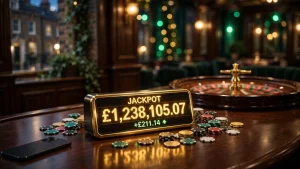
Digital dice can be random-number games, while dice-themed slots, crypto payment choices and craps involve distinct considerations.

An online casino brings games that would otherwise be played in a physical venue onto a digital interface. The basic exchange remains familiar: a player stakes cash or chips on a possible outcome, and the game determines whether that stake produces a return. What changes online is how the game is presented and, for random-number games, how the result is generated.
That distinction matters when looking for dice-themed play. The name may suggest a physical object, but a digital game does not need a dealer to throw dice in front of a player. Random-number games use selected numbers generated by a computer or other gaming equipment. Those numbers determine the outcome according to the game’s design. The result is presented on screen, while the underlying process runs through software or equipment rather than a visible roll.
I find it useful to separate what a game looks like from how it works. An animation can show dice, cards or another visual cue, but the appearance alone does not explain the mechanics. A dice-style display is not evidence of a particular physical procedure, nor does it tell anyone what outcomes are possible or how a stake is settled. Those details depend on the rules of the individual game. The general point is simpler: in an online random-number game, a generated result governs what happens.
Casino play is built around staking on possible outcomes or combinations of outcomes. A player commits a stake before the result is known; the game then resolves that result and applies its rules. This is the framework behind online casino play, including games presented with dice imagery. It is not necessary to assume that every such game shares the same structure.
That is where marketing language can create a false impression. “Dice” describes a theme or format label, not a guarantee that every game uses the same rules. Two games with similar visuals may handle outcomes differently, and games with different visuals may both rely on random-number generation. The interface is only the visible layer. The rules determine how a stake connects to an outcome.
Online availability also has a boundary: casino games are offered online where permitted by law. That statement describes the setting, not a recommendation about any particular site or product. The presence of a game on a screen does not, by itself, explain the conditions under which it is offered.
A random result is uncertain from one play to the next. It does not follow that the game is financially balanced between player and casino over time. Casino games typically give the casino a predictable long-term advantage, while still allowing players the possibility of short-term gains. Those two features coexist.
The advantage is a property of the game’s economics, not a prediction about the next result. A player may receive a return on one occasion, or may not; a short run can look very different from the longer pattern built into a game. Randomness does not promise that outcomes will alternate neatly, compensate for earlier losses or produce a win after a certain number of plays. It means the result is generated through the game’s random process.
From inside the industry, this is the point often obscured by a bright interface: an individual result and the business model operate on different timescales. The first is uncertain. The second is structured so the casino has the long-term edge. Short-term gains remain possible, but they do not remove that underlying advantage. That is the commercial balance.
A screen can make casino play feel immediate: choose a stake, start a game, see an outcome. Yet speed of presentation is not the same as clarity about the game. The useful information sits in the rules and the way they describe stakes, outcomes and returns. A title or graphic can help identify the general style, but it cannot substitute for those terms.
This is especially relevant when searching for an online dice casino or comparing online casino dice games. Those phrases cover a broad idea, not a single standard game. Without the rules in front of them, players cannot infer exact odds, payouts or procedures from the word “dice” alone. Treating the label as a complete explanation is an easy mistake.
The general mechanics are therefore a better starting point than the visual promise. Casino games involve stakes on possible random outcomes; random-number games use numbers generated by a computer or other gaming equipment; and the casino’s long-term advantage can coexist with a player’s short-term gain. The interface may be polished. The underlying arrangement stays plain.
A specialist market review characterises the UK online casino landscape in 2026 as two parallel spaces: casinos operating within the UK Gambling Commission’s framework, and offshore platforms outside it. That description captures a visible difference, but it needs a legal qualification. The two spaces are not equivalent routes to a lawful UK casino.
For real-money gambling offered to customers in England, Scotland and Wales, the operator needs a UKGC licence. The requirement applies even if the business is based elsewhere. A site may be reachable from Britain and may accept British players, yet that access does not put it inside the UKGC system. Offshore casinos that accept UK players operate outside that system and do not hold a UKGC licence.
That distinction matters when looking for casino sites offering dice games. The presence of a dice-themed game, a casino-style interface or a British-facing page does not establish the operator’s regulatory status. Nor does the word “trusted” in promotional copy settle the question. It is a claim, not a licence. The regulatory position depends on the operator and its authorisation, not on the game’s theme or the wording used to sell it.
Offshore platforms accepting UK players can form a visible part of the market because they may be accessible to people in Britain. But access and permission to serve the British market are different matters. In the regulated space, operators are subject to the UKGC’s framework. Outside it, the Commission does not provide the same oversight of the platform.
I have found that this is where promotional language can blur the important point. A page may emphasise that a casino welcomes UK customers, while giving less prominence to the fact that it is not UKGC-licensed. “Available to UK players” describes access. It does not mean “licensed for the UK.” Those phrases are not interchangeable.
The distinction applies across casino products, not only dice games. A casino game with dice, a dice-themed slot or another format may be displayed on either kind of platform. The game’s presence cannot turn an offshore operator into a licensed one. Conversely, a site’s regulatory status does not, by itself, tell anyone which particular games it offers. These are separate questions: who runs the casino, and what is available in its catalogue.
This is why a search for UK casino sites with dice games can lead to results that look similar on the surface but sit in different regulatory positions. Branding, site design and the way a game is presented are not reliable substitutes for licensing information. A site can use British currency or language and still operate outside the UKGC framework.
A UKGC-licensed casino is operating under the regulator’s rules for serving British customers. The licence is a meaningful distinction, not a decorative badge: it identifies the regulatory system responsible for overseeing that operator’s UK-facing gambling activity. For a player considering any real-money casino, that status is more consequential than whether the site labels a product as a dice game, dice slots or casino dice.
Regulatory Status
Offshore platforms that accept UK players operate outside the UKGC system and do not hold a UKGC licence, regardless of their accessibility in Britain.
An offshore platform may make its own claims about oversight or player safeguards, but those claims should not be confused with UKGC supervision. The fact that a platform accepts UK customers does not bring it under the Commission’s authority. The gap is structural: one operator is within the local licensing framework; the other is outside it.
I would not treat “non GamStop” as a synonym for a special kind of dice product. It refers to a platform’s relationship to the UK system, not to the rules or mechanics of a game. The same distinction applies to claims about a “trusted dice casino”: the phrase alone says nothing conclusive about licensing. What matters is whether the operator holds the required UKGC authorisation for real-money gambling in the relevant British market.
That is the market divide in its simplest form. Dice-themed entertainment may appear across different kinds of sites, but the legal position follows the operator. A British player’s ability to open a page is not proof that the platform is licensed to provide gambling in Britain. Clear language about access and clear evidence of authorisation are different things. The difference matters.
If you’re looking for a casino dice game in the UK in 2026, payout timing is one practical detail to check before choosing where to play. This reference card highlights the stated withdrawal timeframe for each listed operator.
Chanze
Chanze lists a payout speed of 1–3 business days, a useful detail to consider when choosing a casino for dice games.
Dieselwin
Dieselwin lists a payout speed of 1–3 business days. This gives players a stated timeframe to factor into their plans.
SlotoSport
SlotoSport lists payouts as taking 1–3 business days, providing a clear timing detail for prospective players.
Revery Play
Revery Play states a payout speed of 1–3 business days. Players can use this timeframe when considering their options.
BeOnBet
BeOnBet lists a payout speed of 1–3 business days, offering a stated timeframe to keep in mind.
Jetsetspins
Jetsetspins lists payouts as taking 1–3 business days. That timing is a practical point to consider before playing.
NightWin
NightWin gives a payout timeframe of 1–3 business days, which players can consider when weighing their options.
Zombillion
Zombillion lists a payout speed of 1–3 business days. This is the stated withdrawal timing available for consideration.
Amunbet
Amunbet states that payouts take 1–3 business days, a useful timing detail for players to note.
SpinFormula
SpinFormula lists payouts as taking 1–3 business days, giving prospective players a stated timeframe to consider.
“Best” is not a property that can be read from a game tile or a welcome banner. In a UK context, the first comparison is whether the operator is entitled to offer real-money gambling to British residents. Since the Gambling (Licensing and Advertising) Act 2014, operators taking bets from people in Britain have been required to hold a licence. That is a more substantial distinction than a polished site or a broad game menu.
I have seen how marketing language can make unlike services appear comparable. “Trusted” may be a label; a licence is something that can be checked against the operator and the activity being offered. A claim about dice play does not settle the question. The relevant point is whether the business itself is authorised to provide gambling to customers in the UK.
After that, player protection is a practical test, not a decorative feature. Platforms generally provide their own controls, including deposit limits, session timers and self-exclusion options. Their presence matters, but so does whether the controls are clear and usable within the account. A feature mentioned on a promotional page is not the same thing as a working control that can be found and applied.
That difference is easy to overlook. A casino can describe its tools in reassuring terms while leaving the operational detail elsewhere. The comparison should therefore focus on the substance: what limits can be set, how session reminders work, and what self-exclusion means for access to the account. Without clear terms, a label such as “responsible” does little work.
“Best dice casino UK” is therefore not a useful verdict on its own. It can only mean best against stated criteria. Licensing is a threshold, not a bonus point: a site that does not meet the legal requirement should not be treated as a stronger option because another feature looks attractive. Once that threshold is established, the comparison can consider the quality and clarity of protection features.
The same standard applies when the wording shifts to dice casino sites or to a Bitcoin dice casino. A payment method does not answer a licensing question, and the word “dice” does not establish that the rules, protections or terms are suitable. Those are separate matters. I would keep them separate in any comparison rather than letting a familiar payment option or a prominent game image stand in for evidence about the operator.
There is also a difference between a specific claim and a general impression. “Fast”, “secure” and “player-friendly” are conclusions, not supporting details. A meaningful comparison identifies what can be verified and avoids implying that one attractive feature settles the whole decision. It does not turn a single safeguard into a blanket endorsement.
For a UK-facing comparison, the sound order is straightforward: establish the operator’s licence status, then examine the protections it actually provides, and treat promotional language as something to verify rather than accept. That approach does not produce a universal winner. It produces a more defensible meaning of “best”—one tied to legal standing and usable safeguards, rather than presentation.
A slot built around dice imagery remains a machine game. The theme may show rolling dice, use dice-shaped symbols or borrow the language of a casino table, but that does not make the play a dealer-led dice game. The distinction is practical: a gambling machine is generally used by one player at a time, without a casino employee running each turn. A table game, by contrast, is conducted by a dealer or croupier and sets players against the casino rather than against one another.
That difference matters when a title is described as a “dice roll” game. The phrase may refer to the visual theme or presentation, not to a particular set of dice rules. I would not infer from the name alone how a result is generated, what combinations matter or how a payout is calculated. Those details depend on the game itself. A dice motif is not a rule sheet.
The same applies to labels such as “dice and roll” or “rolling dice” slots. They can describe a slot’s look and feel, but do not establish that the player is making the same decisions as in a table game. In a machine format, the session is organised around spins. There is no croupier presenting a physical roll, and the familiar language of dice should not be mistaken for evidence of a traditional table format.
For online slots in Britain, the rules governing the machine format are more useful than the theme when assessing what a session involves. Online slot autoplay is prohibited, and each spin must last at least two and a half seconds. The maximum stake per game cycle is £5 for customers aged 25 and over, and £2 for those aged 18 to 24. The £5 limit for customers aged 25 and over took effect on 9 April 2025. These are slot restrictions, not general limits for every casino game that happens to feature dice.
Age checks also sit behind the experience. A UK-licensed operator must verify a customer’s age before allowing a deposit, and online gambling in the UK is for people aged 18 and over at licensed, regulated sites. That is part of the operating framework, not a feature of any particular dice-themed title.
“Free play” is another phrase that needs care. It can mean different things in advertising or on a game page, and it should not be read as proof that a specific slot offers a practice mode or a particular balance. Nor does the word “free” turn a machine into a table game. The useful distinction remains the format: machine-led play on one side, dealer-led play on the other. The label alone settles neither the rules nor the availability of a mode.
When I assess a dice-themed slot, I separate three things that marketing language often bundles together: the theme, the actual game format and the applicable UK slot rules. A dice graphic tells little about the rules. A slot label tells more about how the game is organised. The stake and spin requirements tell what constraints apply in Britain. Different questions. Clearer answers.
The phrase “casino dice” sounds more precise than it is. It identifies a broad idea: money or chips are staked on an outcome involving chance. It does not, by itself, explain what a game asks a player to predict, how a result is produced, or how a successful stake is paid. Those details belong to the rules of the individual game, not to the word *dice*.
That distinction matters because casino games can ask players to stake on a single possible result or on a combination of outcomes. The underlying principle is still the same: the stake is exposed to uncertainty, and the result determines whether it wins or loses. In a casino dice game, the visible theme may suggest familiar physical dice, but the name alone is not a rulebook. A title is not enough to establish the game’s mechanics.
For random-number games, selected numbers are generated by a computer or other gaming equipment. That is a description of how random outcomes can be produced; it does not tell the player which number matters, what counts as a winning result, or how much a win returns. Those points have to be stated in the game’s own rules. I have seen attractive labels do a lot of work in a lobby. Less often, they explain the mechanics.
The same care applies to the word “random”. It describes the character of the outcome, not a promise that a particular result is due, or that a run of results will balance itself out within a session. A stake can produce a short-term gain, but that possibility does not change the economics of casino play. Across repeated play, casino games are structured to give the casino a predictable long-term advantage.
That advantage is not a forecast of what happens in one round. A player can win in the short term; the casino’s edge describes the longer-run balance, not a guarantee about the next outcome. Treating a brief run as proof that a result is about to change is a mistake I have seen made at the counter and online. Randomness offers no schedule.
So, when a game is described as a casino dice game, the useful starting point is modest: stakes are placed on possible random outcomes, and the game’s rules determine what those outcomes mean. The label should not be mistaken for evidence of a particular format, payout structure or familiar set of dice rules. The house advantage remains part of the picture. The rest is game-specific.
A dice casino demo sounds straightforward: a way to try a game without staking cash. But the label alone does not establish what is offered. It does not confirm that a particular casino has a demo, that a dice title is included, or that play uses a practice balance. Those details belong to the specific game and operator, not to the phrase “demo”.
That distinction matters because casino games involve stakes on possible random outcomes. In real-money play, the stake is part of the transaction; a demonstration mode, if one is available, would need to be understood separately. I have seen promotional language do a lot of work with very little detail. The practical question is not whether a page says “free”, but what that word describes.
A dice casino game demo should not be assumed to reproduce every aspect of cash play. The general fact that random-number games use numbers generated by a computer or other gaming equipment says how outcomes can be produced; it says nothing about a particular demo’s interface, settings, or relationship to real-money play. Nor does it establish whether results carry over. No carry-over should be inferred.
The same caution applies to related labels. “Online craps” may identify a game category, but it does not tell what rules, interface, or demonstration options a particular online craps casino UK offers. A dice slot demo points towards a machine format, not proof of a table game or a particular dice title. And “dice casino free spins” is not enough to establish that spins apply to dice play, or what conditions would attach to them.
I separate three claims that advertising can blur: a game exists, a demo version exists, and the demo can be played under stated conditions. Each needs its own support. A page that describes a casino’s real-money games does not, by itself, verify a practice mode. Likewise, a visible demo button would not explain any limits or whether the experience differs from cash play; the terms and game information would need to do that.
For real-money casino play in the UK, the legal position remains separate from the demo label: online gambling is legal only at licensed and regulated sites, and operators serving Great Britain consumers must hold the relevant UKGC licence. A demo claim does not settle that status. It settles only what the operator can substantiate about the demonstration itself.
Labels are not mechanics.
A cryptocurrency option describes how an account may be funded; it does not tell anyone what games a casino offers or how those games work. That distinction matters when “crypto dice” and craps appear together in a platform’s promotions. A payment logo is not evidence of a particular dice game, and a game label does not confirm which currencies can be used to play it.
A specialist review describes some alternative platforms as accepting Bitcoin, Ethereum and Litecoin alongside conventional cards and e-wallets. That is a report about payment methods, not a guarantee that every platform supports each one or that a specific dice or craps title is available. Payment arrangements can also be described separately from a site’s licence status. In the UK, real-money gambling offered to customers in Great Britain requires a UKGC licence; a foreign licence does not replace it.
The same separation applies to craps. The phrase “casino craps” identifies a game category, but it does not establish the rules, betting options, payout schedule or interface of any particular online version. Those details depend on the game itself and its published rules. Without those details, claims about how a player should place a craps bet would be guesswork. A payment method cannot fill that gap.
I have seen these categories blurred in casino copy: a page can place a cryptocurrency list beside a dice-themed game image, leaving the impression that the two are linked. They may be, but the association needs to be confirmed in the specific game and cashier information. The distinction is basic. Money movement and game mechanics are separate systems.
For UK players, there is a further practical boundary. Platforms operating outside the UKGC system may accept UK customers, but that does not make them UK-licensed casinos. The terms “crypto dice casino” or “craps dice casino” therefore say little on their own about regulatory protection, currency support or the exact game on offer. Each claim needs to be checked against the relevant licence details, payment terms and game rules.
Separate the rails from the roll.
A Bitcoin payment changes the route money takes; it does not establish what dice games a casino offers. That distinction matters when a site presents itself as a destination for Bitcoin dice. Payment support and a particular game catalogue are separate claims, and one cannot be inferred from the other.
A specialist review reports that some alternative platforms accept Bitcoin alongside Ethereum and Litecoin, with conventional cards and e-wallets also listed as options. That is a report about payment methods, not a guarantee that every platform supports each currency or that a Bitcoin deposit can be used for a specific dice game. The cashier’s terms are the operative detail: they determine which methods are available to an account and how transactions are handled.
Timing needs the same care. The review describes many platforms as offering immediate deposits and completing withdrawals within hours rather than days. “Instant” tends to describe the deposit side, not every step of a cash-out. A withdrawal can involve the platform’s processing and the payment network’s own handling; the stated timing should therefore be read as a reported feature, not a promise for every transaction.
I have seen payment language do a lot of promotional work. “Fast” sounds like a single service standard, but deposits and withdrawals are different processes. The practical comparison is whether the chosen method is supported, what the cashier says about processing, and whether the account’s currency and transaction conditions are clear before funds are sent.
For UK players, the payment label does not change the licensing position. A Bitcoin option does not make an offshore casino a UKGC-licensed operator, and UK-licensed casinos cannot accept credit cards for gambling. Where a site’s status is unclear, a familiar coin or a quick deposit is not a substitute for checking who operates it and which rules apply.
A search for a Bitcoin dice casino may also bring up unrelated dice formats or bonus offers. Neither a payment method nor a “dice casino bonus” establishes that a named game is available, or that a bonus applies to it. The cashier and the game catalogue answer different questions. Keep them separate.
While deposits are often described as immediate, withdrawals may involve both the platform's processing and the payment network's own handling times.
A casino game starts with a stake: cash or chips placed on a possible outcome, or a combination of outcomes. In a dice game, the appeal is easy to grasp—the result is uncertain, and a successful outcome may produce a short-term gain. That possibility is part of the offer. It is not the same as a reliable way to make money.
I have found it useful to separate the visible event from the financial structure underneath it. A roll, or any other random event, is what the game presents. The stake is what the player risks, while the casino’s advantage is built into the game over repeated play. The exact rules vary by game, so the general idea should not be mistaken for a universal set of dice instructions.
That distinction matters when looking at casino dice payouts. A payout is meaningful only in relation to the stake and the outcome it is attached to. A large-looking return on a particular result does not, by itself, show how the game performs over time. The overall structure is what counts.
The casino’s long-term advantage does not mean every session ends in a loss. Players can win in the short term; that possibility is part of casino gambling. But repeated play gives the house a predictable advantage, rather than turning a run of wins into evidence that the underlying balance has changed.
I used to read a run of outcomes as a signal. It was an easy mistake: recent results feel like information, even when the game is based on random outcomes. A streak can be memorable without changing the casino’s long-term position.
So, approaching casino dice means keeping the basic exchange in view: a stake is put at risk against possible random outcomes, and short-term gains remain possible within a structure that favours the casino over time. That is the central point, whether the question is how to play craps at a casino or what casino game is played with dice. The name alone does not alter the underlying economics.
No system removes that advantage.
A “top” label implies that the sites have been assessed against the same evidence and placed in a defensible order. For dice games at casinos, that cannot be established by treating every platform that accepts UK players as part of one market. The regulatory position matters first.
One specialist casino review characterises the UK online casino market in 2026 as having two distinct parts: UKGC-regulated operators and offshore platforms outside the UKGC system. The distinction is consequential. Remote operators selling into the British market must hold the relevant UKGC licence, regardless of where they are based. Offshore casinos may accept UK players, but they do not sit within that regulatory system.
I have seen how a ranking can turn a broad availability claim into an implied endorsement. A site appearing in a list may look comparable to every other entry, even when its regulatory status differs. That is not a meaningful order. It is a mixed category.
A UKGC licence is not a guarantee that a particular dice game is offered, nor does it establish that one licensed casino is better than another for that format. Equally, acceptance of UK players does not make an offshore platform UKGC-licensed. These are separate claims, and collapsing them into a single “top dice casino” verdict obscures the point that matters most: which regulatory system governs the operator.
The wording “top dice casinos UK” can sound like a straightforward category. In practice, it can bring together licensed British-market operators and non-GamStop sites operating outside the UKGC framework. A list that does not make that distinction clear is liable to suggest equivalence where there is none.
I would not turn those different statuses into a league table. A ranking needs comparable, verifiable grounds; a shared game theme is not enough. Regulatory status is the starting distinction, not a score. No false precision.